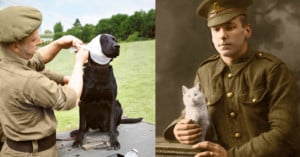
Colorized Photos of Wartime Animals Reveal Their Sacrifice
A talented photo colorizer has paid a tribute to wartime animals by breathing a new and colorful life into historical photographs that depict them and their sacrifices.
A talented photo colorizer has paid a tribute to wartime animals by breathing a new and colorful life into historical photographs that depict them and their sacrifices.
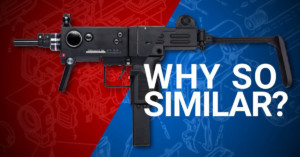
“Why are guns and cameras so closely connected?” This is what I set out to explore and investigate recently through my own experience in film. Between starting the production and finishing it, one major event made this connection a lot darker.
Colonial history overflows with commodities. From the early 1800s, wool generated extraordinary wealth for squatters and pastoralists and substantial investment in the Australian colonies. In the 1850s, gold motivated tens of thousands of people to work the earth or service the diggings. Coal, copper, tin, wheat, barley, and cotton all assumed importance at different times.
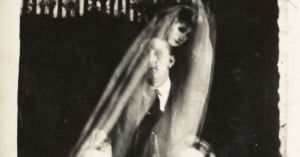
Photography has always had a relationship to haunting as it shows not what is, but what once was.
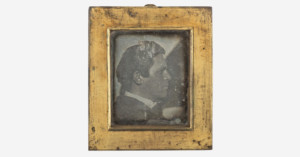
Some of the earliest photographic portraits taken in America were recently discovered in an unheated shed on Long Island. The historically significant find contains photographs from some of the first experiments with the daguerreotype process.
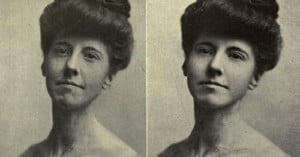
If you're tired of the unrealistic beauty standards set by all the edited pictures on Instagram and long for a return to "the good old days," here is some bad news: people have been "Photoshopping" portraits for just about as long as photography has been around.
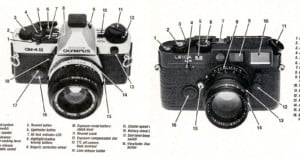
1991. What a great time to be alive. Seeing movies like Robin Hood and Hook in the theatres, and hearing hits like "Joyride" by Roxette or "Losing My Religion" by REM are some of my favorite pop culture memories of that time. Not to mention watching TV shows like Home Improvement, America’s Funniest Home Videos, and The Fresh Prince of Bel-Air.
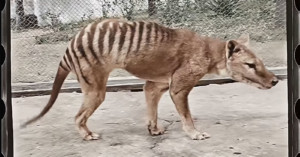
A newly digitized and colorized newsreel from 1933 is providing the world with a fascinating new look at the Tasmanian Tiger, an animal that has been extinct since 1936.
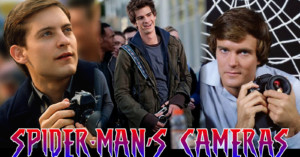
I’m sure photographers out there are one of two minds. One is that Peter Parker being both a photographer and a superhero is amazing and that we wish we could get those crazy angles. The second is that by taking pictures of himself for money, he is a total scam artist that raised the bar on pictures of Spider-Man no one could hope to accomplish.
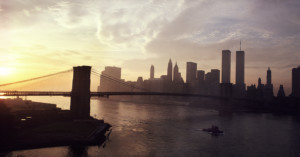
Photographer Camilo José Vergara has created a set of 52 images that pay homage to the victims of the September 11, 2001 Attack on New York City, by looking back at the site over the course of the last 51 years.
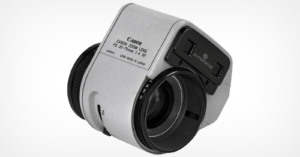
The Canon Zoom Lens FD 35-70mm f/4 AF was a lens originally manufactured in 1981 and features an unusual motor system that allowed it to autofocus. In Kai Wong's 13-minute video, he shows how it still works remarkably well even today.
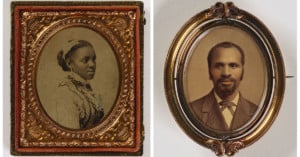
A collection of early American photography from Larry J. West has been acquired by the Smithsonian American Art Museum, transforming the museum’s holdings. West’s collection includes 286 pieces from the 1840s, when daguerreotypes started to show up in the US, to about 1925.
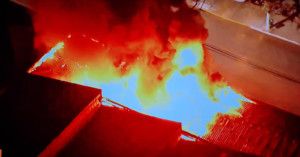
A storage facility belonging to the Cinemateca Brasileira has been engulfed by flames and while there were no injuries, the facility is home to priceless archives of 35mm and 16mm film and other museological objects.
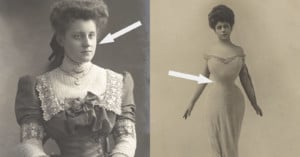
This 22-minute video offers a fascinating deep dive into the history of portrait photography manipulation, which dates all the way back to the Victorian era. It's an eye-opening look at the continuous relationship between societal beauty standards and reality.
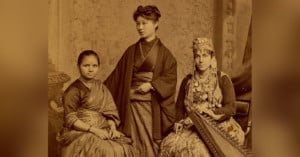
This historical 1885 photograph depicts three women doctors who all graduated and each became the first woman from their respective countries (India, Japan, and Syria) to obtain a degree in Western medicine.
Advertised as a world's first, an Australian auction house has announced the sale of "Australia's most significant photographic collection," which will be accompanied by NFTs that will provide proof of ownership alongside the physical negatives.
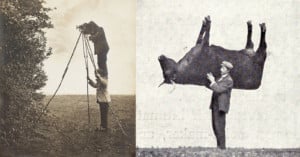
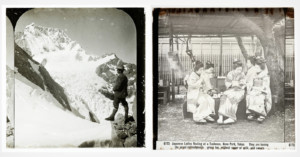
Throughout photography history, determined, creative, and brave photographers have gone to extreme lengths to capture the perfect shot. Here's a curious photo from the 1890s that shows a crazy tripod setup used by wildlife photography pioneers in the 1890s.
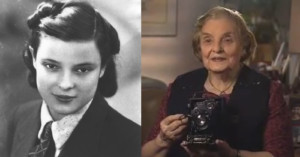
Faye Schulman was a Jewish partisan photographer who courageously fought against Nazis with both a gun and a camera. She was the only photographer to document resistance efforts in Eastern Europe during World War II.
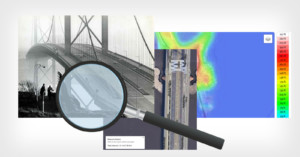
Here is a little exercise to show how we can do things in this modern world. This is not one of those whacky geo-location stunts, this is just ordinary research, some simple geometry, and some careful guessing.
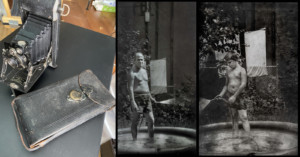
Photographer Mychal Watts recently stumbled across an old 1920s-era Kodak Series II camera in a small shop in New York. Enamored with the piece of history, he bought it after he found that it still held an undeveloped roll of 120 format film inside.
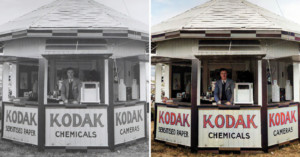
The ethical dimensions of artificial intelligence (AI) image colorization were recently brought to public attention when several historical images were altered using digital algorithms.
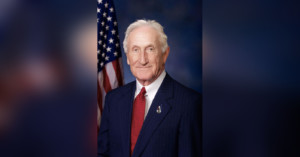
Here's a photorealistic portrait that imagines what George Washington would look like if he were a politician in the present day instead of back in the 18th century.
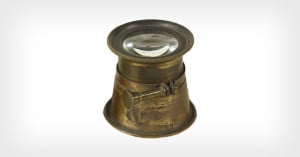
This article is dedicated to a very helpful yet often-overlooked photographic accessory. After scouring the Web, I have only been able to find few brief entries dedicated to those devices, so I hope my writing will be found helpful by inquisitive minds interested in the history of photo equipment.
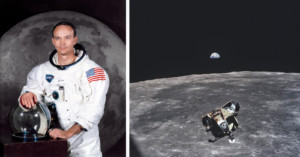
NASA astronaut Michael Collins has passed away at the age of 90. Collins is most well known for a photo he took of the lunar module containing both Buzz Aldrin and Neil Armstrong in front of the Earth, which captures all of humanity, alive and dead, in a single photo. That is, other than himself.
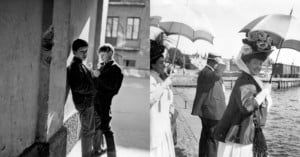
The Finnish capital city of Helsinki is the country's central hub of politics, education, finance, and culture. If you'd like a window into the history of the city, check out Helsinkiphotos.fi -- it's an online database of over 65,000 free photos that anyone can view and use.
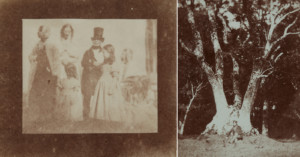
In a sale celebrating the 50th anniversary of Sotheby's photography auctions, a set of nearly 200 early photographs by William Henry Fox Talbot quadrupled its pre-auction high estimate and achieved a new auction record for the artist: $1,956,000.
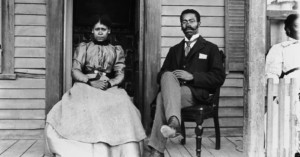
Unstable. Criminal. Impoverished. Absentee fathers. Neglectful mothers. “A tangle of pathology,” as the Moynihan Report, a 1965 study on Black poverty, put it. For decades, the Black family has been denigrated as dysfunctional.
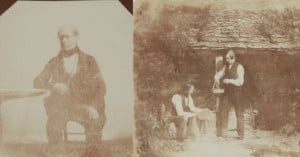
A rare collection of some of the world's earliest photographs is coming up for sale. Sotheby’s will be selling nearly 200 photos by 19th-century photography pioneer William Henry Fox Talbot at auction in New York next month.
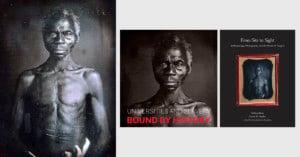
A Massachusetts judge has dismissed a woman's lawsuit claiming that she is the rightful owner of the images of an enslaved father and daughter and not Harvard, the New York Times reports. The judge cites common law that the content of an image cannot be used to claim ownership of that image, regardless of the subject.
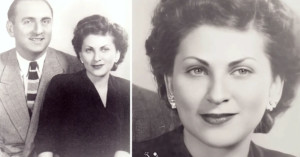
Deep Nostalgia is a new AI that can breathe new life into historical photos by animating people who have long passed. The results are both creepy and fascinating at the same time.
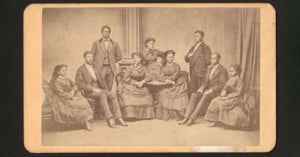
Frederick Douglass is perhaps best known as an abolitionist and intellectual. But he was also the most photographed American of the 19th century. And he encouraged the use of photography to promote social change for Black equality.
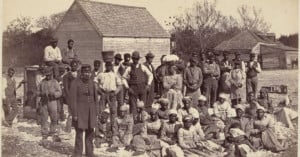
In 1976 while rummaging through an attic of Harvard’s Peabody Museum of Archaeology and Ethnology in search of old museum publications, editorial assistant Lorna Condon opened a drawer in a wooden cabinet. Inside, she found a number of flat leather cases which contained a series of daguerreotypes of partially and fully nude Black people.
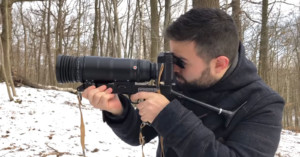
Photographer Mathieu Stern was browsing a flea market when he came across a Zenit Fotosnaiper, a Soviet-era camera rig that looks and feels more like a rifle. Stern jumped at the opportunity to have a copy of his own and to go hands-on with the camera.
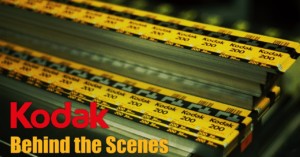
Curious how Kodak manufactures its film? In this 8-minute video, Studio C-41 shows the process from making the original giant rolls of plastic that eventually becomes film, to the finished product found on store shelves around the world.
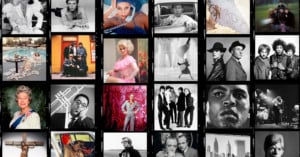
Have you ever wondered what alternates of iconic photos looked like? Iconic Licensing has acquired thousands of previously unseen contact sheets from some of the most celebrated photographers of modern times, including Terry O’Neill, Norman Parkinson, and Ted Williams.
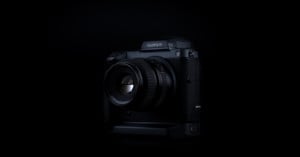
Fujifilm has announced a unique, specialized version of the GFX100 camera. Still insisting on calling it a "large format" camera, this latest version can shoot infrared images at either 100 or 400 megapixels thanks to newly-added pixel shift functionality.
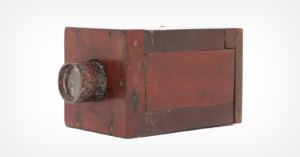
This early experimental "mousetrap" camera constructed out of wood, brass, glass, and bone may be the oldest ever to be sold once it clears auction. Purportedly from around 1840, it is expected to sell for between $65,000 and $91,000.
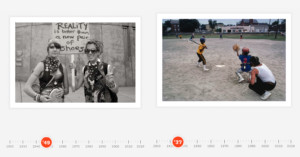
Photographers know better than most: how you edit a photograph can totally chance the perception of that photo for the viewer. But a new online photo history quiz wants to make this explicit, showing how converting a photo to black-and-white can trick us into thinking a photo is much older than it really is.
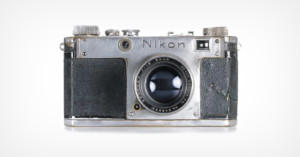
The second annual Wetzlar Camera Auctions (WCA) that focuses on historical cameras occurred on October 10th with a total of 254 items up for sale, the majority of which were Leica cameras. Among the group was a prototype Nikon L Rangefinder with a Leica screw mount that became the focus of a bidding war, ending at a record-setting sale of €397,000 (~$468,850).
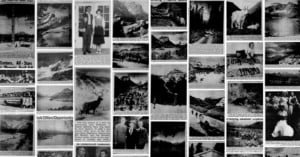
The Library of Congress has created something really cool. It's called the Newspaper Navigator, and it's an AI-powered image search that lets you browse through over 1.5 million newspaper photos from over 16 million pages worth of digitized newspapers published between 1900 and 1963.