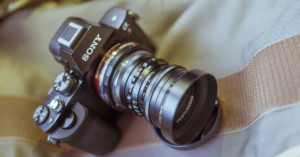
Older Sigma lenses that were designed for Canon EOS film cameras often don’t work correctly when mounted onto a new EOS digital SLR, even though the newer bodies still use Canon’s EF mount. If you’re an owner of such a lens, you might have heard that you can send it in to Sigma’s service center for them to rechip it in order to make it compatible again.
Did you know that those of you who are handy with electronics can actually do the rechipping yourself at home? Photographer Martin Melchior recently did this with his Sigma 70-210 f/2.8 APO lens, and says that anyone with basic soldering skills can do the same.
Read more…

Did you know North Korea had an official Flickr page? The country’s account on the popular photo sharing service made headlines today after it was hacked and defaced by Anonymous.

Read more…

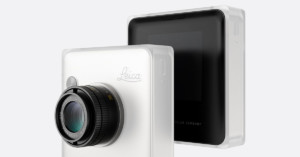
Sigma’s DP1, DP2, and DP3 cameras are known for the fact that they’re compact cameras with beastly APS-C Foveon sensors inside. With such novel sensor technology at their core, comparatively less is said about the f/2.8 lenses on the front of each camera.

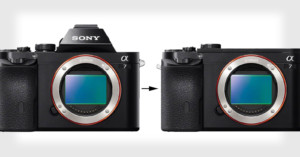
Some folks over in China decided that they wanted the glass of the camera to be just as hardcore as the sensor within, so they figured out how to modify DP cameras to offer an Leica M mount, turning the bodies into interchangeable cameras (and proper mirrorless cameras).
Read more…

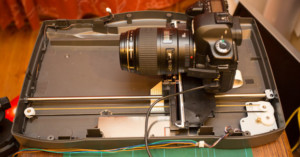
Focus stacking is when you combine multiple photographs of different focus distances in order to obtain a single photo with a much greater depth of field than any of the individual shots. This can be done by turning the zoom ring on your lens, but this can be difficult to control (especially for highly magnified photos). It can also be done using special rigs designed for the purpose, but those are generally quite pricey.
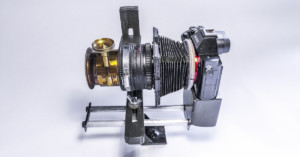
Photographer and software engineer David Hunt recently came up with the brilliant idea of turning an old flatbed scanner into a macro rail for shooting focus-stacking photos.
Read more…

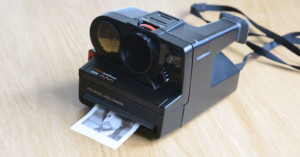
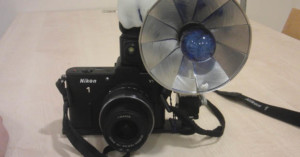
After recently purchasing a Nikon 1 V1, Swedish photographer Sven Hedin decided to work on making the camera work with an external flash. Not just any external flash, mind you, but a vintage flash unit — the kind that uses disposable bulbs.
Read more…

Back in October, Roger Cicala shared some first impressions of the Canon EOS M with us, and stated that he believes the camera is “a firmware update and a price drop away from being a great camera.” While we haven’t seen any major price cuts to the camera so far, a firmware update may be on the near horizon.
By “update,” we mean “third-party firmware enhancement.” Magic Lantern has announced that its firmware add-on will indeed work with Canon’s mirrorless camera, and that they’ve begun the process of porting it.
Read more…

Hardware security guru Joe Fitz has successfully hacked the WU-1a wireless mobile adapter to be compatible with the Nikon D800. “Why would anyone want to do this?” you might ask. Well, to get the same features, you could also buy a Nikon UT-1 Communication Unit for $470 and Nikon WT-5A Wireless Transmitter for $580 — a combined total of $1050. The Nikon WU-1a, designed for the entry-level D3200, costs just $58!
Read more…

The Olympus OM-D EM-5 is a powerful little camera, but what owners are using these days many only be a portion of what the camera is fully capable of. 43 Rumors writes that an anonymous hacker is claiming to have hacked the camera using some firmware update trickery. What he or she found was quite interesting: hidden and locked features such as clean HDMI 4:2:2 output and focus peaking!
Read more…

After months of dedicated hacking, Magic Lantern has finally been released for the Canon 7D. The new alpha version of the firmware add-on introduces a slew of new features to the camera, including focus peaking, zebra stripes, magic zoom, spotmeter, liveview customization, image review tweaks, and much more.
Read more…

Ireland-based photographer David Hunt recently came up with the brilliant idea of turning an old broken battery grip into a small computer that can be connected to his Canon 5D Mark II. After buying a Raspberry Pi computer for €35, he modified the battery grip and stuffed the computer inside.
Read more…