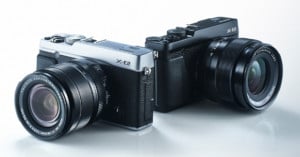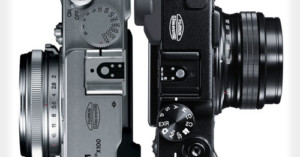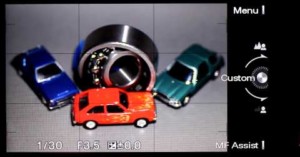
Here’s a quick demonstration of what Fujifilm’s new focus peaking looks like on the freshly-announced X100s and the X20. When manually focusing the lens, the feature uses white pixel highlights to indicate the high contrast areas of the scene. This is one of two new features — the other being split image focusing — designed to make manual focusing a much nicer experience on X-Series cameras. Read more…
Rumors are heating up regarding Fujifilm’s camera announcements at CES 2013 next week. Mirrorless Rumors writes that while Olympus, Panasonic, and Sony won’t have anything major to show in the way of mirrorless cameras, Fujifilm has a number of unveilings that will have some photographers salivating. Read more…
For those of you who are desperate for Olympus to release a focus peaking feature for the OM-D EM-5, did you know that there’s a trick you can use for “ghetto focus peaking”?
A French photographer named Nicolas recently found that the camera’s “Key Line” Art Filter actually works quite well as a focus peaking feature. Simply turn on the filter, set your camera to shoot RAW+JPEG, and focus/shoot away. You can throw away the artsy-filtered JPEG files afterward, but the RAW photographs will be precisely focused thanks to the clever “hack”! Read more…
The Olympus OM-D EM-5 is a powerful little camera, but what owners are using these days many only be a portion of what the camera is fully capable of. 43 Rumors writes that an anonymous hacker is claiming to have hacked the camera using some firmware update trickery. What he or she found was quite interesting: hidden and locked features such as clean HDMI 4:2:2 output and focus peaking! Read more…
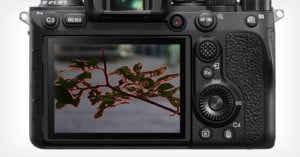
One of the interesting technologies Sony introduced into its line of NEX mirrorless cameras last year (starting with the NEX-C3) was “focus peaking”, a feature from the video recording world that highlights in-focus areas of an image to aid in manual focusing. You know those colorful pixels that image editing programs use to indicate blown out or underexposed areas of photos? It’s like that, except for focus. What’s awesome is that you can adjust things like focus, focal length, and aperture, and then see the depth of field adjust on your screen in real time. Check out the 10-second video above for a demo. Read more…