
Focal Length, Diagonals, and Depth in Photos
I’ve long strived for depth in certain photos. I like a line that begins in the lower corner and heads for the diagonally opposite upper corner.
I’ve long strived for depth in certain photos. I like a line that begins in the lower corner and heads for the diagonally opposite upper corner.
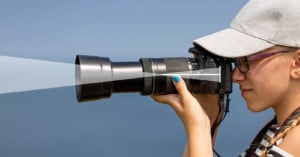
One of the most basic and common terms in the world of photography is the focal length of a lens. In this guide, we will dive down deep into what focal length is and how it works.
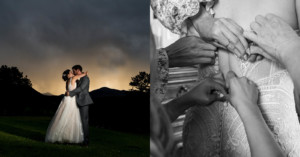
Most photographers I know have lens preferences and tend to utilize a favorite lens for their photography. Maybe it’s the way the lens captures the sun flare or the way the lens sees what they picture in their mind. But what if you could only shoot one?
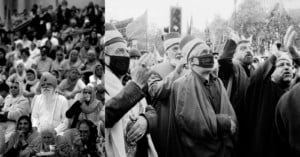
Recently, the more I study my photographs, the more I feel that bokeh is cheating me out of a more substantial image. I really like photographs with a lot of visual complexity -- well presented, not chaotic, but a clear arrangement of multiple elements.
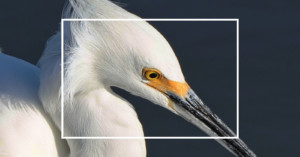
It's common for photo writers to state, "A 100mm lens on a Micro Four Thirds camera has the equivalent reach of 200mm on full frame". While the field of view is equivalent to 200mm FF, the reach is not necessarily equivalent.
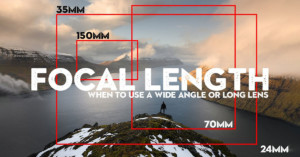
Getting started in landscape photography and not sure what focal length lens to use? Here's a 26-minute video by photographer Nigel Danson on how to go about making that decision.
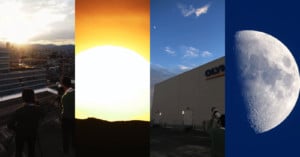
With the major Japanese trade show CP+ being cancelled over coronavirus concerns, Olympus has taken to YouTube to share the presentation it was planning to give at the show. The 45-minute presentation included an interesting look at how much reach the new M.Zuiko Digital ED 150-400mm f/4.5 TC1.25x IS PRO lens gives when combined with the M.Zuiko Digital 2x Teleconverter MC-20.
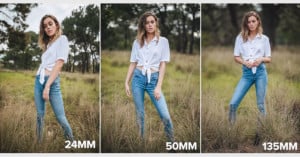
Photographer Julia Trotti made this 7-minute video that shows how your choice of focal length affects your results in portrait photography.
For many years, the only lens focal length I felt comfortable with when doing street photography was a 50mm.

Thinking about which lens to buy next? You might want to take a look at this 9-minute video first. In it, photographer Jamie Windsor argues that choosing the right focal length is more than a technical decision based on what type of photography you want to do -- your choice affects the dynamic and meaning of your photos.
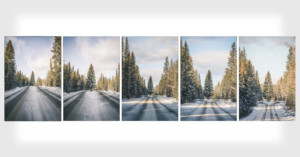
Most the time when I am out doing landscape photography, I have a Canon EF 16-35mm f/4L IS and Canon EF 70-200mm f/4L IS with me. On road trips, I try to bring my Canon EF 100-400mm f/4.5-5.6L IS II -- it’s a fantastic lens with great image stabilization and impressive image quality. Unfortunately, it is a bit too big and heavy for me to bring out more often!

I started photography on perhaps the most popular focal length, 35mm, in the form of my RX1R, which I shot through my time at university. From there I moved to 50mm, which was a revolution to me in the way I saw and thought about my images. I now shoot the majority of my favorite images on a 90mm, which although not entirely unconventional is still far from the “standard.”
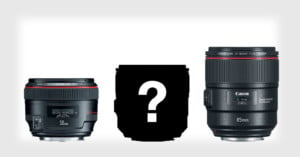
For some time now, my favourite portrait lens has been the Sigma 85mm f/1.4 art. This lens, as many of you may know, is simply incredible when it comes to performance. Even the price of this lens isn’t unreasonable when you compare it to some alternatives currently available.
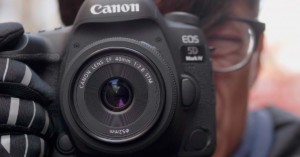
Do you own and use a beloved 35mm or 50mm lens? Popular photography personality Kai Wong thinks you should consider trying out the middle ground between the two. He made this 11-minute video about why he thinks 40mm is actually the best focal length you can carry if you want a do-it-all prime lens.
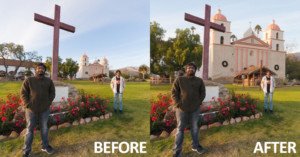
Traditional photography involves choosing a focal length and position before snapping a shot. A new technology called "computational zoom" will allow photographers to remix those two factors afterward to create not only new compositions, but physically impossible ones.
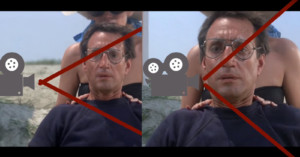
The "dolly zoom," also known as the "Hitchcock zoom" or "Vertigo effect," is a filmmaking technique that involves changing a zoom lens' angle of view while moving the camera toward or away from a subject to keep their relative size in the frame the same. Here's a 4-minute video by Now You See It that explains this technique and how (and why) it's used.
Have you ever asked yourself what the best focal length for your first (or your next) prime lens should be? If you use mostly zoom lenses, Adobe Lightroom may be able to help.
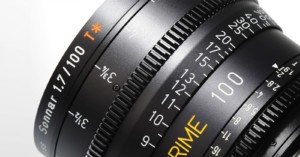
Ever wonder what the difference between an F-stop and a T-stop is? If you've never bothered to look up and understand this bit of light transmission trivia, listen up: this simple video does the work for you.
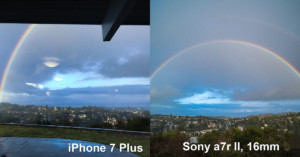
Just before sunset a few days ago, a gorgeous double rainbow appeared over the San Francisco Bay. I happened to have a fisheye lens attached to my camera, so I ran outside and snapped the shot above.

Computers are changing photography in a big way—from colorizing black and white photos automatically, to telling how memorable your photos are. And now, a new imaging technology can change the apparent focal length of a photo, making it look like a wide-angle selfie was taken from further way with a portrait lens.
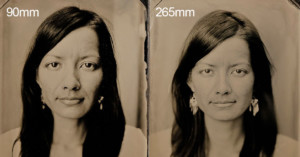
I know this topic is covered here and there and everywhere: in school and online, in workshops and lectures, on street corner posters and graffiti under freeway overpasses… However, one way or another this topic seems to either elude a lot of photographers entirely or perhaps they ignore it knowingly. Either way, after continually seeing tight headshots done with lenses possessing an obviously incorrect focal length, my personal OCD has reached a boiling point and I decided to finally do this little post complete with a demonstration.
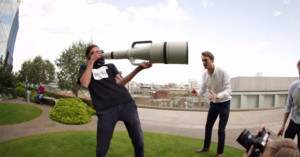
Want to see that ultra-rare Canon 1200mm f/5.6 L USM lens we told you about a couple of weeks ago in action? Well, you're in luck, because the folks over at MPB Photographic have delivered on their promise to create some content with it by putting this monster through its paces in London.
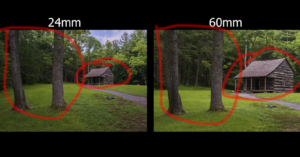
Put together by photographer Steve Perry, the video tutorial above shares a collection of useful tips, advice and examples that help explain how to best think of and use focal lengths when you're out capturing landscape photography.
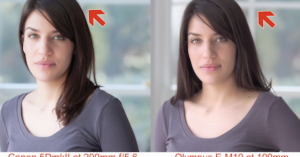
Editor's Note: Due to some issues with the camera, this video is very shaky at times. It didn't bother us much, but if you're easily distracted this video might annoy more than it educates you. You've been warned.
If you're just getting into the world of cameras and lenses, the term "crop factor" and phrases like "this is a 35mm equivalent lens" might still confuse you. Well, that shouldn't be the case much longer.
The video above offers a clear, concise and simple explanation of crop factor that will hopefully clear all of this up and equip you with some important knowledge that will come in handy the next time you're shopping for a lens or crop sensor body.
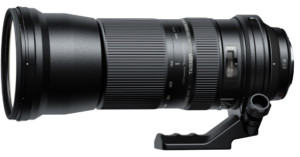
Here's a little gear porn to keep your G.A.S. revving this Thursday. Japanese lens manufacturer Tamron has officially announced that it is working on a 150-600mm f/5-6.3 ultra-telephoto zoom lens that will replace the company's current 200-500mm lens and become the longest focal length zoom in its lineup.
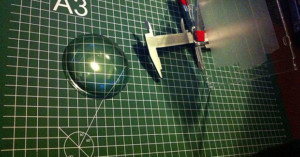
I'm hoping this post can explain a lot of the confusion beginning photographers have about focal length and crop factors. Some understanding of basic geometry is required for you to fully grasp this post. Also note that I'll be rounding the math decently well. Just run through the calculations if you want exact answers.
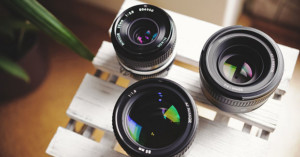
After two years of testing, renting, buying and selling just about every level of Nikon and Canon lenses and cameras, I have learned quite a bit about what works and what doesn’t. Pretty much you can’t go wrong with Canon or Nikon, and just about everything they make is top notch.

We've shared some funny pictures in the past that illustrate how distance, not focal length, changes perspective -- but nothing beats a video walk through. So, in this short video, photographer Mike Browne explains why you should treat your zoom lens as a series of prime lenses, and not the equivalent of getting physically closer to your subject.

We've written a couple of times in the past on how you can achieve drastically different portrait looks by choosing different lens focal lengths and subject distances. Basically, your choice of glass can make a huge impact on what your subject's face looks like... and how much they appear to weigh.
Reddit user Popocuffs wanted to demonstrate this, but instead of using a human subject, he used his cat.

We've shared this same topic here a couple of times before, but Jay P. Morgan of The Slanted Lens created this video lesson showing some examples of how profound of an impact your focal length choice can make.
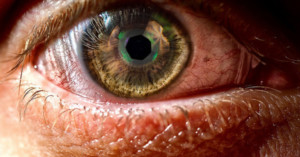
Ever wonder what the f-number of your eyes are? It can easily be calculated using …
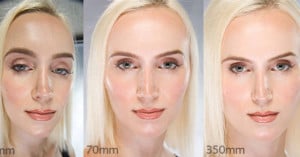
You’ve probably heard before that focal lengths between 85mm and 135mm produce the best head shots because …
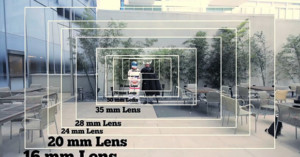
Here's a neat image showing the different field of views offered by focal lengths ranging from 16mm to 200mm. It's not simply lines overlaid on a single photo -- the different focal lengths were actually used to capture what the scenes looks like through the lenses.