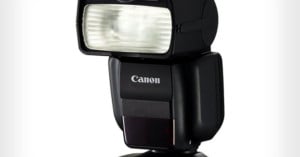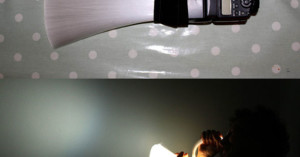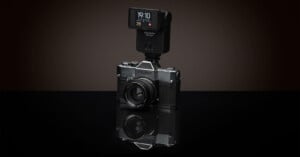
Photographer Váncsa Domokos created a neat do-it-yourself camera accessory that uses optical fibers to control the direction and intensity of a flash unit’s light. Instead of having light come directly out of the flash unit, the accessory redirects it through a thick bundle of optical fibers, allowing you to point the light in any direction — and in different directions if you’d like.
Read more…

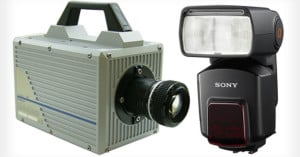
Photographer Florian Knorn recently took a Fastcam SA4 high speed camera — ordinarily used for observing things like ballistics and fluid dynamics — and pointed it at a Sony HVL-F58AM flash unit, capturing what a camera flash firing looks like when captured at 500,000 frames per second and then slowed down to to 25fps.
Read more…

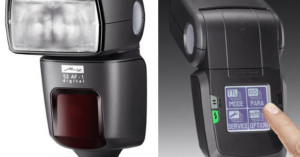
The world of camera gear is getting really into this whole touchscreen thing. Touchscreen interfaces appeared on a bevy of cameras at Photokina this month (especially when paired with Android OS) and even on a new light meter, the Sekonic L-478D. The latest guest to crash the party? The flash.
The new Metz 52 AF-1 is the world’s first hot-shoe mounted flash unit to offer a touchscreen interface. Granted, the screen isn’t as flashy as the touchscreens found on the devices mentioned above — it won’t be winning any beauty contests anytime soon — but it gets the job done.
Read more…

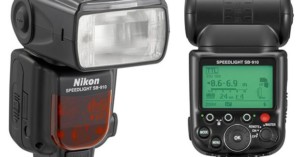
Nikon has announced the new SB-910, a top-of-the-line flash unit to succeed the SB-900. Instead of increased power — the guide number and zoom range haven’t changed — Nikon has chosen to focus on usability. The new flash features a new MENU button and improved LCD user interface that are designed to make operating it a breeze. It also automatically detects spiking temperatures, and slows down the recycle rate to automatically prevent overheating. The price fits the SB-910′s place in the Speedlite lineup: it’ll cost a cool $550 when it starts shipping on December 15 — more than some entry level DSLRs.
(via Nikon via Engadget)

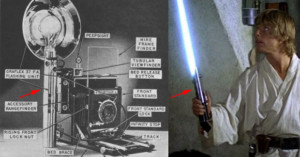
Did you know that the original Star Wars lightsaber was made using antique camera parts?
For A New Hope, the original film prop hilts were constructed by John Stears from old press camera flash battery packs and other pieces of hardware. [#] The 3-cell Graflex flashgun was modified and used as the prop for Luke Skywalker’s lightsaber in Star Wars: A New Hope and The Empire Strikes Back. A black grip was added and the circular bulb housing was obviously removed, but little else was changed to create the lightsaber prop. [#]
Do a search on eBay and you’ll find plenty of people selling these flash units as “lightsabers”.
The Graflex (via Reddit)

If you’ve used your flash for quite a while, you may have noticed some yellowish haze where the plastic has oxidized. For flash units that have a smooth surface, here’s a pro tip: you can make it shine again by simply dabbing a little toothpaste onto a cloth and wiping off the haze in a circular motion.
Read more…