
How to Fix Photoshop Scratch Disk Full Errors
One of the most common errors when using Adobe Photoshop has to do with Photoshop not being able to start or complete a command because “the scratch disks are full.”
One of the most common errors when using Adobe Photoshop has to do with Photoshop not being able to start or complete a command because “the scratch disks are full.”

Yesterday, Apple released iOS 16.3.1 which brought with it a few notable updates to iCloud performance, Siri, and FindMy, but it also appeared to break the Google Photos app for many users. Google was quick to address the problem, though, and a fix is available.

Skylum has announced an update for Luminar AI that adds one new feature, addresses multiple bugs, and fixes a major issue with the platform's ability to properly read Canon EOS R5 files.

After purchasing Takumar 55mm f/1.8 lens years ago, I started building my collection of vintage lenses, and because I don’t like spending a lot of money on them, I became a frequent visitor of thrift stores, flea markets, and online auction sites.

Photography equipment has come a long way in recent years; staggering megapixel counts, blisteringly fast AF systems, and low-light performance that was unheard of not long ago. But in my opinion, one of the most useful and underrated advancements has been in off-camera lighting, notably portable, battery-powered strobes.

Canon has released a firmware fix to the dreaded "lock up" issue that has plagued some 1D X Mark III users, making the camera unusable for high-speed shooting. Firmware version 1.1.0, released earlier today, fixes the problem and adds a few additional features at the same time.

Shooting directly into the Sun, whether it is sunrise or sunset, often results in some areas around the Sun getting clipped, and we get these rather harsh edges in our sky. Even when shooting bracketed or underexposing for the highlights, we may not achieve a pleasing result around the strongest light in a scene.
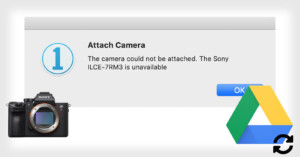
Is your Sony camera not tethering to Capture One Pro or any other software on your Mac or Windows computer? I had this issue for quite some time and thought there must be some issue with my system, or camera, or wire -- nope. I decided to write a message to Capture One and get a fix but no one could help me.

Last week, reviewers reported that Apple's latest generation of MacBook Pro laptops suffer from thermal throttling, or having the CPU run much slower than advertised during intense processing because of heat issues. If that turned you off to the laptop, there's some good news today: Apple says the throttling was due to a software bug that has since been fixed.

When I first started on my journey of learning my way around Photoshop I was a full-on Apple product fanboy, it just seemed like every creative was using an Apple machine and that I should do the same. Once I went full-time, I realized that I could build myself a PC that would be much more powerful for the price.

Travelers like to visit Thailand for cheap foods, medical procedures, and... other less wholesome reasons. One thing people often overlook, however, is the repair services. In Thailand, you can almost always repair any gadget for a very reasonable price. This especially applies to Sony cameras that are made in Thailand. In this post, I’ll explain the process so that you can repair your gadgets and bring them back to life.

Scanning colour negative is without a doubt the most irritating part of my workflow.
Since I started to shoot film, it has been the source of great frustration, especially in terms of color rendition. Each color negative I scan shows a dreadful blue or green cast that's a pain to get rid of in Lightroom.

This is mind blowing when you really think about it. HyperDrive, a product created specifically to add ports back to the newest version of Apple's MacBook Pros, has raised nearly $1.6 million from over 17,000 people desperate to undo one of Apple's biggest hardware goofs to date.

Google says its new Pixel smartphone has the best smartphone camera ever made, but it looks like the company still has some issues to work out. Pixel owners are reporting that the camera sometimes captures annoying lens flares in photos.
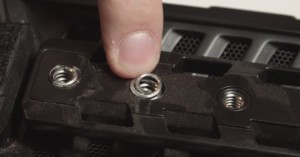
If the tripod thread on the bottom of your camera or favorite accessory breaks, don't go throwing the whole thing away or sending it off for an expensive repair. All you need is about $25 and some DIY know-how to fix it yourself.

A little while ago, I was shooting the icebergs on the black sand beach by the Jokulsarlon Glaicer Lagoon, Iceland with a rental EF 24-70mm F2.8L II. Iceland is notorious for being windy, and while I was shooting there was blowing winds carrying ocean spray and water splashes all over me and my camera + lens.

Making perspective adjustments on a photograph usually impacts the whole thing, but that's not always ideal. What if you want to keep your foreground perspective the same and only fix a small piece of your shot? This short tutorial shows you how to do just that.
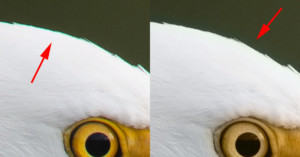
Photoshop and Lightroom both have built-in tools for dealing with chromatic aberration (AKA color fringing), but in some cases the features don't work as well as you'd hope. In the 8-minute video tutorial above, photographer Steve Perry of Backcountry Gallery shares a quick and easy trick he uses in Photoshop to manually remove fringing from his shots.

A couple of days ago, Adobe acknowledged that a nasty bug in Adobe Lightroom CC was causing slowdowns and crashes that were being reported across the Web. If you've been pulling your hair out over the issue, there's good news today: a fix has arrived.
Adobe just released an update to Lightroom that fixes the crash problem.
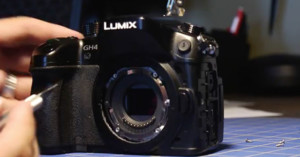
Shane Reetz is a photographer whose Panasonic GH4 developed an issue recently: the lens mount began to wobble in and out. After sending the camera to Panasonic’s repair service and finding out a fix would cost $762, Reetz decided he would try performing surgery on his camera himself. The total cost for fixing the camera turned out to be only $5, and Reetz learned quite a bit along the way.

Argentinian professional photographer and retoucher Joaquin Villaverde has a knack for restoring and colorizing old photographs. The video above is a time-lapse he made showing how he recently breathed new life into a vintage portrait that had a good amount of damage. It's 2 hours of work in Adobe Photoshop CC 2014 condensed into 3 minutes.
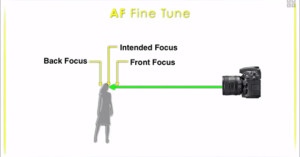
One pesky issue you may have run into with your DSLR is front-focusing or back-focusing, a problem that, in the past, required that you send your camera into a service center along with any troublesome lenses.

One problem almost all portrait photographers are going to run into at one point or another is skin redness. We're human, there's blood flowing through our faces, it's inevitable and even natural.
At times, however, it shows up just a bit too much around the nose, eyes, and cheeks. That's when you hop on Photoshop and pull up the tutorial above.

Last month, we reported on a rumor that Nikon's upcoming D610 DSLR will simply be a D600 clone that fixes the sensor speck issue that some owners grumbled about a while back. Now, a newly leaked set of camera specs seems to confirm that initial report.

The Canon 1D X firmware update that Canon accidentally leaked yesterday is now official and available over on Canon's website. The upgrade adds two autofocus features that photographers have been asking for since the camera was released: illuminated AF points and the ability to use cross-type autofocus at f/8.
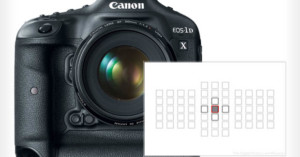
Ever since the Canon 1D X and 5D Mark III were released, photographers have been complaining about sometimes not being able to see the black AF points in the new 61-point system. In July we wrote that Canon was reportedly working on a fix. It now looks like the fix may soon be upon us, in the form of a firmware update.
A press release announcing the new firmware appeared briefly on Canon's website today but was quickly taken down once the news started getting around. The release mentioned two impending upgrades to the 1D X: red AF point illumination and cross-type autofocusing at f/8.

If your DSLR ever dies in your arms or starts acting funny, here's a simple thing to check before shelling out money to have it examined by professionals: the camera's internal clock battery. Redditor Aero93 writes,
So my camera died out of nowhere. No matter what I did and tested, it wouldn't turn on. Canon quoted $400 to check the cam + labor parts. Independent repair guy was around $250. It was too much for me. I decided to tackle the problem on my own. I got the manual online. Started taking the camera apart. I got stuck on one thing.
After that, I started asking around on a forum. Somebody suggested I check the internal clock battery, I didn't even now it existed and its right next to the regular battery. I went out and bought a new one. Boom, camera fired right up.
The internal clock battery is the one that keeps the clock in your camera running even when the main battery is removed. They usually cost about a buck each.
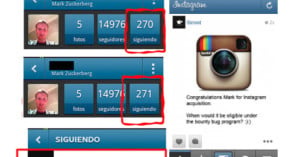
Sebastian Guerrero, an independent researcher in Barcelona says he's discovered a way to force friendship with any Instagram user -- private or public -- by exploiting an Instagram server-side vulnerability. In one case, Guerrerro forced Mark Zuckerberg to follow his test account. Then Guerrerro sent him a message through a photo post, which would show up in Zuckerberg's photo feed of people he follows. Guerrero also used a test account to follow a private user without the required approval from the private user.

After receiving several complaints from professional and private sources alike, Nikon has finally stepped forward to admit to and address the reported "lock up" issue with its new D4 and D800 DSLRs. The issue, which Nikon maintains only affects "a small number of D4/D800 users," causes both cameras to lock up unexpectedly and up until now could only be "fixed" by removing and reinserting the battery.
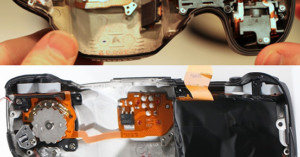
Canon has received some pretty bad publicity over the past month due to the 5D Mark III’s …
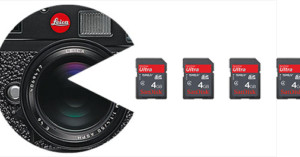
Back in August, it came to light that some of Leica's $7,000 M9 cameras had a problem in which they would corrupt the SD card being used -- a problem that caused one photographer to permanently lose work after a day of shooting.

Well, that was fast. Just a day after removing Version 2.0.3 of the 5D Mark II firmware due to a bug, Canon has released firmware Version 2.0.4, which simply fixes the bug in Version 2.0.3.