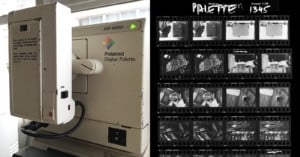
You wouldn’t think the world of instant film could learn much from the world of beer — and on most counts you’d be right — but in this particular case, a little bit of Coors inspiration may have played a role in The Impossible Projects new line of COOL Polaroid films. The specialty instant film, part of The Impossible Project’s Spring 2012 line, are kept in a temperature-sensitive package. In order to maintain its shelf life, the packaging will warn you when you’re storing it in too warm an environment by displaying the message “Keep Me Cool.” Read more…
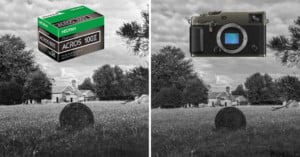
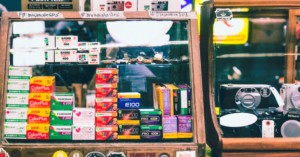
Bad news if you’re a film shooter and Fujifilm is your brand of choice: the company has announced that it will be increasing the worldwide price of its entire line of photographic films starting in May 2012. In the announcement, the company blames demand and economics for the decision:
The demand for film products is continuously decreasing, yen’s appreciation and the cost of production, such as raw materials, oil and energy, continues to rise or stay at high level. Under such circumstances, despite our effort to maintain the production cost, Fujifilm is unable to absorb these costs during the production process and is forced to pass on price increases. To sustain its photo imaging business, Fujifilm has decided to increase the price of photographic films.
Fujifilm remains committed to photographic products and asserts that even with the new price. Its photographic products remain exceptionally good value compared with other system products.
While the announcement doesn’t mention how much prices will increase by — they state that it will vary depending on market — Fuji Rumors reports that it will be an increase of over 10%.
Sick of staring at giant darkroom timer while waiting for chemicals to do their work? Try replacing the timer with carefully selected music. Photographer Lauren E. Simonutti writes over at Lens Culture,
For some reason I only listen to music in the darkroom. I find watching clocks tiresome so I time film processing by music — I have a range of songs of the proper length. Film goes in, music goes on (Tom Waits, Bowie, Bauhaus), song ends, film comes out.
An easy way to find songs with the correct length is to sort your music library by duration.
The Camera is a beautiful 7-minute-long short film by amateur filmmaker Peter Lewis about a solitary girl who finds a creepy mysterious Polaroid camera in an abandoned beach house. It’s the first film Lewis has completed, and was shot using a Canon Rebel 550D T2i (and the Canon 50mm f/1.4 and Tamron 28-200mm) on a budget of $50 during a vacation in Nags Head, North Carolina. Lewis singlehandedly managed all the stages of production, including composing the original score, creating the foley sounds, and editing the film in Final Cut Pro X. If you enjoy this film, be sure to check out Framed, an eerily similar short that was shot with an iPhone 4S.
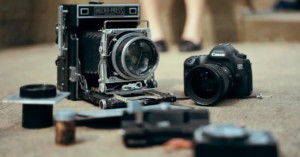
Had an interesting conversation the other evening with the delightful Raina Kirn, the “Raina” half of the famed Raina + Wilson photo team (Wilson – worry not, you’re delightful too). The occasion was a west-end Toronto photographer’s pub night, and we were bemoaning the loathsomeness of sorting and organizing images digitally, the endless toil and drudgery of file management, the indentured servitude photographers must now endure as pawns in the palm of the evil god that is Computer. We glumly agreed that there’s really no way to avoid it. You just have to grit your teeth and slog away, like wading through mud — completely unpleasant, but necessary if you want to escape. Read more…
In February 2008, Polaroid announced that it was ceasing production of instant film. ‘TIME ZERO’ is a documentary that tells the story of the last year of Polaroid film in three acts. Act I introduces the magic of Polaroid through the perspective of Polaroid artists and former employees of the corporation. Act II begins with the discontinuation of instant film and covers the grass-roots movement to keep it alive. Act III centers on ‘The Impossible Project’ and follows their against-the-odds effort to reinvent instant film.
The film was created by Polaroid enthusiast Grant Hamilton, and will premier on April 28 at the Independent Film Festival in Somerville, MA — three miles away from Polaroid’s former headquarters.
If you ever turn to eBay to purchase film, you should purchase from sellers that have both a high feedback rating and a country of origin that you trust. Reader Dallas Houghton recently purchased what he thought was 10 rolls of Fujicolor Superia 200 for $28 from a seller based in ShenZhen, China. After the film arrived, he noticed a tiny bit of yellow on the roll. When he gave it a closer look, he discovered that the “Superia” branding on the outside was actually a sticker. Once the sticker was removed the film turned out to be a roll of Kodak 400. He peeled the sticker off another roll and that one turned out to be an older Kodak Kodacolor 100 roll. Caveat emptor.
Filmmaker Jeff Desom took Alfred Hitchcock’s famous 1954 film “Rear Window” and turned it into a single panoramic time-lapse video showing the courtyard through photographer Jeff Jeffries’ rear window:
I dissected all of Hitchcock’s Rear Window and stiched it back together in After Effects. I stabilized all the shots with camera movement in them. Since everything was filmed from pretty much the same angle I was able to match them into a single panoramic view of the entire backyard without any greater distortions. The order of events stays true to the movie’s plot.
Basically it’s what Jeffries would have created if he had spent the entire movie shooting a time-lapse.
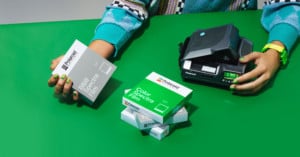
The Impossible Project has partnered up with Japanese music producer and designer Nigo for a limited edition version of its PX 70 Color Shade Film. Instead of its traditional white frames or the newer black frames, the film comes in 10 different colors: yellow, orange, red, pink, lilac, dark blue, light blue, green, black and white. Each pack comes with eight frames with randomly selected colors and costs $25 over at The Impossible Project shop.
VU35 is a new brand by Lucas Desimone and Matias Resich that offers products created from wood and reused 35mm film — a plastic material that’s difficult to dispose of. Their first product is a minimalistic collapsible bookshelf called Filmantes, which uses strips of film to connect three wooden shelves. Read more…