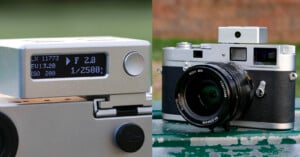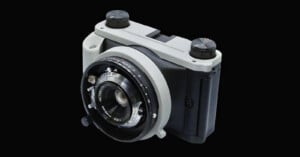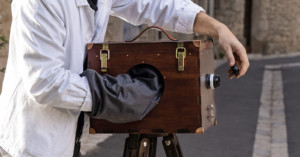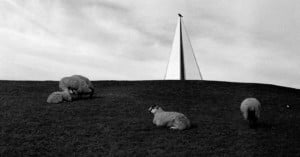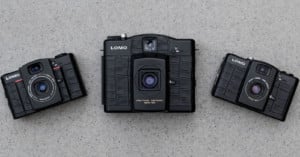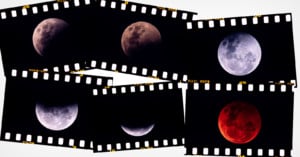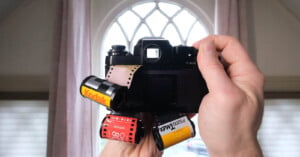
One would hope that the medium of photography was immune to racial prejudice, but an exhibit by London-based artists Adam Broomberg and Oliver Chanarin shows that this was not always the case. The artists’ exhibit, on display at Johannesburg’s Goodman Gallery, explores the marks that racism left on early color photography.
Using film designed to capture white faces and a camera that became infamous for helping further apartheid in South Africa, Broomberg and Chanarin took photos of beautiful South African flora — putting the once-racial implements to better use. Read more…
Don McCullin is known the world over for his incredible work as a photojournalist. His powerful and moving photography of devastation and suffering in Cyprus, The Congo, Vietnam and many others have won him worldwide acclaim as one of the greatest ever.
And now, for those who don’t know about his life’s work, or really anybody who wants to see what being one of the most prolific (and perhaps most haunted) photojournalists of our time means, the documentary ‘McCullin’ is here to fill you in. Read more…
There are some places where you’re just not allowed to stage a professional photo or video shoot, and topping that list would be places like Disney World, Disneyland, and probably Apple’s headquarters in Cupertino. The thing is, some photographers and videographers have no problem ignoring the rules to get a great shot (think: rooftopping).
Writer and filmmaker Randy Moore, however, took it to another level with his upcoming movie “Escape from Tomorrow.” He somehow managed to film almost the entire thing inside both Disney World and Disneyland without getting permission… or getting caught. Read more…
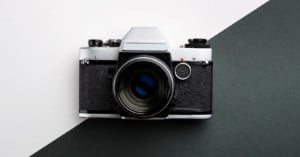
It’s been a while since we’ve shared some DigitalRev tomfoolery, but the most recent question posed by Kai and his buddies is an interesting one: given how expensive “entry-level” full-frame DSLRs are, would a dirt cheap 35mm SLR be a realistic alternative? Read more…
In 2009, when Kodak announced that production of Kodachrome film would be coming to an end, legendary photographer Steve McCurry saw an opportunity, and asked if the company would give him the final roll. Given his reputation and the many famed photographs he’s taken on Kodachrome, it’s no surprise Kodak said yes.
As a tribute to this final roll, a crew from National Geographic decided to follow McCurry and document the momentous last 36 frames that would ever be shot on that film — the video above is the result. Read more…
Want to know how much film you and your camera are chewing through? John Sypal over at tokyo camera style does this by collecting box tabs. Regarding the photos above, he writes,
This is compiled from the box tabs of every single roll/pack of film I shot in 2012.
Since 2001 I’ve kept a tab from every roll of film I’ve shot in the backs of collage-based photographic journals. In the mid-2000’s I was shooting some 500 rolls a year- I’ve cut back to about 300 or so the past two years. A complete visual collection of all the box-tabs from the past dozen years would result in a much larger image.
It’s like a stamp or sticker collection book for photographers. You can find a larger collage of the photos above here.
P.S. A giant poster-sized collage of box tabs might make for a pretty wild home decor item.
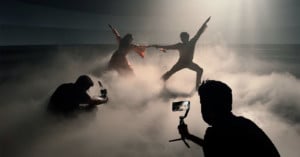
Motion image photography is a new name for an old concept: pulling stills from video. In fact, famed headshot photographer Peter Hurley took a stab at it last year, pinning the 5K Red Epic against his Hasselblad to see if he could recreate his work in video. The issue there, even ignoring price, was that the sheer size of the Red Epic makes it far too bulky for anything but studio work.
Well, in this short documentary/experiment, photographer Abraham Joffe and a few of his esteemed photographic friends set out to see if technology had finally shrunken down and advanced to the point where the terms photographer and videographer could essentially become one and the same. Their tool of choice was Canon’s new 1D C, and their results were phenomenal. (Warning: the video contains a tiny bit of nudity). Read more…
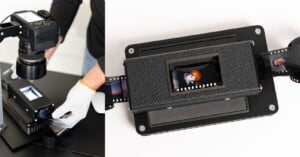
Yesterday I wrote a post showing the high level of image quality you can achieve by scanning film using a digital camera rather than a film scanner. This post will describe my personal technique for digitizing film using a DSLR and a macro lens. Read more…
If you shoot film and aren’t much into chemicals (or don’t have a basement in which to keep a gigantic 5×7″ enlarger), you’ll soon find yourself needing a way to import those beautiful pictures you’ve taken onto your computer. What? Why didn’t I say, “you’ll need a scanner”? After all, it’s not 1987 anymore — scanners are as common as toaster ovens.
Well, I didn’t say “a scanner” because it’s not the only way you can digitalize those pictures. Indeed, even though it’s the first (and often only) technique most people will think of, it is also the most inefficient and time consuming. And it can lose a lot, I mean a lot, of the quality of the original slide or negative. Read more…