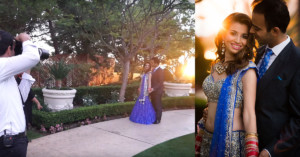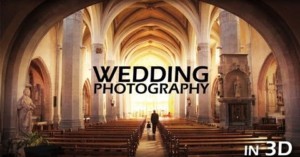
Remember that slow-motion wildlife footage that consisted entirely of still photos animated with parallax? French photographer Sebastien Laban does the same thing, except with his wedding photographs.
In the video above, all the apparently 3D scenes you see are actually the result of using some After Effects magic on ordinary 2D photographs. Read more…
Want to create a long exposure photo but don’t have a camera that can keep its shutter open for extended periods of time? Mansour Moufid of Elite Raspberries is working on a script called “Hipshot” that can take ordinary video footage and convert it into a faked long exposure still photo. He writes,
Long-exposure photography is a technique to capture dynamic scenes, which produces a contrast between its static and moving elements. Those parts of the scene which were in motion will appear blurred, creating a nice effect.
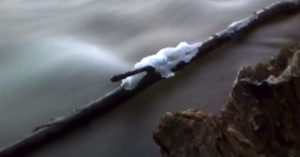
[Above] is a long-exposure shot of a stream I took recently. It is technically not a long-exposure photograph, but a simulation; this image was actually generated from a video recording taken with an old iPod, which was then processed in software into a single image. (Forgive the poor quality, I don’t own a good camera. Nonetheless, this image demonstrates the desired effect.)
You can check out the technical details of how the Python script works here. If you want to try it out for yourself, you can download Hipshot over on Google Code.
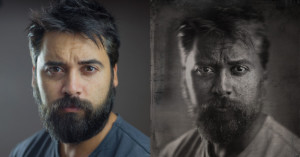
Faking the look of old films is becoming ubiquitous in the world of mobile photo sharing apps, but so far the popular apps have stuck with various films and not older photographic processes. If you want to create a photograph that mimics the look of a wet plate, it’s actually pretty easy to do in Photoshop. Read more…
It may be hard to believe, but all the amazing slow-motion clips you see in the video above were created using individual still photographs. Joe Fellows of London-based film production company Make Productions gathered photographs of wildlife and people from the WWF archives, and then Photoshopped and animated the images using parallax. Read more…
Here’s a clever parody of the drug commercials you see on TV. It’s marketing “Fauxtographor”, prescription pills geared towards helping photographers become more creative and successful in their work.
17-year-old filmmaking student Sacha Powell shot this powerful slow motion film using a $500 Canon 550D/T2i, 50mm f/1.8, 18-55mm kit lens, and Sigma 70-300mm. On the software side he utilized Premiere Pro CS5, After Effects CS5.5, and Twixtor for faux slow motion. Impressive.
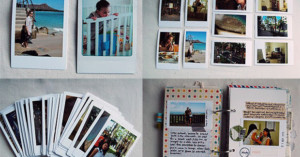
Eve Johnson of Evalicious wanted to turn some old digital photographs into Instax-style prints for a travel journal, so she decided to make some fake ones. She arranged two photos on each template, saved them as 4×6 prints, had them made at a local print shop, and then cut them out in Instax dimensions. You can find the low down over on her blog.