
Tom Hanks Photobombs Bride’s Wedding Photos
A bride was treated to an unexpected encounter with Tom Hanks when the famous actor bumped into the wedding party as they exited their downtown Pittsburgh hotel en route to the ceremony.
A bride was treated to an unexpected encounter with Tom Hanks when the famous actor bumped into the wedding party as they exited their downtown Pittsburgh hotel en route to the ceremony.

Widely recognized for his photojournalism work of 20th century America and his iconic celebrity portraits, Steve Schapiro has died from pancreatic cancer. He was 87.
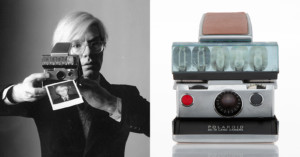
One of Andy Warhol's personal Polaroid SX-70 Land Cameras, a camera the artist used extensively at the height of his career in the 1970s, was just auctioned off by Heritage Auctions for a whopping $13,750 earlier this week.
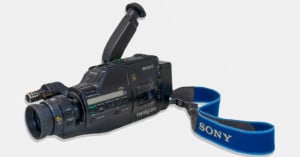
In 1991, four white police officers were caught on camera violently assaulting a black man named Rodney King during an arrest. When the officers were acquitted, that footage ultimately sparked the 1992 Los Angeles Riots; and now, the video camera that captured it is being auctioned off for a starting bid of $225,000.
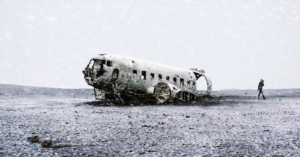
A young Chinese couple in their early 20s was found dead last week near the famous DC-3 plane crash site in Iceland: an iconic photo spot frequented by photographers and tourists alike. Authorities say there was no sign of foul play, and believe inclement weather is to blame.
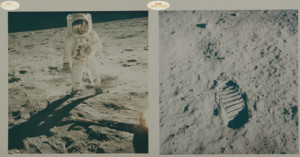
As we wrap up 2019 and the 50th anniversary of the moon landing in 1969, Sotheby's has one more NASA-themed auction up their sleeve. Launched yesterday, the Space Photography auction includes over 100 original NASA "red number" prints, including some of the most iconic images to come out of the US space program.
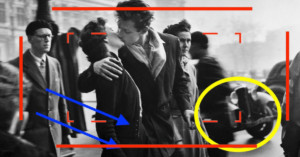
What's up, photography fans? It's Martin here from All About Street Photography, and today I want to talk about the story behind the famous photo Le baiser de l'hôtel de ville (Kiss by the Town Hall) by French photographer Robert Doisneau.
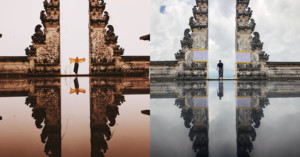
It should come as no surprise that everything on Instagram is not as it seems. And yet, the revelation that the famed #GatesofHeaven photo op in Bali, Indonesia is a fake photo op that will cost you one or two bucks has surprised many as the news rippled across the Internet this week.
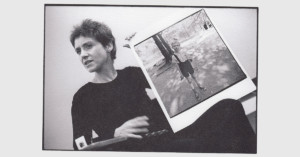
Diane Arbus was honored with an obituary by the New York Times today, 46 years after the renowned American portrait photographer died. It was one of 15 obituaries published today as part of a project titled Overlooked.
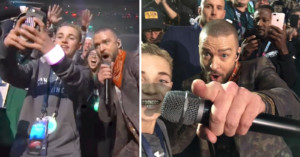
A 13-year-old 7th-grader is Insta-famous today after he snapped a selfie with singer Justin Timberlake on national TV during the Super Bowl halftime show.
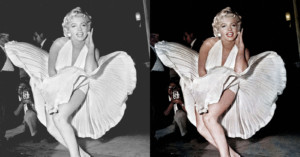
Digital colorizations of historical photos have gotten quite a bit of attention in recent years. Retrographic is a new photo book that brings this concept to physical pages. It's a collection of some of the world's most well-known black-and-white historical photos transformed into living color.
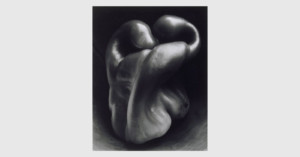
Edward Weston is considered to be one of the most influential American photographers of the 20th century. One of his most famous works, titled Pepper No. 30, is a B&W photo of a single green pepper with beautiful, soft lighting. Here's a fascinating, little-known fact about the piece: it was shot at an aperture of f/240 with an exposure time of 4-6 hours.
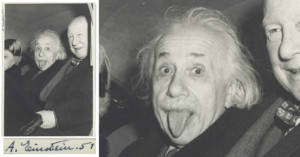
An iconic photo of Albert Einstein just sold at auction for $125,000. The photo of the famous scientist sticking out his tongue was also signed by Einstein himself.
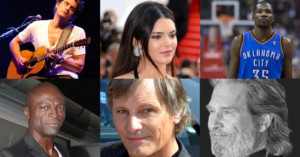
Everyone is a photographer, and that includes celebrities. But some celebrities take their photography more seriously than others, investing both significant time and money into developing their craft. Here’s a small sampling.

The art of photography lost one of its most influential and controversial voices today. Ren Hang, a renowned and oft-censored Chinese photographer whose work has been displayed around the world, died this week. He was 29 years old.
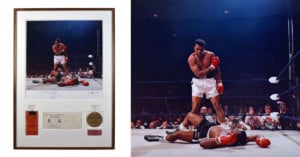
Neil Leifer's photograph of Muhammad Ali standing over a knocked out Sonny Liston is, without a doubt, the most iconic image of the heavyweight champion ever captured. And now, you can own the photographer's own print of the photo, signed by Ali himself.

How many famous modern and historical photos are you able to recognize simply by hearing the nickname? Go ahead, read each nickname then try to picture the image in your head.

This complex, built in the end of the 19th century, was on my wish list for a very long time. When the opportunity arose to visit it, I grabbed my chance and carefully planned the exploration.
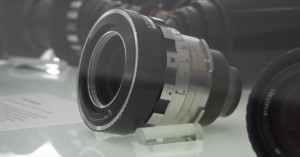
As iconic lenses go, perhaps no lens is quite as iconic as the famed NASA Zeiss f/0.7 glass Stanley Kubrick used to film a candle-lit scene using only natural light. In this video we get to see the lens, find out about the camera Kubrick modified to use it, and discover some of the tricks he employed to shoot that scene.

Do a search for the world's most famous landmarks, and you'll find an endless stream of photos captured by tourists from all kinds of angles. But the photos you'll find probably don't look like photographer Oliver Curtis' images. For his project Volte-face, Curtis visited iconic landmarks and pointed his camera in the opposite direction.
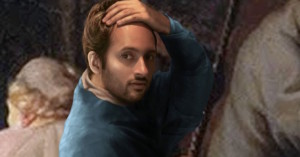
In a bid to show off the potential behind their stock photography collection, Adobe asked four digital artists to do something pretty incredible. They were asked to recreate four lost or stolen art masterpieces... using only Adobe Stock imagery. Ready? GO!
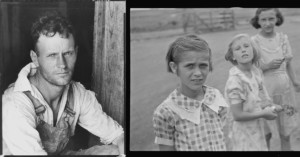
The great American photographer Walker Evans is best known for his stark photos that document the years of the Great Depression in the US. In the 4.5-minute video above, produced many years afterwards, Evans looks back on his photography and offers a glimpse into his mindset at the time he shot it.
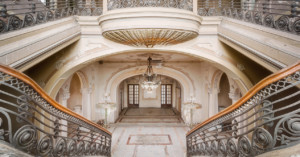
Once this was the most glorious building of Romania but since 1990 it’s been abandoned and slowly but surely falling apart. The building is now listed as a historic monument by the Ministry of Culture and Religious Affairs of Romania.

Set designer/artist Nicole Heffron and photographer Henry Hargreaves latest collaboration pays homage to the best known filmmakers in history. Each month for a year, they designed and photographed a different cult filmmaker's "birthday meal."
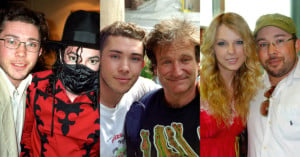
Australian photographer Richard Simpkin isn't exactly a celebrity, but you could be tricked into thinking so if you look at his personal photo album. Simpkin has spent over 25 years collecting photos of himself posing with some of the world's most famous people.
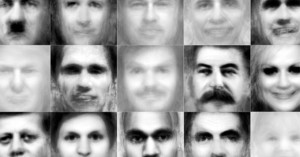
What do you get when you combine 50 portraits of the same famous face and averaged the result? Reddit user Dwainosaur dared to not only ask the question but to pursue it. He gathered up a large collection of photos and wrote a script for averaging the results. Subjects include Brad Pitt, Jack Black, Billy Murray, and Barack Obama. Infamous faces include Adolph Hitler and Joseph Stalin.
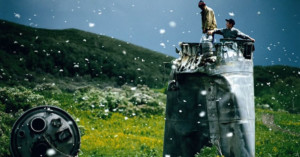
Magnum photographer Jonas Bendiksen spent seven years journeying through the former Soviet Union …
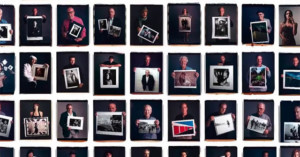
Photographer Tim Mantoani is the man behind one of the great photo projects and books of our time. Called "Behind Photographs", the series is a giant collection of giant 20x24 Polaroid pictures of some of the world's most famous photographers holding their most iconic photos.
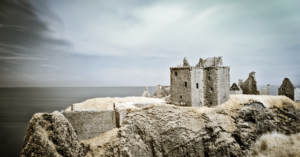
How do you put a fresh spin on landmarks that have been photographed ad nauseam? Well, great composition and an understanding of light certainly helps, but if you're photographer Kaitlin Kelly, you also add infrared photography into the mix and take the photos to a whole new level.
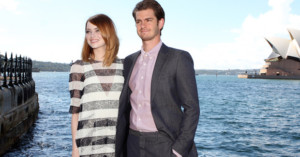
In the photography hierarchy, the paparazzi are considered by many to be the lowest of the low. Even when they get attacked by less-than-loved celebrities, the reaction from many of our readers is rarely sympathetic. But thanks to some creativity and quick thinking, actor couple Emma Stone and Andrew Garfield have managed to turn the pap into a force for charity.
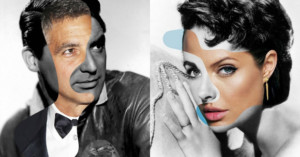
It turns out the rich, famous and powerful of today bear a striking resemblance to the rich, famous and powerful of yesteryear -- at least if you trust the photo series Iconatomy by George Chamoun and the followup series Then & Now by Marc Ghali.
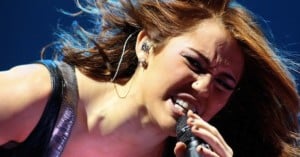
We hate to contribute in any small way to the Miley Cyrus hoopla/shenanigans/ruckus (pick your poison) but when an old 35mm SLR that would normally go for about $60 starts bidding at almost $100,000 we can't help but take notice.
The camera in question is an old 35mm Nikon N80 SLR, and as you might have already guessed, the reason it's going for so ridiculously much is that ... well ... Miley is selling it.
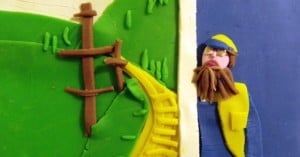
When Eleanor Macnair made her first Play-Doh re-creation of a famous photo, she had no idea how big her little project would hit it. But only a little over a month after launching a Tumblr to display her work, she's gotten more publicity than she could have expected.
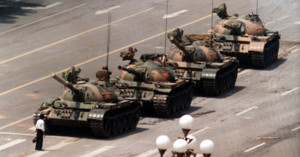
When the Chinese military moved into Beijing's Tiananmen Square on June 5, 1989 to forcibly remove pro-democracy protestors, an anonymous man famously decided to place himself in front of the long column of Chinese tanks that were rumbling into the area. Photos and videos of the incident were immediately published and broadcast around the world. AP photographer Jeff Widener's "Tank Man" photo, shown above, is widely considered to be one of the most iconic photos of the 20th century.
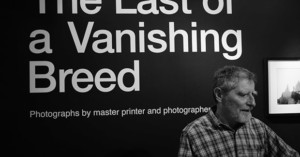
Have you heard of Sid Kaplan? If you've studied the works of great American photographers, you've likely at least seen some of Kaplan's handiwork. Although he's a master photographer in his own right, Kaplan had made a name for himself as one of the industry's finest photo printers. Over the past four or five decades, Kaplan has made prints for some of the biggest names in photography.
In the early 2000s, NYC-based photographer Christopher Dawson noticed that even though major events were going on around the world, major news organizations in the US often remained fixed on stories involving the rich and famous. Due to the fact that stories involving celebrities often result in more eyeballs and advertising dollars, things like Britney Spears' custody hearing or Michael Jackson's molestation trial would attract a disproportionate amount of attention.
Starting 2004, Dawson began to create a series of photos with the camera pointed at the newsmakers rather than the stories. The ongoing project is titled "Coverage."
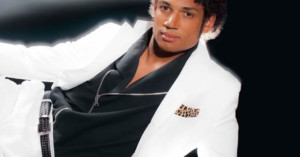
For a recent Music Issue of ESPN Magazine, photographer Mattias Clamer created portraits of 14 famous athletes in the style of iconic album cover photos. Clamer paid a huge amount of attention to detail, which resulted in many of the photos looking nearly identical to the covers they were meant to recreate.
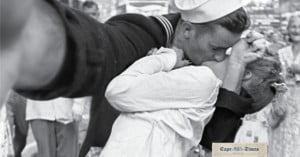
Self-portraits snapped with an outstretched arm can be seen everywhere these days, from profile pictures on Facebook to filtered shots on Instagram. Among iconic historical photos? Not so much.
However, Cape Town, South Africa-based newspaper Cape Times has launched a brilliant new advertising campaign that imagines what those photos were look like if they had been captured with arm's-length "selfies".
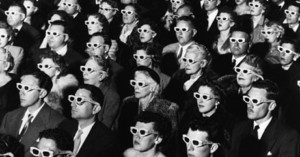
This iconic photograph by LIFE magazine photojournalist J. R. Eyerman turned 60 this past week. Shot at the Paramount Theater in Hollywood in 1952, the image shows the opening-night screening of the first ever full-length, color 3D movie, titled Bwana Devil.
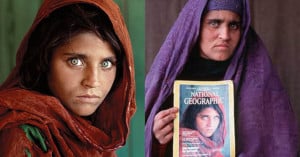
In 1984, photographer Steve McCurry shot a portrait titled "Afghan Girl" that would become the defining image of his career and one of the most famous National Geographic covers ever published. In 2002, McCurry was able to locate the subject, Sharbat Gula, and learn her story.