
Real or Fake: Tom Brady’s Epic Hole-in-One Caught by FPV Drone
Tom Brady went viral this week after he posted a video to his social media channels showing him hitting an epic hole-in-one on the golf course.
Tom Brady went viral this week after he posted a video to his social media channels showing him hitting an epic hole-in-one on the golf course.
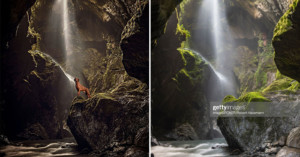
A pet photographer is in hot water this week after other photographers noticed that many of his photos were actually composites in which animals were digitally inserted into gorgeous landscapes captured by other photographers.
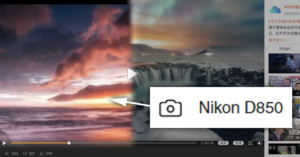
Huawei has apologized multiple times in the past after getting caught passing off DSLR photos as ones shot with its smartphone cameras, yet it seems like the company still hasn't learned from its blunders. The company was just caught faking smartphone photos yet again.
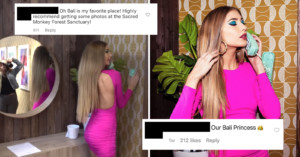
YouTuber and Instagram influencer Natalia Taylor recently pulled a prank on her 2 million plus followers that shows just how easy it is to "fake it till you make it" on social media. Namely: she faked a whole trip to Bali... by going to IKEA.
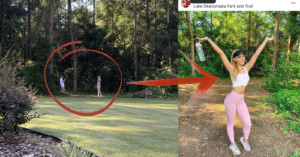
You might be able to fool the Internet, but as one Florida woman found out the hard way, you'd better hope your sister isn't around when you're doing it. Your little lie might just go viral.
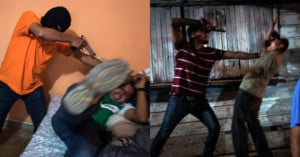
A photojournalist has apologized after being accused of faking an award-winning series of photos that purportedly show hitmen in Honduras carrying out violent acts.

It looks like Huawei still hasn't learned its lesson after getting caught faking smartphone photos in ads multiple times. The company's latest teaser ads for the upcoming P30 Pro smartphone imply that they show sample photos, but they don't.
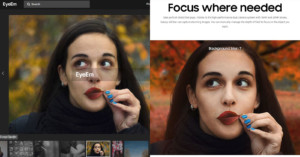
Smartphones are sometimes marketed these days as being capable of shooting "DSLR-quality photos." Samsung went a step further: it was just caught using an actual DSLR photo to fake its smartphone's "portrait mode."
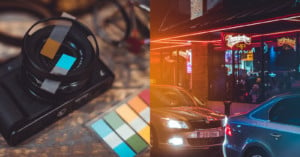
Here's a neat little trick for getting creative with your photos in-camera: placing colorful page markers right in front of your lens can produce a "light leak" look reminiscent of plastic toy cameras.
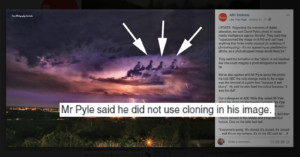
An Australian photographer has sparked a bit of a controversy after one of his photos featured by a major media outlet drew accusations of Photoshop manipulation. The photographer responded by denying that he cloned the main subject of his photo, but his untouched photo seems to tell a different story.
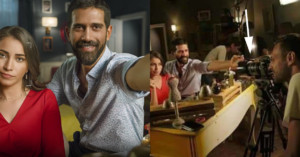
The Chinese smartphone giant Huawei has been caught passing off DSLR photos as examples of what its smartphone camera can do. And it might have gotten away with the deception were it not for an Instagram slip-up by the actress in the ad.
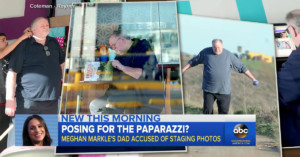
A photography scandal has erupted leading up to this week's royal wedding between Prince Harry and Meghan Markle. Markle's father is accused of staging a series of paparazzi photos that were sold for an estimated $130,000+.
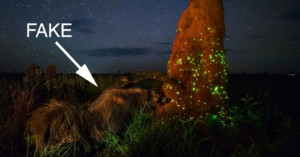
A winner of the prestigious Wildlife Photographer of the Year photo contest has been stripped of his award after it was discovered that the anteater seen in the photo is a stuffed animal.
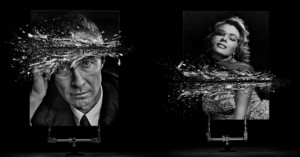
For his new project titled "Explosion Collages," photographer and visual artist Fabian Oefner created a series of photos showing portraits being shredded by speeding bullets. But there's a twist...
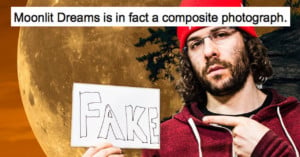
Photographers have been talking this month about best-selling landscape photographer Peter Lik's new photo, "Moonlit Dreams," pointing out that the image appears to be a "faked" composite instead of a single "real" exposure. It has since been confirmed that the photo IS a composite.
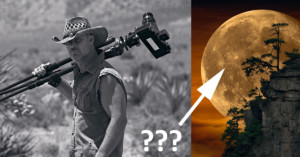
Photographer Peter Lik is purportedly one of the bestselling landscape photographers on Earth, having sold a reported half a billion dollars worth of prints by 2015. He also claims to have sold a single print for $6.5 million in 2014, which would still be the world's most expensive photo today. But one of Lik's new prints is raising eyebrows and eliciting cries of "Photoshop!"

Want to fake a luxurious lifestyle on Instagram? There's a Russian company that can help you do so. It specializes in renting out a private jet for Instagram photo shoots for people who don't have the wherewithal to actually fly around in one.
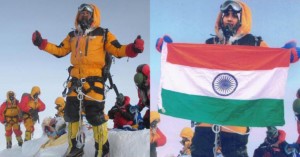
In September 2016, an Indian couple made international headlines after it was found that their photos "proving" they had reached Mount Everest's summit had been faked using Photoshop. It turns out the husband and wife were both police officers in India, and they've just been fired after an investigation into their deception.
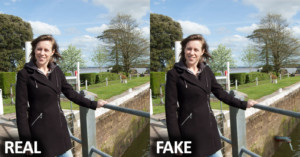
The Internet is filled with fake photographs, and some have even won contests run by the likes of Nikon. And here's why: people are generally very bad at detecting when a photo has been faked.
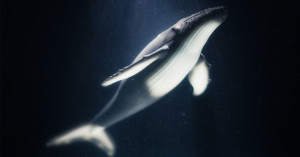
Egyptian photographer Amr Elshamy has shot photos showing whales and dolphins in the sea and polar bears and seals in snowy landscapes. But here's what makes his wildlife photography different than most others: they were all shot indoors on a table in Elshamy's room.
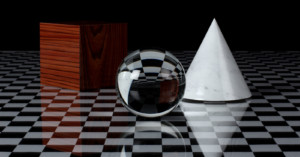
These days, more and more of what you think are real photos are actually CGI renderings. But have you seen "CGI renderings" that are actually real photos?
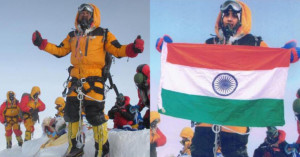
An Indian couple has been banned from climbing mountains in Nepal for 10 years after authorities concluded that they had faked a historic ascent of Mount Everest by Photoshopping other people's photos.
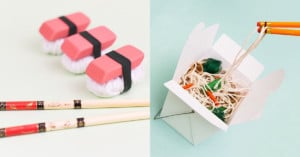
Kristina Lechner of Kalamazoo, Michigan, is a fake-food photographer (not to be confused with a fake food-photographer). Her project Food Not Food is a series of tasty photos in which everything in the frame is something inedible that was found around the house.
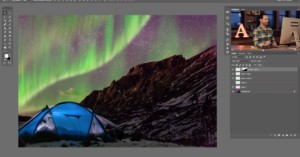
Seeing and photographing the Aurora Borealis is pretty high on many a photographer's wish list, but if you don't live in the arctic circle (or don't have the budget to get there), then capturing this amazing display may have to wait a while. In the meantime, let the folks at Phlearn show you how to fake the Northern Lights using Photoshop.
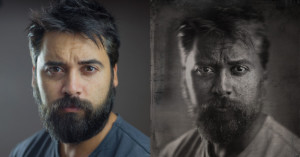
Love the look of wet plate collodion photographs? Did you know you can give any digital photo that same look using Photoshop? It's a technique that can be learned in about 10 minutes.
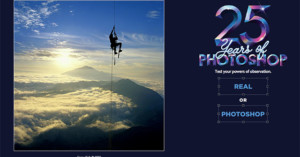
When Adobe celebrated Photoshop's 25th birthday back in February, one thing that flew under our radar was a fun little "Real or Photoshop" test that Adobe put up on its website.
The site shows you 25 images, and your task is to figure out whether each one is an actual photograph or a faked picture that resulted from photo manipulation. Some are pretty obvious, while others may cause you to scratch your head.
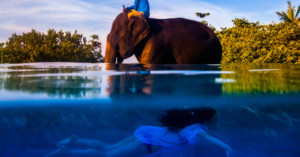
I made this photograph a while back for a private client in Phuket, Thailand, who owned a stunning vacation home that she designed herself. She was drawn to my editorial style in my commercial work and she wanted me to take that approach for a series of lifestyle images at her home.
We spoke on the phone to prepare for the shoot, and she threw out the idea of hiring an elephant. I thought she was joking at first but when I realized she wasn’t, I jumped at the opportunity, I mean... how often do you get to have an elephant as a model at your disposal? (More on disposal later).

For the past couple of years, photographer Navid Baraty has been experimenting with the idea of creating photographs of the universe without having to leave his home... and without having to point a camera up at the sky. His WANDER Space Probe series of images may resemble photos captured by NASA using its Hubble telescope camera, but the photos were actually created by putting ordinary kitchen items on an Epson flatbed scanner.
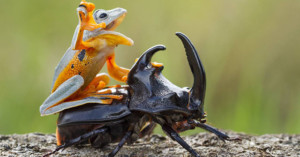
Photos of a frog riding a beetle have been flooding the Internet over the past month. Think it looks cute and adorable? Reactions to the series of photos have been split between blind praise and outrage over the authenticity of the photo-story and welfare of the subjects. So, did this scene really occur naturally as claimed? We don't think so, and here's why.
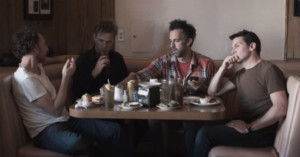
The band Guster recently released this video version of their entire album Evermotion.
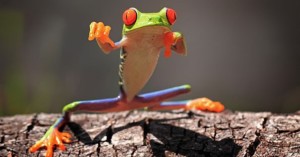
Photographs like the one above by photographer Shikhei Goh go viral on a fairly regular basis. If the stories are to be believed, given enough patience and a little (or a lot) bit of luck, animals can be captured doing all sorts of amazing things.
According to an analysis published on Weibo, however, the stories can't (or rather shouldn't) be believed. Photos like these, the article claims, are staged by photographers who force pet store animals into awkward and unnatural poses.

Think the above photo is showing a violent protest in the Middle East? Think again. The photo is in fact a screen grab from a video showing just how easily news photos of a 'violent protest' could be staged.
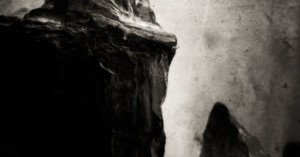
Flip through photographer Michael Jackson's "A Child's Landscape" series, and you'll find what appear to be vintage photographs of rocky coastlines that were captured with some old photographic process over a century ago. The images are actually modern photographs captured quite recently in Jackson's studio using rocks in a fish tank.
Full disclosure: I've never done commercial photography and don't exactly know what goes into making a picture for an advertisement. The only knowledge I have on this subject is the hours of behind the scenes work I’ve watched, the hundreds of magazines, blogs and tutorials I’ve read and, obviously, the billions of ads that have bombarded my field of view since the first moment I began to comprehend visual information.
When you’re in the process of building a photographic portfolio, you think long and hard about what type of photographer you'd like to be. I’ve read over and over that it's important to choose a specific area of the business in order to obtain the type of clients you're looking for. Before I began this research, I was under the impression that I wanted to be a commercial photographer.
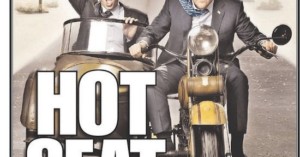
NBC recently received some criticism for distributing the above photo of Jay Leno and Jimmy Fallon to several news outlets -- some of which used it on their front page -- without disclosing that the background and road in the image were fake. Being an entertainment outlet, however, they were granted a pass; the fakery was obvious and it was the news outlet's job to figure it out and disclose it to their readers.
But one particular newspaper has drawn more fire than the rest. The New York Daily News was one of the papers that used the photo on their front page, but on top of not disclosing the initial fakery, they further 'shopped the photo and kept that part to themselves as well.
Want to create a long exposure photo but don’t have a camera that can keep its shutter open for …
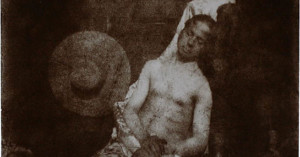
The mid-1800s was a busy time for photographic firsts. In 1838, daguerreotype inventor Louis Daguerre captured the first ever photo of a human being. One year later, in 1839, photograph pioneer Robert Cornelius stepped in front of his camera and created the first self-portrait. 1840 held yet another interesting development: the first hoax photograph.
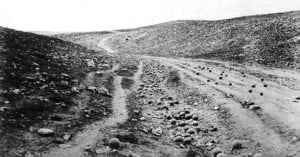
You might recognize the photograph above. Titled Valley Of The Shadow Of Death and snapped by British photographer Roger Fenton in 1855, it's considered to be one of the oldest known photographs of warfare. Problem is, it might also be one of the oldest known examples of a staged photograph.
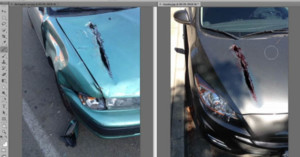
Earlier this year, we wrote about a new company called Fourandsix (pronounced "forensics"), a collaboration between a former Photoshop product manager and a professor who's an expert in digital forensics. The goal of the new startup was to build powerful tools that would make detecting digital photo manipulation easy. Well, the first Fourandsix product is now available.
Called FourMatch, it's an extension for Photoshop CS5/CS6 that "instantly distinguishes unmodified digital camera files from those that may have been edited."
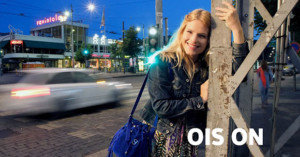
Nokia has already confessed and apologized for faking the optical image stabilization sample footage in a new promo video for its Lumia 920 phone. In case you weren't sure: yes, the sample still photographs in the video were faked as well.
Designer Youssef Sarhan did some investigative work after the story initially broke, and came to the conclusion that the images were almost certainly taken with a camera other than the Lumia 920.