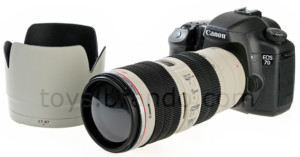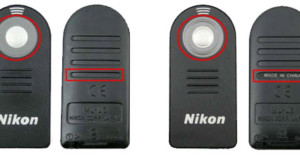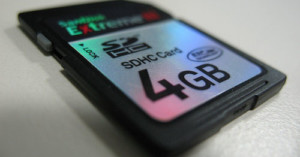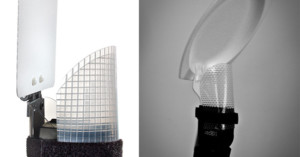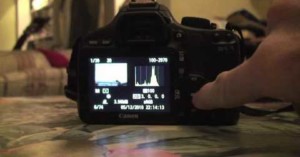
One sad truth about the photo industry is that there’s a ton of counterfeit products floating around, and unless you buy directly from a reputable source, it can be difficult to know for sure whether you’re getting the real thing. Last month we posted on how up to 1/3 of memory cards labeled “SanDisk” are actually counterfeit. Over on Nikon’s website, there’s a support page that shows photographs of counterfeit Nikon accessories next to genuine ones, with many of them almost indistinguishable from each other. Some of the counterfeit products are so real-looking that the only difference is a slightly different screw, or a slightly brighter logo. Read more…
Did you know that a third of the SanDisk memory cards being used on Earth are actually fake? A SanDisk engineer recently shared this startling fact with a reader over at The Online Photographer:
[...] at any given time, approximately a third of the SanDisk memory cards (made by Toshiba) being used out there in the world are counterfeit. As in, not SanDisk memory cards at all—some other kind of cards dressed up as lookalikes.
Thirty percent, was the number quoted. A third, more or less.
To make sure you’re getting the real thing, always purchase your memory cards from reputable dealers. Read more…
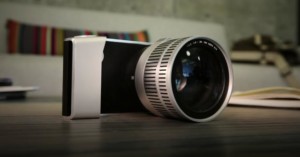
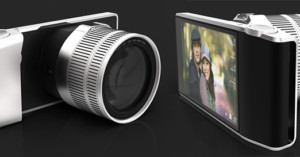
We covered the WVIL (wireless viewfinder interchangeable lens) concept camera at the beginning of the year when the design team behind it released a fake video of it being showed off at CES 2011. The above video is another neat glimpse at the supposedly patent-pending design, which puts all the camera functions in the lens itself, leaving the camera body to function as a wireless display and control panel. What do you think of the idea?
Sure this might be an April Fool’s joke, but it’s also a pretty interesting concept demo. Perhaps this is a glimpse of how we might be operating cameras in the future.
We’re pleased to announced today that Eastman Kodak has agreed to acquire PetaPixel. Editorial control and content on this blog will not be affected, though, as part of the deal, Kodak-related press releases will be published along with our usual content. Kodak is attempting to diversify into photography markets outside the ones it has traditionally focused on, and we’re honored to join them in boosting their share of the photography blog market. Terms of the deal will not be announced, but inquiries may be directed to petapixel@kodak.com.
Here’s an interesting snippet from an article published today by David Pogue of the New York Times that describes a trick one photographer uses to overcome the megapixel myth:
A few years back, one of his clients, a stock-photo company, rejected his submissions because they didn’t meet the company’s minimum-resolution requirements. All photos had to be, for example, 10 megapixels or higher.
Tom knew that his five-megapixel photos (or whatever they were) would print perfectly well; he knew that the megapixel myth was at play. But he couldn’t convince the stock agency that its megapixel requirement was based on mythology.
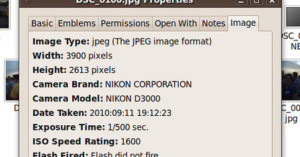
So he took a photo file from a buddy who owned a fancy high-end Canon SLR, pasted in his low-res photo, and dragged it out bigger, so that it filled the full area of the higher-resolution photo. (Why did he start with his buddy’s file? So that the metadata—the invisible information about the photographic settings embedded in every digital photo—would indicate to the stock agency that the picture was taken with that high-end camera.)
Not only was the stock agency fooled, but to this day, many of its customers have used Tom’s phony high-megapixel photos in professional publications. They’ve all been delighted by the quality.
It would be interesting to find out how widespread this kind of fakery is in the photo industry.
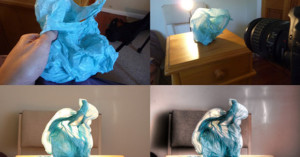
In his series “Elastic” photographer Edi Yang shows that you can fake smoke photography by shooting plastic bags a certain way. What you need is a strong backlight and some post-processing mojo. Read more…
You’ve probably heard of EVIL cameras already, but how about WVIL? The Wireless Viewfinder Interchangeable Lens is a concept camera design by Seattle-based design firm Artefactgroup. What’s novel about the design is that the imaging sensor is situated in the back of the lens rather than in the camera body, allowing the lens to be detached and used apart from the body wirelessly. Read more…
Last week one of the big stories in the world of photography was that Kuwait had banned the use of DSLR cameras in public places. The story originated with an article in the Kuwait Times, and was then widely reported by publications ranging from The Guardian to Amateur Photographer. People were in disbelief that a country would take such an unreasonable stance against a particular camera technology while leaving others legal (e.g. mobile phones, compact cameras, etc…). Turns out the whole thing was a big hoax. Read more…