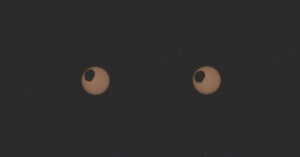
NASA Captures Martian Eclipse That Looks Like a Pair of Googly Eyes
The Mars Perseverance Rover captured an eclipse last week from the surface of Mars as a moon passed in front of the Sun.
The Mars Perseverance Rover captured an eclipse last week from the surface of Mars as a moon passed in front of the Sun.
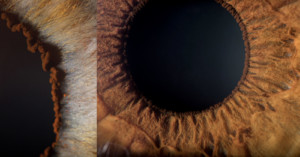
A photographer battled to get these extreme close-up photos of eyes that look like an otherworldly landscape.
Compound eyes are a common feature in many insects and for years their vision has been treated as very different from that of mammals. A new study, however, may have found that human eyes might be more like an insect's than previously believed.
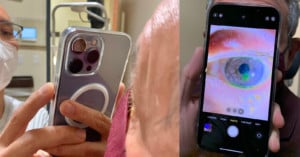
Doctor Tommy Korn recently went viral for showing how he uses the new iPhone 13 Pro macro camera capabilities to document the eyes of his patients. In an interview, he explains why he chooses to do it this way rather than use a "real" camera.
The American Museum of Natural History has published a helpful video that explains how the human brain processes color and shines a light on the importance of color accuracy in technology.
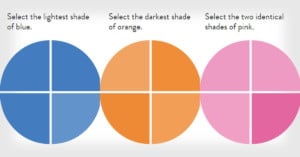
How do you think your perception of color stacks up against the general public? If you're a photographer, have your eyes been trained to perceive color better than the average person? Here's a short and sweet test that can help you find out.
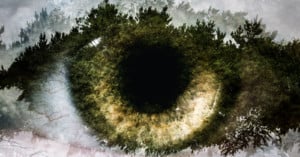
"Eyes" is a collection of multiple exposure photos by Leeds, UK-based photographer Ben Dauré. What's impressive about the surreal photos of human eyes is that they were created entirely in-camera rather than with Photoshop.
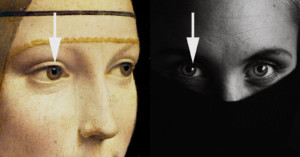
Want to shoot powerful portraits? One of the keys to doing so is focusing on your subject's eyes. This 2.5-minute video by Light Club is an inspiring look into this critical facet of portraiture.
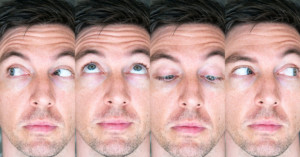
Sight is very important to me. It’s one of my senses that I don’t think I could ever do without. A musician might fear going deaf, but I could live with that. I’d rather not have to but if it came down to losing my hearing or losing my vision, I’d take being deaf. That’s just me.
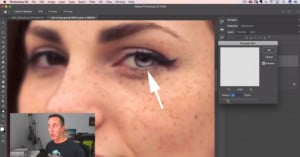
Photographer and retouching expert Matt Kloskowski made this 14-minute video that introduces on technique for adding life back into a portrait subject's eyes using Photoshop.
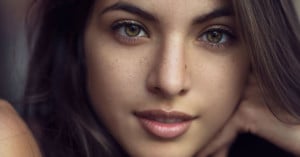
Retouching eyes unnaturally is a great way to ruin a good portrait. Here's a 14-minute tutorial by photographer Dani Diamond that shows how you can easily retouch eyes with a natural look using Photoshop.
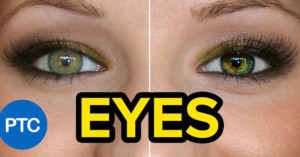
Here's an in-depth 28-minute tutorial from the Photoshop Training Channel that will show you how to enhance and create amazing eyes in portrait photos using Photoshop.
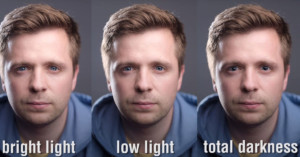
Here's something not everyone thinks about: the intensity of light that you shoot your portraits in doesn't just affect the exposure, but it also affects the pupil size of your model.
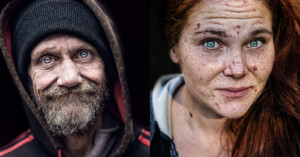
I had just moved to the pretty, but constantly rainy, Portland, Oregon, and the weather was getting to me! After going through a hard period of homesickness and mild depression, following a friend’s advice, I got my very first DSLR camera. I liked the idea of registering anything I wanted, and by anything I mean everything: landscape, objects, wild life (as wild as downtown Portland can get!), you name it…
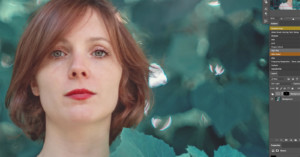
There's a simple way to make your subject's eyes pop in a portrait, and it doesn't involve touching vibrance, saturation, luminosity, or any other color-based edit. In fact, you can make the full edit in 30 seconds.
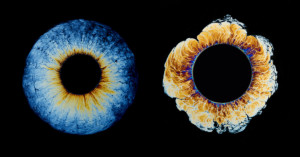
Photographer and artist Fabian Oefner is known for his creative work with paint, oil, and even petrol. He's a master of finding beauty in chemistry, and capturing that beauty through his camera lens. Oil Spill, his most recent project, is no exception.
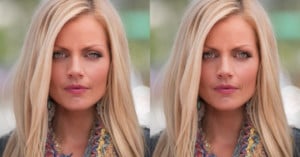
Here's a quick how-to that will probably come in handy sometime down the road for every portrait photographer. Have you ever shot a portrait where one of your subject's eyes was partially closed and it made everything look strange and uneven? Scott Kelby shows you how to fix it in Photoshop.

Here's an unusual wedding photography slideshow by Peter Adams-Shawn of Memories of Tomorrow Photography. Titled "Eyescapes," each photo shows a scene at the wedding that was captured as a reflection in a guest's eyeball.
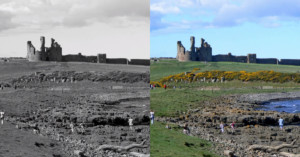
Did you know that your brain can be tricked into seeing a black-and-white photo in full color? The 1-minute BBC clip above shows an example of this, and you can try it out for yourself.
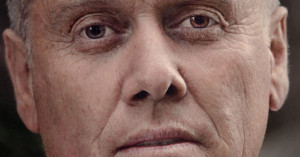
It is said that eyes are the windows to our souls and when focusing in on a portrait, we do our best to make sure they are razor sharp. With a bit of help from Photoshop, we can take the beauty of the eyes a step further. Today, we will be examining a method that I have personally used over the last few years to truly make eyes pop and give them another dimension of depth.

Did you know that some creatures can actually see the world in long exposures? Scientists recently discovered that cockroaches are the latest insect found to have that feature built into their eyes and brains. It allows the resilient little bugs to see in near-pitch black environments.
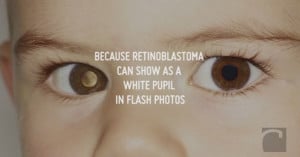
A new ad campaign in the UK is using interactive posters to inform parents that they can easily check their child for eye cancer using flash photography.
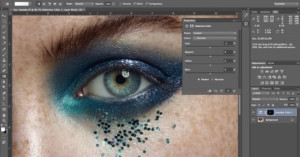
They say the devil's in the details, and one of the most crucial details of any portrait is the eyes. You want to make sure that the eyes in your portraits are always looking the absolute best without somehow coming off as fake or enhanced.
Here to help us do just that with a new tutorial that focuses, for once, on the white of the eyes, is retouching expert Michael Woloszynowicz.
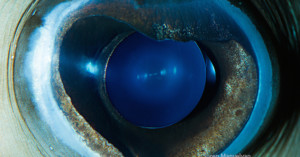
Photographer Suren Manvelyan is back with more of the types of images that he's made his name capturing. Namely: intense macro photographs of the strange shapes and landscapes found in animals' eyes.
In 2011 we shared part one, in 2013 part two, and now we get to share part three: a fishy exploration into the eyes of animals that spend much or all of their time underwater... and an owlet.
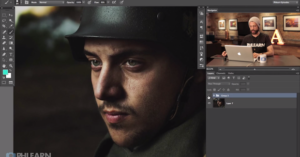
One of our favorite Photoshop tutorial websites, Phlearn, yesterday put out a tutorial that is both incredibly useful and a bit scary. Useful because making eyes pop in post is probably one of the most sought after Photoshop skills. Scary because this kind of manipulation is a slippery slope that could lead to photographers getting lazy and using the "fix it in post" excuse... so proceed with caution.
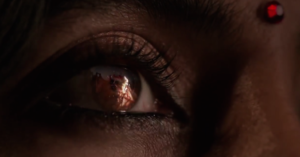
Nothing like starting hump day off with some visual inspiration, and this promo video, released by Canon Australia earlier this week, certainly fits the bill.
Put together as part of the company's #whatdoyousee campaign, the video is made up entirely of reflections in people's eyes that answer the campaign question, "What do you see?"
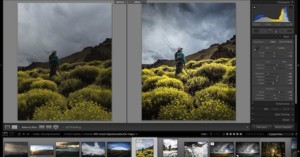
If you're worried that spending hours upon hours staring at a computer post-processing thousands of photos will damage your eyeballs, rest assured: it won't. And the video above by the folks at DNews explains why that is.
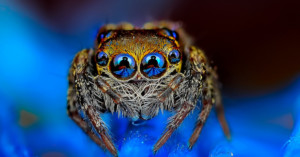
Macro photographs of insects are nothing new; and yet, Malaysian Jimmy Kong's photographs of spiders staring straight at the camera are immediately captivating and at least a tiny bit terrifying.

Sometimes the best thing you can do to improve your photography is leave your camera at home.
Yes, practice is imperative if you want to improve. You do need to learn to work your camera instinctively and make a mastery of the technical aspects needed to create beautiful images.
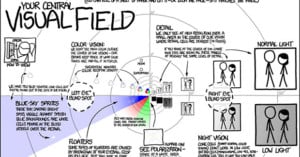
Randall Munroe over at XKCD posted this …

One tip that instructors often pass onto the beginning photographers is to use their …
Want to see how your eyes stack up against other photographers when it comes to seeing colors? Try your …
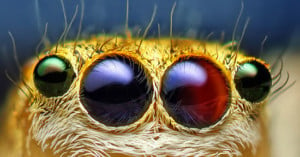
In a paper published in Science this week, Japanese researchers reported on a discovery that jumping spiders use a method for gauging distance called "image defocus", which no other living organism is known to use. Rather than use focusing and stereoscopic vision like humans or head-wobbling motion parallax like birds, the spiders have two green-detecting layers in their eyes -- one in focus and one not. By comparing the two, the spiders can determine the distance from objects. Scientists discovered that bathing spiders in pure red light "breaks" their distance measuring ability.

Here’s something that’ll blow your mind (sorry that it’s an ad): stare at the colored dots on this girl’s …
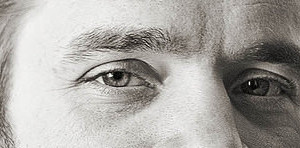
Here’s a quick and simple tip for better portraits by Reddit user rmx_: …

Photographer Daniel Fox captured this beautiful (and spooky) photograph of dozens of pairs …
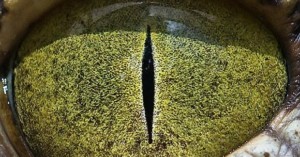
After seeing his close-up photographs of human eyes become enormously popular last year, photographer Suren Manvelyan turned to a more difficult subject: animals. He somehow managed to create a series of photographs showing the stunning eyes of animals ranging from crocodiles to horses.
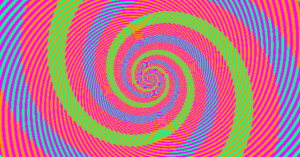
We’ve shared a couple stories in the past month on how human eyes are very subjective and …
What if in the future, the human eye itself could be turned into a camera by simply reading and recording the data that it sends to the brain? As crazy as it sounds, researchers have already accomplished this at a very basic level.

Here’s a short inspirational video featuring Canadian photographer Jeff Wall in which he …