
Image of Full Moon Through a Rock Formation Looks Like a Giant Eye
A photographer created a stunning image of full Moon through a rock formation in Utah so it appears like a giant eye.
A photographer created a stunning image of full Moon through a rock formation in Utah so it appears like a giant eye.
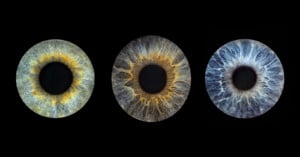
A photographer in Florida has fulfilled her dream and has launched a photo studio with one specific purpose: to capture macro shots of customers' eyes.
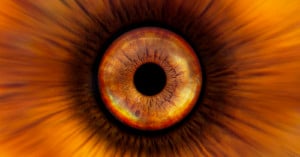
The world of macro photography is full of fascinating subjects, but eyes and irises have got to be among the most mesmerizing ones. As with most captivating subjects, capturing it can be quite a challenge.
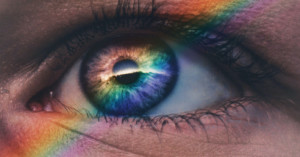
A team of scientists at the Hong Kong University of Science and Technology have developed an artificial eye that could someday help cure blindness or even enhance human vision. For now, their creation boasts just 100-pixel resolution, but the groundwork has been laid.
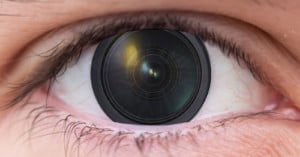
Scientists have revealed a new futuristic robotic contact lens that's essentially an advanced zoom lens for the human eye. It can be zoomed and controlled by blinking and looking around.
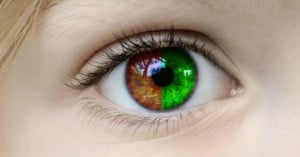
Most mammals rely on scent rather than sight. Look at a dog’s eyes, for example: they’re usually on the sides of its face, not close together and forward-facing like ours. Having eyes on the side is good for creating a broad field of vision, but bad for depth perception and accurately judging distances in front.

Pau Buscató is a street photographer who has a knack for capturing playful moments in which subjects and scenes come together in curious ways for brief moments of time. Many of his pictures are illusions that may cause you to stare a little longer to understand what it is you're actually seeing.
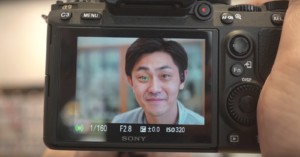
Sony claims the a9 is an autofocus tracking monster—its 693-point AF system performing 60 AF/AE calculations every second. But that's not limited to regular subject tracking; as this demo video shows, the eye-tracking AF has been significantly improved as well.

Do you have the feeling that, nowadays, almost everyone is taking photos? Not even that long ago, photography was much more exclusive.
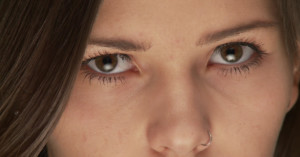
If the eyes are the widows of the soul, then the right catch light can throw those metaphorical windows wide open, revealing your portrait subject in profound and powerful ways.

As a wedding photographer it’s imperative that you provide images that your couples will love, but it's equally necessary to stay inspired and shoot for yourself. Wedding photographers must advance in their skill year on year, grow and produce stunning images that couples will book you for.
When looking to improve, many photographers turn to workshops -- there are hundreds out there for wedding photographers. Many seem to be provided solely to earn a quick buck for the teacher.
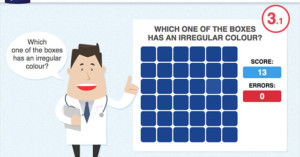
Most of you have probably spent a considerable amount of time staring at the colors of photos in programs like Photoshop, but how good are your eyes at discerning colors? iGame's Eye Test is a simple online test that will assess the quality of your color perception through a simple game format.
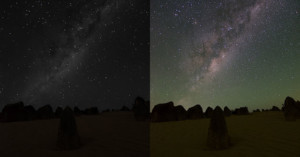
The Internet is teeming with photographs and videos of the starry night sky that dazzle the eyes and tickle the imagination, but have you ever wondered how the imagery compares to what photographer's naked eye actually saw while the camera was taking a picture?
Photographer inefekt69 recently decided to answer that question by creating the photos above. On the left is what the human eye could see in the dark, outdoor field, and on the right is the photo he shared online.

Steve Perry of Backcountry Gallery offers this short Photoshop tutorial on how you …
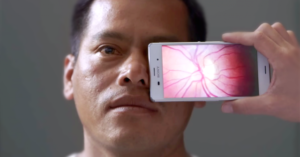
Smartphones have revolutionized the way we go about our everyday lives. And while more often than not they’re used for more trivial tasks, there are times where their ubiquity and decreasing costs play a vital role in far more meaningful endeavors.
One such case is Peek Retina, a smartphone camera adapter and accompanying app that enables anyone with the know-how to perform an extensive eye exam on anyone... anywhere. The humanitarian potential is obvious.
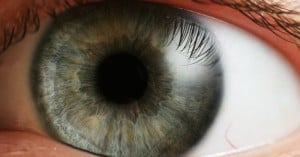
Update: Since we published this, a reader and retinal neuroscientist wrote up a rebuttal, explaining why this couldn't possibly work in humans. Click here to read his full explanation.
Mind = Blown. A camera sensor might fall short of the human eye in a lot of respects, but one area where it exceeds it is infrared. The sensor can see it (sometimes with a little bit of help), but humans can't... or can they?
A crowd-funded experiment maintains that they can, given a little bit of dietary help. And they just got their first positive results, successfully extending human vision to 950nm!

Released in an article earlier today, what you see above is the first photograph taken with Sony's revolutionary curved sensor. And while you can't really tell much about the quality or any other specifics about the sensor from it, it's still exciting to see that this tech isn't just schematics on a piece of paper -- it's real and it works.
What is the resolution of the human eye? You might think it's a straight forward question with a straight forward answer. We have a certain number of photon collecting cells in our retina much like an image sensor right? So we should be able to pull a 'megapixel' count of sorts out of there.
Well, actually, it's not nearly that simple. And in the video above, video blogger Michael Stevens (aka. Vsauce) explains why, before ultimately answering the question anyway.
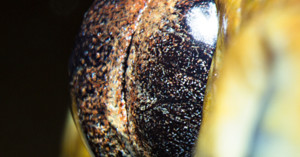
They say beauty is in the eye of the beholder, but in the case of Suren Manvelyan's macro photography, it's just in the eye. After his extreme close-up photos of both human and animal eyes went viral one right after the other, Manvelyan decided to continue seeking out more beauty in the eyes of animals by releasing a part two to the amazing series we shared with you back in 2011.

Has someone ever asked you why you like an image? Beneath the surface of great picture, there is a geometric design in hiding. During World War II, photographer Alfred Eisenstaedt worked for the early version of the Associated Press and went on to become a Life Magazine photographer, taking over fifty cover shots for them. Without getting too deep into Eisenstaedt’s personal story, I will say that he started photography with very little formal training.
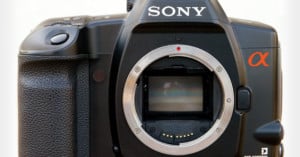
Want to focus your camera simply by looking at a particular area of the viewfinder? If you're a Sony shooter, you might be enjoying that feature as early as next year. The company is reportedly working on building Eye Tracking autofocus into its cameras, with the initial version arriving in a flagship camera sometime in 2014.
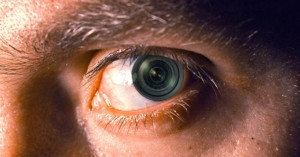
This article started after I followed an online discussion about whether a 35mm or a 50mm lens on a full frame camera gives the equivalent field of view to normal human vision. This particular discussion immediately delved into the optical physics of the eye as a camera and lens -- an understandable comparison since the eye consists of a front element (the cornea), an aperture ring (the iris and pupil), a lens, and a sensor (the retina).
Despite all the impressive mathematics thrown back and forth regarding the optical physics of the eyeball, the discussion didn’t quite seem to make sense logically, so I did a lot of reading of my own on the topic.

Using the human eye to control cameras isn't a new idea -- Canon used to offer eye-controlled focusing in its SLRs -- but designer Mimi Zou's Iris concept camera takes the concept one step further by having the camera be entirely controlled by the eye. Shaped like a lens, the photographer uses the camera by simply looking through it. Focusing, zooming, and snapping photos are done by looking, narrowing/widening the eyes, and blinking (respectively).
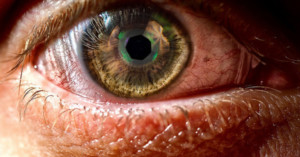
Ever wonder what the f-number of your eyes are? It can easily be calculated using …
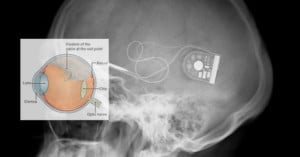
Image sensors and the advent of digital imaging have been met with differing reactions from the photographical community. But what a team of doctors at the Oxford Eye Hospital have managed to do with the technology is 100% digital, and 100% amazing. Clinical trial leaders Robert MacLaren and Tim Jackson have helped two blind men to partially see again.
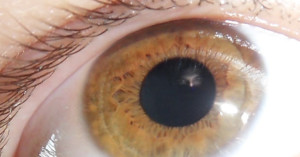
After taking a macro photograph of his own eye using a Samsung WB500 compact camera, …

You may have heard that digital cameras can be made sensitive to infrared light by removing the IR filter found inside, but did you now that something similar can be done with the human eye? People who have aphakia, or the absence of the lens on the eye, have reported the ability to see ultraviolet wavelengths. Claude Monet was one such person.

Want to see how your eyes stack up against other photographers when it comes to seeing colors? Try your …
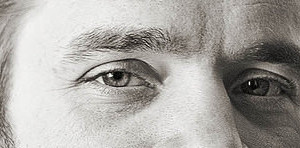
Here’s a quick and simple tip for better portraits by Reddit user rmx_: …
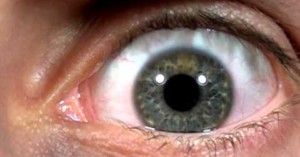
Here’s a slow motion video showing a closeup look at the human eye, our amazing biological lens (and sensor).

You might want to skip this post if you’re squeamish. A filmmaker named Rob Spence has successfully become a …
San Franciscan Tanya Vlach lost her left eye in a car accident back …