Fujifilm claims that the sensor in its new X-Pro1 mirrorless camera system beats DSLR sensors (both crop and full frame) in resolution and signal/noise ratio. To give salivating photographers a taste of the camera’s image quality, the company has released 9 full-resolution JPEG images shot at different settings and focal lengths. The photo above was captured at ISO 1600 (check out the full-res here). They also provide a glimpse into the camera’s film simulation mode, as each one was shot in either Velvia or Provia mode.
At CES the company also announced that they’ll be releasing a lens adapter for the camera that will make it compatible with Leica M-mount lenses as well as old Fujinon lenses.
(via 1001 Noisy Cameras)

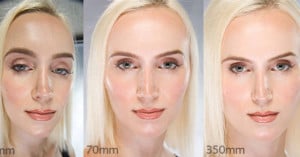
You’ve probably heard before that focal lengths between 85mm and 135mm produce the best head shots because they provide a desirable perspective in head shots, but how much of a different does the focal length actually make? Photographer Stephen Eastwood decided to find out, shooting 10 portraits of the same subject with focal lengths ranging from 19mm to 350mm.
Lens Distortion (via Orms Connect)
Image credits: Photographs by Stephen Eastwood
This short film, titled “Mobius”, is one of the short films Canon screened at last night’s Hollywood announcement for the EOS C300 and concept cinema DSLR. It was made by Vincent Laforet, who was also selected to test the Canon 5D Mark II and Canon 1D Mark IV.
Read more…

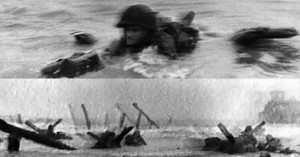
Still think Adobe’s Image Deblurring technology is fake? Check out this before-and-after comparison showing what the feature does to one of the most famous camera-shake photos in history: Robert Capa’s D-Day photograph of an American soldier landing on Omaha Beach.
Read more…

One of huge benefits of shooting in RAW is that RAW files usually have considerably more dynamic range than a JPG. This means that details in the shadows and highlights of an image that would otherwise be lost if shooting JPG are stored in the RAW file, and able to be recovered if needed during post-processing. Reddit user Jake Kelly shot the photo on the left of his friends in a dark movie theater, severely underexposing the image but avoiding hand-shake with a shutter speed of 1/60. A quick adjustment in Lightroom helped him recover a ton of detail that definitely wouldn’t be possible had he been shooting in JPG (try taking the JPG on the left and getting the result on the right).
For a more in-depth look at this topic, you should read the “Dynamic Range & Exposure Compensation” section of the RAW tutorial over on Cambridge in Colour.
(via Reddit)
Image credits: Photographs by Jake Kelly and used with permission