-
Clayton Cubitt · May 22, 2013
-

We photographers deal in things which are continually vanishing, and when they have vanished there is no contrivance on earth which can make them come back again. We cannot develop and print a memory.

– Henri Cartier-Bresson
We exist on a treadmill of forgetting and anticipating. We labor to preserve what we treasure of our past, even while the present shotguns us with a thousand new options, one of which must become our future. One of which we must choose.
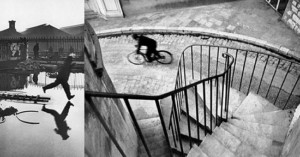
In this maelstrom of time it is hard to be calm; to understand what warrants attention, and what can be ignored. This state of tranquility and presence has been the essence of the modern photographic act, best characterized in the popular mind by Cartier-Bresson’s concept of the “Decisive Moment.”
Read more…
-
Andrew Waits · Jan 28, 2013
-

Capitol Hill 60 Minute Photo closed its doors at the end of last year. Given the transformation photography has gone through over the past decade, it hardly came as a surprise. At its core, the success, survival, and eventual demise of 60 Minute Photo is just another familiar story of a business fighting against the moving current of technology. It’s closure, however, reveals something important, something personal. It represents a shift in how we create and preserve our memories and a deepening of the divide between customer and proprietor.
Read more…
-
Simone Anne Lang · Jun 14, 2012
-

I used to care. In fact, I used to care a lot. It’s actually sort of embarrassing, in retrospect, how much it mattered to me.
Read more…

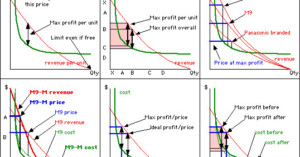
Have you ever wondered how Leica chooses its pricing for its high-end cameras? J Shin has written up a great post over at Leica Rumors that offers a geeky and lengthy explanation of the economics behind the company’s pricing decisions:
Every time there is any kind of a product-related announcement here and elsewhere, there are a number of invariable comments complaining about and/or defending Leica’s price strategy. In making these comments, people make references to various economic and noneconomic reasons why Leicas are priced the way they are. This essay is an attempt to show that, basically, almost everybody is right, at least when it comes to Leica’s profit motives. Rather than nefarious greed, devious psychological warfare, and, as some often mention, Dr. Kaufmann’s ignorance of Leica fandom, Leica prices are basically a function of mathematical inevitability.
The Mystery of Leica Pricing Explained [Leica Rumors]

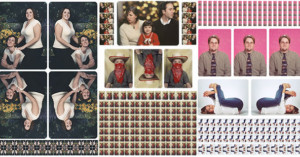
Hyperallergic has published an essay about a project titled Free Sitting done by artist Nora Herting, who got a job as a photographer at a JC Penny portrait studio for the project. Here’s the essay’s description of the project:
The portrait serves a testament to the subjects’ prosperity and personal relations, and yet, despite the time and care people take when having their pictures taken at commercial studios, the resulting photographs are rarely considered aesthetic objects. They are documentation. Herting’s work questions what, exactly, we are documenting in this benign, constructed way.
The studio-portrait experience has a structured set of parameters that form a stylistic equation. When participating in this process we become blind to its constructs. Artists disrupt and violate codes and, in doing so, bring them to our attention. Herting breaks the rules of the studio portrait, and the resulting photographs no longer fulfill their role as social symbols. Images programmed to be evidence of happiness or prosperity become painful, ugly or embarrasing, possibly revealing something unseen before.
If you can wrap your mind around this, please leave a comment with your translation or interpretation.
An Artist Goes Undercover at a JC Penney Portrait Studio (via MetaFilter via Nerdcore)
Image credits: Photographs by Nora Herting

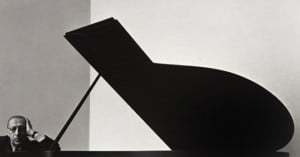
Design director Wayne Ford has written up a great piece on the career of American photographer Arnold Newman, who was in the vanguard of the “environmental portrait” movement that emerged in the early 1940s.
By this point, [Alexey] Brodovitch — the indirect teacher — was very aware of the young photographers work and his growing reputation, and began assigning him regular portrait commissions for Harper’s Bazaar. One of these assignments was to photograph the Russian composer, Igor Stravinsky, which resulted in one of Newman’s most iconic images, although at the time it was rejected for publication. ‘Sometimes, as with his famous image of Stravinsky, he would have to recreate a natural habitat artificially,’ remarks Huxley-Parlour, ‘so he expressed his essence by placing him at a grand piano in an editor’s apartment,’ creating a strong, hard, linear composition, ‘very much like Stravinsky’s music.’
Arnold Newman and the development of the ‘environmental portrait’ (via A Photo Editor)
Image credit: Photograph by Arnold Newman

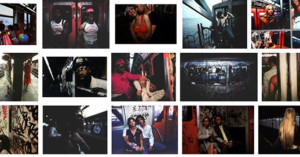
Back in the spring of 1980, Magnum photographer Bruce Davidson began to photograph the subway system in NYC for his project titled Subway. NYRBlog has published an interesting essay — an excerpt from the introduction of Davidson’s book — in which the photographer talks about his experience:
To prepare myself for the subway, I started a crash diet, a military fitness exercise program, and early every morning I jogged in the park. I knew I would need to train like an athlete to be physically able to carry my heavy camera equipment around in the subway for hours every day. Also, I thought that if anything was going to happen to me down there I wanted to be in good shape, or at least to believe that I was. Each morning I carefully packed my cameras, lenses, strobe light, filters, and accessories in a small, canvas camera bag. In my green safari jacket with its large pockets, I placed my police and subway passes, a few rolls of film, a subway map, a notebook, and a small, white, gold-trimmed wedding album containing pictures of people I’d already photographed in the subway. In my pants pocket I carried quarters for the people in the subway asking for money, change for the phone, and several tokens. I also carried a key case with additional identification and a few dollars tucked inside, a whistle, and a small Swiss Army knife that gave me a little added confidence. I had a clean handkerchief and a few Band-Aids in case I found myself bleeding.
It’s an interesting glimpse into the mind of a photographer who takes his work very seriously.
Train of Thought: On the ‘Subway’ Photographs (via kottke.org)

Photo editor Michael Davis on why clichés win photo contests:
I think one of the dynamics at play is that work that was recognized in the past triggers interest in similar work in the present. In other words, we have this library of images in our minds and when we see images that are similar to the images that we think are great, there’s an association, a connection that is positive. These are derivative images. But instead of being a negative aspect, these images get elevated, often to the highest awards and often without realizing we’re just awarding what worked in the past.
That’s the nature of the cliché: I’m photographing a subject that was deemed good in the past, therefore the photo I make today will also be good. As a judge, the perspective is: This type of photo has been recognized in the past, therefore we should recognize it today.
His advice for photographers looking to break free of subjects that have been beaten shot to death? Do the hard work of researching prior work, and think about breaking new ground in either the subject, story, or storytelling method.
If clichés are so bad, why do they win contests? [Michael Davis]
Image credit: Cliche by Tom Newby Photography

Rodney Smith of The End Starts Here has written an interesting piece on the topic of smiling, and argues that smiling is a “false sentiment” that separates a casual photograph from a portrait:
The truth is no portrait of substance has people smiling. Look at the history of painting, Rembrandt, Titian, Goya, Velasquez, Sargent, Vermeer, DaVinci, etc., the subjects gaze to the viewer is neutral at best, neither inviting nor forbidding. It is there for the viewer to see and feel.
Smiling is like much of American popular culture, superficial and misleading. It is part of our vernacular, but it should be expunged in photographs.
You can find some famous portrait paintings made throughout history here. Virtually all of them support this argument.
Smile (via A Photo Editor)

Photographer Rodney Smith writes that the greatest gift possessed by still photographers is under attack like never before:
So dear photographers, others before you fought hard and long to give you a gift. And although everyone from corporations, to magazines, to art buyers try desperately to take it away from you, I implore you not to give it away.
Most of you are young and feel the need to work, and feel powerless against larger forces. You do not realize that when you get older, having the rights to your own work will be the best gift you have as a still photographer. It will help you when you need it most.
[...] The pressure is on. The economy is awful and people will grab what they can get away with. I implore you to stay strong and fight hard for what many other photographers, over the last 50 years, have fought hard to give you; the right to own and control your own work.
What Is A Picture Worth? (via APhotoEditor)
Image credit: Nimoy Present Toss 2009 by Wild Spirit Wolf Sanctuary Wolves