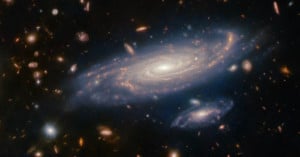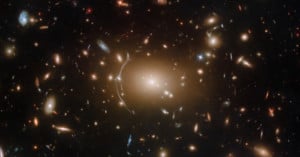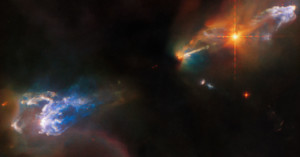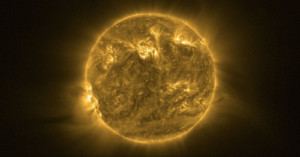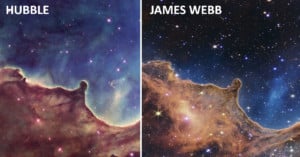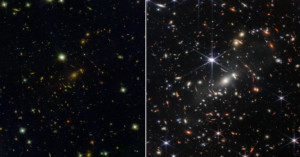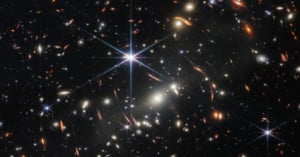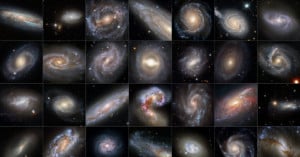
The space agencies that run the Hubble Space Telescope may have some of the most powerful photographic equipment at their disposal, but every now and then they can still use a little help from amateur astrophotographers.
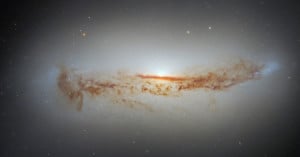
Amateur astrophotographer Robert Gendler created the beautiful photograph above showing the spiral galaxy M106 by compositing existing imagery captured by the Hubble telescope with his own photos captured from Earth.
Read more…

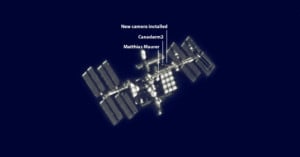
Astronaut photographers on the International Space Station have been beaming quite a few photographs of Earth as of late, but have you ever wondered how they manage capture relatively sharp photographs of Earth’s cities at night?
The speed at which the ISS hurtles around our planet is indeed a major challenge for low-light photography, and astronauts in the past have tried to overcome it by using high-speed film or by doing some manual tracking (which is very hit-and-miss). Luckily, space shooters nowadays have a new special tool up their sleeve: the NightPod.
Read more…

Over the past decade, photographer Michael Benson has worked as a self-assigned curator of the past 50 years of NASA’s interplanetary space exploration photography. His big idea is that the images produced during this period form an important chapter in the history of photography, so he wants to select and repackage images in a way that can appreciated by the general public. After browsing through massive numbers of RAW photos shot by space agencies, Benson composites and colorizes them into gorgeous wide-angle views showing what the locations would look like if the viewer were standing where the probe was.
Read more…

A 268-megapixel sensor might suffice for photographing the stars through a telescope, but apparently a sensor many times more powerful is needed for photographing alien planets from space. The European Space Agency has just finished building the largest camera ever to be used in space: a camera over three feet wide with a gigapixel sensor composed of 106 separate CCD sensors. Just to give you an idea of how powerful the camera is: it will be able to measure the width of a strand of hair from over 600 miles away, and the thumbnail of someone standing on the moon.
Read more…