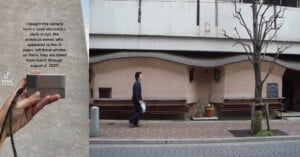
Photographer Finds Street Images of Japan on Used $25 NYC Camera
A photographer discovered beautiful street photos of Japan on a used $25 digital camera that she bought in New York City.
A photographer discovered beautiful street photos of Japan on a used $25 digital camera that she bought in New York City.
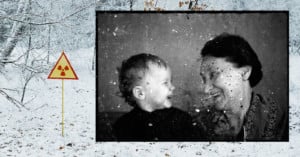
Ukrainian photographer Maxim Dondyuk has been collecting and archiving photos and negatives that he has found in the Chernobyl exclusion area for the last six years. He has rescued around 15,000 artifacts, which include films, photos, postcards, and letters, but with the Russian invasion of Ukraine, he has been forced to put his Untitled Project from Chernobyl on hold.
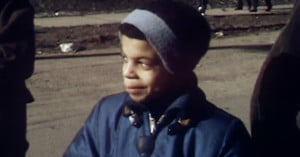
Rare footage of the late and legendary American singer-songwriter Prince giving a news interview as a then-unknown 11-year-old child has been discovered in the archives of a Minnesota news station.
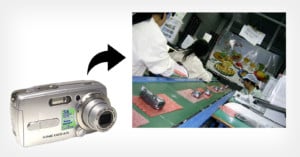
Back in 2008, I was in the Middle East in the military. I wasn't permitted to have my mobile phone in that location at the time, so I took a relatively cheap digital camera and used it to capture reams of unique photos.

As part of a 2021 North Atlantic Stepping Stones expedition, what is called a potentially "unknown" or "undescribed" red jellyfish in the genus Poralia was captured on camera. The disk-shaped red jellyfish was found floating nearly 2,300 feet below the surface.
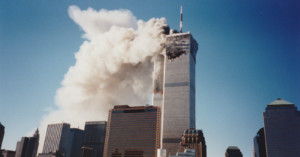
A few years ago, a man named Liam Enea got his hands on a photo album from his late relative. Inside, he was surprised to discover a trove of never-before-seen photos captured during the infamous September 11th terrorist attacks on the World Trade Centers in 2001.
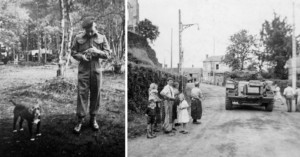
I met a man who owned a ton of his uncle's photos he took during his time in World War II. The images by Kenneth McKenzie start in Vancouver and Banff where they did their training, then all across Europe.
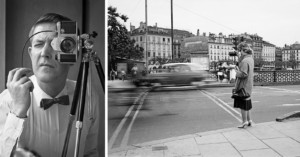
Back in 2014, photography enthusiast Dylan Scalet inherited a sizable collection of photos shot by his grandfather, Jack Sharp. It wasn't until the COVID-19 lockdown that he began digitizing the film, and in doing so, Scalet discovered that he had a treasure trove of beautiful (and previously unseen) street photos showing life in Europe over half a century ago.

In the spring of 2016, film student Victor Galusca was exploring a sleepy village in his native Moldova when the 23-year-old noticed some photographic negatives in the rubble of an abandoned house.
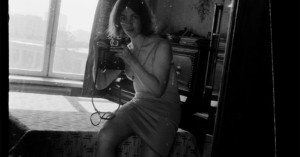
80 photographs shot by Masha Ivashintsova that are on display from December 4 in Tallinn, Estonia. The retrospective is the first of its kind since Asya Ivashintsova-Melkumyan stumbled on 30,000 forgotten photographs taken by her mother that capture a poetic outsider's view of life in the Soviet Union.
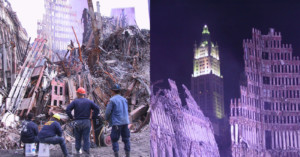
A giant archive of 2,400 never-before-seen 9/11 photos have been discovered on a set of CDs purchased at an estate sale. The images show workers in the wreckage of the World Trade Center towers after the September 11th, 2001, attacks in New York City.
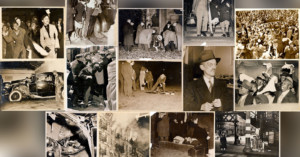
Back in 1970, artist David Young purchased a box of old news photos at a Philadelphia thrift store. After moving to Seattle, Young put the box in his kitchen cabinet and forgot about it for years. It turns out that box contains unseen 1930s crime photos by the famed New York City photographer Weegee.
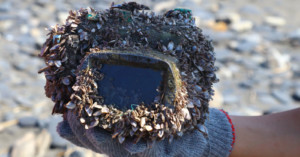
An amazing story of one camera's incredible journey has emerged over in Asia. The Canon camera was lost at sea for over two years before it was recently discovered, and the owner has just been found thanks to the photos within.
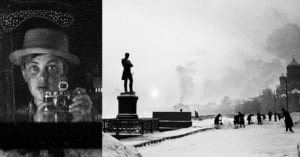
She was Leningrad's lost photographer. Russian photographer Masha Ivashintsova (1942-2000) photographed constantly but never showed her work to anyone. In late 2017, a relative stumbled on boxes of negatives and undeveloped film gathering dust in an attic. Published here, some for the first time, are some of the 30,000 images from the remarkable discovery.
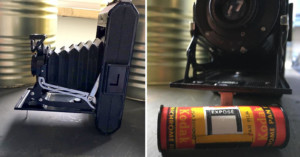
Photographer Martijn van Oers of the Netherlands recently visited a thrift store and came across an original Zeiss Ikon 520/2 folding camera, which was produced in Germany between 1929 and 1937. To his surprise, the camera contained a roll of exposed film in it.
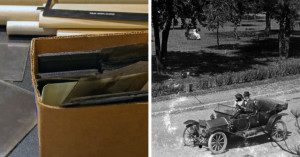
Over in Peoria, Illinois, a box of nearly 200 glass negatives from the late 1800s and early 1900s has been found in the corner of the attic in a condemned house.
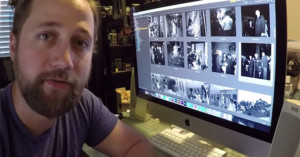
Photographer Levi Bettwieser has been doing some incredible work as the founder and film technician behind The Rescued Film Project. Back in January he made headlines around the world after finding 31 rolls of undeveloped film that was shot by a World War II soldier. Now he's made another fascinating discovery: after developing an unprocessed roll of orphaned film from California, Bettwieser found never-before-seen photos of former US President Dwight D. Eisenhower.
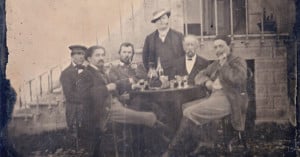
This group photo from 1887 is reportedly the first photo ever found of Vincent Van Gogh after he became an artist. If experts are correct, then the man third from the left (and smoking a pipe) is the legendary artist himself.
Peter Fordham was a British photographer best-known for his music work in the 1970s. If you own a copy of John Lennon’s ‘Imagine’, his second solo album, you’ll be familiar with his work. Fordham was the photographer who took the picture of Lennon, sat at his white piano with a pair of headphones on, at Lennon’s Tittenhurst Park home where the 1971 album was recorded. It’s a classic of rock music photography, Lennon singing into a hard black mic set against a stark white room, and was included as a fold-out poster in the album.
About 6 months ago, I put an ad on Craigslist trying to sell a 2x12 guitar cabinet. The next day I got a response from a nice guy named PJ who was interested and the transaction was soon under way.
While at my house to pick up the equipment, PJ noticed my Canon 7D and various other camera gear sitting on my desk. He then proceeded to tell me that he too was a photographer and that he used to take a lot of photos of bands on the East Coast in the mid 70s early 80s.
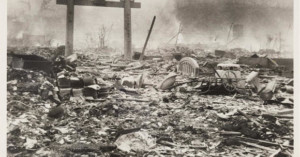
This week, 24 incredible, powerful, haunting photographs will be going up on the auction block at Bonhams in New York. These are photographs that are newly-discovered, and many of them have never been seen before as they were taken with a faulty camera and never made it in front of the public eye.
They are photographs of Nagasaki, Japan, taken by celebrated Japanese military photographer Yosuke Yamahata the day after an atomic bomb was dropped on it and Hiroshima.
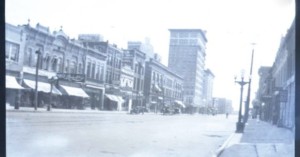
Almost a year to date after the digging up and opening of Oklahoma City's Century Chest, researchers are getting a rare glimpse at early 20th century Oklahoma City thanks to the help of a Kodak Vest Pocket Camera and eight negatives found in "pristine condition" buried inside the time capsule.
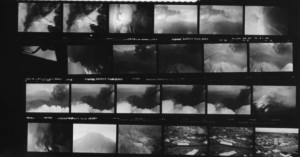
In the Spring of 1980, just a few weeks before the infamous Mount St. Helens eruption that would take his life along with 56 others, photojournalist Reid Blackburn captured the volcano as it looked before it exploded.
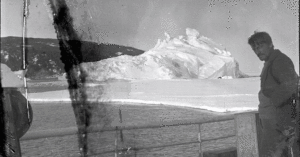
Almost one hundred years after a group of explorers set out across the frozen landscape of Antarctica to set up supply depots for famed explorer Sir Ernest Shackleton, a box of 22 never-before-seen exposed but unprocessed negatives taken by the group's photographer has been unearthed in one of those shacks, preserved in a block of ice.
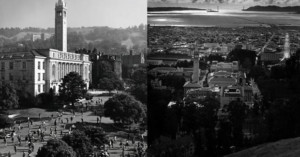
UC Berkeley's library system is the fourth largest library in the United States, so it's no wonder that treasures are often forgotten and buried inside the rare collections. Case in point: a massive collection of signed prints by Ansel Adams have been discovered in one of the 32 libraries, just sitting around in a box.
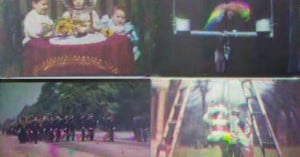
The world's first color moving pictures have been discovered, dating back to 1902. The film sat forgotten in an old metal tin for 110 years before being found recently by Michael Harvey, the Curator of Cinematography at the National Media Museum in England. The pictures were part of a test reel of early color experiments by an Edwardian inventor named Edward Raymond Turner, and show Turners children, soldiers marching, domesticated birds, and even a girl on a swing set.
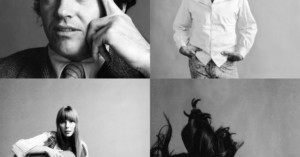
Jack Robinson was a quiet man who mostly kept to himself, which explains why it was his boss, Dan Oppenheimer, who was left to take care of his estate when he passed. Little did Oppenheimer realize, however, that when he opened the closet in Jack Robinson's incredibly tidy apartment, he would find a collection of pristine portraits of celebrities that Robinson shot in his early days as a commercial photographer for Vogue.

The private photographs on your phone might not be as private as you think. Earlier this week, the …
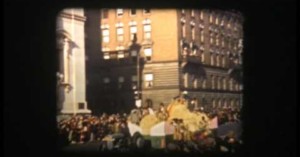
Here’s some interesting color footage showing the Macy’s Thanksgiving Day Parade in 1939.
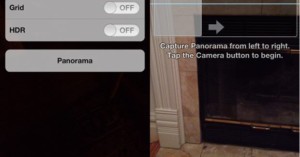
Developer Conrad Kramer was poking around in iOS 5 when he stumbled upon …

On a rainy day recently, light painting photographer Jeremy Jackson was …
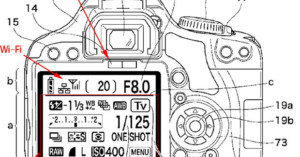
We may be close to seeing a Canon DSLR with an articulating touchscreen — and possibly even built-in Wi-Fi.
The 4th version of Android, named Ice Cream Sandwich, is set to be released sometime in the next month …
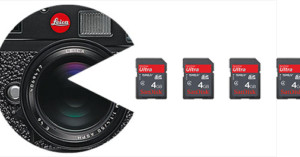
Back in August, it came to light that some of Leica's $7,000 M9 cameras had a problem in which they would corrupt the SD card being used -- a problem that caused one photographer to permanently lose work after a day of shooting.
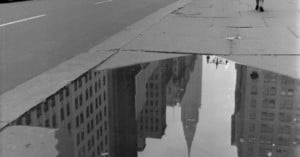
Frank Oscar Larson was an auditor living in Queens back in the 1950s who had a passion for street photography. Every weekend he would travel around the city armed with his Rolleiflex camera, photographing the things that caught his eye. After Larson died of a stroke at the age of 68 in 1964, his photographs quietly sat in a cardboard box for 45 years before finally being discovered by his son's widow in 2009. They offer a beautiful look into what life in NYC was like half a century ago.
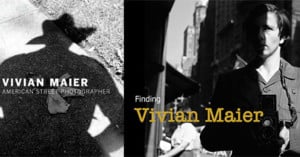
One of the big stories in the photo world last year was when a set of glass negatives purchased for $45 at a garage sale were found to potentially be Ansel Adams photos worth an estimated $200 million. Unfortunately for the finder, the photos were most likely not Ansel's, and ensuing lawsuits prevented him from making a huge profit from the find. Real estate agent John Maloof, on the other hand, could end up making a fortune from his discovery of previously-unknown nanny and street photographer Vivian Maier.
A huge story last year was when a painter named Rick Norsigian came across 65 glass negatives at a garage sale, purchasing them for $45. He then had them examined by experts, who told him that they were previously undiscovered Ansel Adams photographs worth at least $200 million. Just as the find was being heralded as one of the greatest in art history, Ansel Adams' relatives and Publishing Rights Trust expressed skepticism that they were in fact Adams'. It then came to light that the photos might actually belong to a man named Earl Brooks who once lived in the same city as Norsigian (Fresno, California).
Todd Bieber was skiing in Brooklyn’s Prospect Park after the recent blizzards when …
In 2007, 26-year-old real estate agent John Maloof purchased a box filled with 30,000 negatives from an estate sale for $400. After being stunned by the quality of the street photographs, Maloof began digging and discovered that they were created by a nanny and street photographer named Vivian Maier.