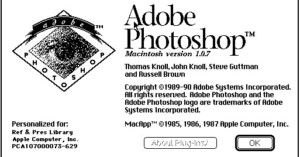
Every time you launch Photoshop, you’re greeted momentarily with a splash screen showing a cloud of names that give credit to the people who have worked on the program. This “Behind the Splash Screen” video introduces you to some of the people whose names are found there, and provides some background on how Photoshop CS5 was developed (as well as the huge challenges they faced). Read more…
Here’s some nerdy news: Israeli facial recognition startup Face.com has just opened up its API, allowing developers to integrate its facial recognition technology in third-party websites and applications. Since launching a year ago, the company has scanned more than 7 billion photos and tagged more than 52 million faces through its Photo Finder and Photo Tagger applications on Facebook.
Now, the technology is no longer limited to Facebook, as any third-party developer can integrate facial recognition into their own apps. The API uses a REST-like interface similar to Twitter’s API, and takes in URLs to photos.
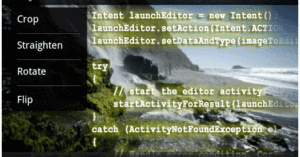
Adobe has just announced that the Photoshop.com Mobile application is now available to third-party developers to integrate into their own applications.
[...] take for example a “sell-your-home-fast” application that allowed you to upload pictures and descriptions of your home to some web site that will advertise your home to millions of people all over the planet. Now imagine that this “sell-your-home-fast” application allowed you to not only snap and upload pictures – but also edit those pictures so that your home looks its very, very best. Well now that scenario is possible – all the “sell-your-home-fast” developer needs to do is use standard Android APIs to incorporate the Photoshop.com Mobile editor into their application.
By doing this, Adobe is trying to assert its software as the de facto standard for mobile image editing, allowing it to have a bigger control over things like interoperability and file types. It’s a lesson well learned from Adobe Acrobat and the PDF.