Posts Tagged ‘debate’

Is HDR Acceptable in Photojournalism?

Is HDR Acceptable in Photojournalism? wapost mini

The Washington Post raised some eyebrows last Friday after running an uber-saturated front page photo with the caption stating that it was “a composite created by taking several photos and combining them with computer software to transcend the visual limitations of standard photography.” After emailing the photo editor, Poynter learned that the image was simply an HDR photograph. While it’s a pretty common technique these days, some believe that it has no place in photojournalism,

Sean Elliot, president of the National Press Photographers Association, said, “HDR is not appropriate for documentary photojournalism.” The organization’s code of ethics say photographers should respect the integrity of the digital moment, “and in that light an HDR photo is no different from any other digital manipulation.”

“By using HDR,” he told me by email, “The Washington Post has combined different moments, and thereby created an image that does not exist. The aircraft visible in the final product was not there for all the other moments combined into the final, and that alone simply raises too many questions about the factual validity of the actual published image.” [#]

What complicates matters is that many new cameras (e.g. Nikon D4, Apple iPhone 4S) offer HDR features that create single images from multiple exposures in the camera. The Washington Post published a response to the controversy yesterday. Do you think HDR is an appropriate technique for photojournalists to use?

(via The Washington Post via Poynter)


Image credits: Screenshot from The Washington Post, and photograph by Bill O’Leary

Shocking: North Korea Doctored Photo of Kim Jong-il’s Funeral

Shocking: North Korea Doctored Photo of Kim Jong ils Funeral doctored1 mini

News photo agencies EPA, AFP, and Reuters have all issued kill orders for a photo of Kim Jong-il’s funeral procession released by the Korean Central News Agency, the state news agency of North Korea. The photo (above at bottom) raised red flags after a comparison with a Kyodo News photo taken just seconds earlier revealed that a number of people had vanished from the scene. The New York Times writes,

A side-by-side comparison of the full images does point to a possibly banal explanation: totalitarian aesthetics. With the men straggling around the sidelines, a certain martial perfection is lost. Without the men, the tight black bands of the crowd on either side look railroad straight.

Perhaps it was a simple matter of one person gilding the lily.

Read more…

Reuters Photograph of Rebel Firing RPG Accused of Being Fake

Update: Erin from Reuters contacted us informing us that this is in fact a genuine, non-manipulated photograph. Here’s a good explanation of why it’s real.


Reuters Photograph of Rebel Firing RPG Accused of Being Fake reutersrpg

Reuters published the above image as an Editor’s Choice photo yesterday, and almost immediately readers began leaving comments questioning whether the photograph was Photoshopped. The debate soon spread to other websites, including Reddit, and it appears that the photographs has since been taken down (though it can still be seen in its original slideshow from last week).
Read more…

Would Photography Greats Still be Great in Our Time?

Would Photography Greats Still be Great in Our Time? 70458366 7a26052091 o

Have you ever wondered whether hall of fame athletes from decades ago would still find success if the played their sports today? How about the same question, but applied to photographers? Would the historical greats of photography be brilliant across all ages, or were they simply pioneers and ahead of the curve in their generation? If they were just starting out today, which of the famous photographers throughout history do you think would still become renowned in the present day, and which wouldn’t?

Threat Level Advisory for the Question “Is Photography Over?”

In April of last year, the San Francisco Museum of Modern Art held a two day summit on the topic of “Is Photography Over?“. The panel discussions from the summit featured some pretty notable names from the industry, and generated quite a bit of discussion once they were shared online. In response, Conscientious editor Jörg Colberg made this humorous tongue-in-cheek video introducing a new color coded threat level advisory system as a quick and easy way of staying up to date with how over photography is.

(via Duckrabbit)

Quantity Over Quality: Photojournalism Going the Microstock Way?

Quantity Over Quality: Photojournalism Going the Microstock Way? eapg mini

The rise of microstock and the fact that anyone with a camera can sell cheap photos has done a lot to devalue stock photography, but is the same thing happening to the photojournalism industry? Paul Melcher says that the industry is headed in that direction:

Forget the photo agency as an agent of talented photojournalists. The key now is to have a lot of contributors worldwide and hope that one will be at the right place at the right time. With photographers everywhere chances you will get the right image at the right time will increase, like buying a lot of lottery tickets.
In the film age, the cost of film, processing, shipment was too prohibitive. Now, you can receive and store million of images for a buck or two.

[...] Thus, taking a queue from the microstock model, photojournalism is now switching to the volume based model. While profitable for a photo agency, it is devastating for photojournalism and photographers themselves.

The story is the same: as technology makes photography and the distribution of photographs easier to do, the buyers of photographs win and the producers of photographs lose.

Volume based photojournalism (via The Click)


Image credit: Everyone is a photographer. by andrew.chau

If a Kid Grabs Your Camera and Snaps a Photo, Who Owns the Copyright?

If a Kid Grabs Your Camera and Snaps a Photo, Who Owns the Copyright? stranger mini

If a stranger suddenly grabs your camera and takes a photograph, who owns the copyright to that photograph? Photographer Mirjam Letsch writes,

Walking in an Indian bazaar, my Nikon dangling on my shoulder, this boy quickly clicked five times. I really liked the creative result when I later saw these images! Don’t know who owns the copyright though!

This might seem like a pretty farfetched example, but what about a case where you carefully set up and compose a fine art photograph, then for some reason ask a stranger to press the shutter for you?

In just five clicks! (via Techdirt)

Photos, Copyrights, and the “Mechanical Representation of Facts”

Photos, Copyrights, and the Mechanical Representation of Facts lachavsrhianna

The debate over David LaChapelle copyright infringement lawsuit against Rhianna rages on — lawyer John William Nelson has written an article on why copyright should extend only to the literal copying of a photograph and not the elements within the photo:

A photograph is a mechanical representation of facts. This is unlike a painting, which is a non-mechanical representation of something—be it facts, such as an attempt to paint an outdoor scene or create a portrait of someone, or imagination in the form of how the artist sees the world, such as the Vincent van Gogh’s Starry Night painting. Paintings, therefore, are pure expressions of ideas or facts. Photographs, however, are mechanical expressions of facts.

[...] extending copyright protection beyond the mechanical copying of a photograph (i.e., scanning it and sending it to all your friends) is extending copyrights in photographs too far. The expression of a photograph cannot be separated from its factual reproduction of actual events. Attempting to do so leads to absurd results.

Therefore, a bright-line rule should reserve copyright protection in photographs only for the reproduction of those photographs. Copyright protection should not extend to the elements within the photographs themselves—doing so results in copyrighting facts, which is beyond the scope of copyright law.

It’s a pretty length piece, but well worth a read. What’s your opinion on this issue? Should the elements within a photograph be covered by copyright protection?

Photography Copyright, Rihanna, And Why We Need a Bright-line Rule (via Techdirt)

Truth, Lies and Deception in Photography

Truth, Lies and Deception in Photography nose mini

The debate regarding what makes a photograph “truthful” or not is probably as old as the art of photography itself. By sheer coincidence, there were a couple interesting articles published today on this issue, and written from two different points-of-view.
Read more…

That Explains It: Canon vs. Nikon Debate Linked to Self-Esteem

That Explains It: Canon vs. Nikon Debate Linked to Self Esteem faceoff

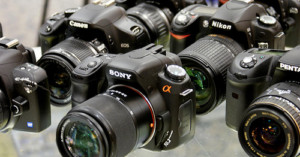
Ever wonder why certain people always seem to engage in meaningless Canon vs Nikon vs et al. camera brand debates at every opportunity? A recent study conducted at the University of Illinois has found that the more knowledge and experience you have with a particular brand, the stronger your self-esteem is tied to it. Ars Technica writes,

Those who had high self-brand connections (SBC)—that is, those who follow, research, or simply like a certain brand—were the ones whose self esteem suffered the most when their brands didn’t do well or were criticized. Those with low SBC remained virtually unaffected on a personal level.

The residual effect of this is that those with high SBCs tend to discount negative news about their favorite brands, and sometimes even ignore it altogether in favor of happier thoughts.

So that’s why feathers are so easily ruffled when camera brands are bashed…

(via Boing Boing)


Image credit: Canon Vs Nikon Faceoff by Rakesh Ashok