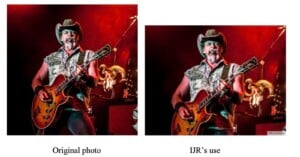
Photographer Wins Copyright Lawsuit After Website Used His Creative Commons Image
A photographer has emerged victorious after suing a website for using his Creative Commons image without the proper credit.
A photographer has emerged victorious after suing a website for using his Creative Commons image without the proper credit.
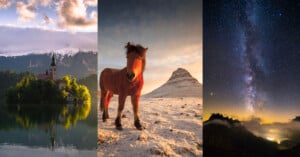
A photographer who has traveled the world taking beautiful photographs for the last 20 years has taken the unusual step of making all of his photos freely available to download.
In a win for photo accessibility, Flickr will expand its partnership with Wikimedia Commons to upgrade its Flirckr2Commons tool and make uploading Creative Commons-licensed images easier.
Flickr has updated its community guidelines to combat "copyleft trolling." As described by Cory Doctorow on Pluralistic, this is excellent news for people that use Creative Commons (CC) images from Flickr, even if they make accidental attribution errors.
SmugMug and Flickr (which was acquired by SmugMug in 2018) have announced a new nonprofit organization called the Flickr Foundation, whose mission is to help keep "billions of historic and culturally significant photographs safe, sound, and accessible for future generations."
A student website received a letter demanding thousands of dollars for a copyright infringement after using a Creative Commons image.

A photographer has accused the popular American media organization TED of requesting that he list a photo as Creative Commons with attribution and then failing to abide by those copyright rules.
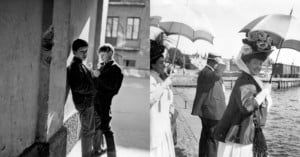
The Finnish capital city of Helsinki is the country's central hub of politics, education, finance, and culture. If you'd like a window into the history of the city, check out Helsinkiphotos.fi -- it's an online database of over 65,000 free photos that anyone can view and use.
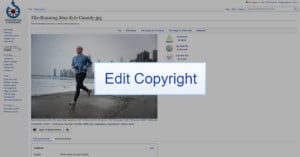
Heads up, photographers (and content publishers): scammers are apparently now changing the copyright ownership data on Wikipedia photographs in order to trick people who use the photos legally.
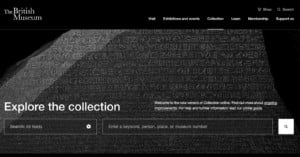
Earlier this week, the British Museum made nearly 2 million high-resolution photographs and images of artifacts within their collection available to the public, allowing you to download and use the images under the Creative Commons BY-NC-SA 4.0 license.
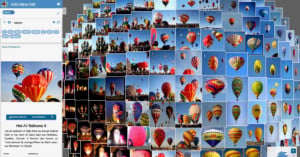
Wikimedia Commons has millions of public domain and freely-licensed photos available to the world, and now there's a powerful new tool that helps you dive into the ocean of imagery for exploring or locating exactly what you're looking for. It's called wikiview, and it's a graph-based visual image navigator.
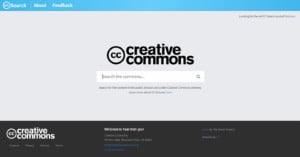
Creative Commons just launched CC Search, a search engine for CC images that has been in beta testing for years as it was being developed and polished. It's a portal to over 300 million CC images from 19 different collections.
Flickr will begin deleting photos of accounts over the 1,000 file limit starting on March 12th, but the photo-sharing service has just announced two changes to its policy: spared from deletion will be all Creative Commons photos and the accounts of deceased members.
Flickr announced a controversial decision this month to limit free accounts to 1,000 photos and delete extra existing photos of users who are already over the limit. Many people immediately wondered whether countless Creative Commons photos would be trashed. Today, Flickr reassured the photo community by promising that CC photos aren't going anywhere.
500px just shut down its Marketplace stock photo platform in favor of selling photos directly through Getty Images and VCG, as the company announced a month ago. And as part of the major change, 500px has wiped out over 1 million of the Creative Commons photos photographers had uploaded to the service.
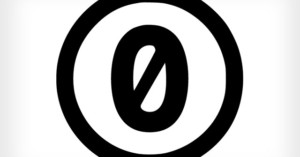
Here's something that you should be aware of if you use Behance to share your photography portfolio online: the "No Use At All" symbol used by Behance is the same well-known one used by Creative Commons for "No Rights Reserved." In other words, with a casual glance, it may look like your work is in the public domain and completely free for everyone to use however they'd like.
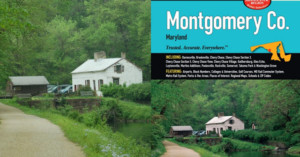
Photographers, be warned: if you share a photo online with a Creative Commons license that allows for commercial usage, you need to be okay with if that actually happens. A photographer named Art Dragulis just learned that lesson by losing a copyright infringement lawsuit.
Finding the perfect photograph to use can be a challenge. Most photographers seek to copyright their work giving them the exclusive rights to its use and distribution. When you simply want to use a photo for a school presentation or your personal blog, navigating the legal landscape can be a nightmare. Luckily, the folks over at Creative Commons have created an Android app to allow you to find quickly and request images that you can legally use.
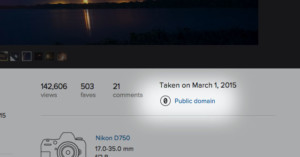
Last week SpaceX posted its photos to Flickr and released them to the public domain. Unfortunately for the company, Flickr didn't have any public domain designation they could use, so even though SpaceX founder Elon Musk said the photos were public domain, the images were shared under a Creative Commons license that required attribution.
That has now changed. Flickr announced yesterday that it has created two new options for members in the copyright dropdown panel: public domain and CC0, which allows users to release content to the public domain.
Flickr is apologizing for its decision to sell Creative Commons photos as wall art. The images have been pulled, and all sales made with CC photos will be refunded.

Flickr -- a site that sometimes seems like the punching bag of the photo community -- is again taking heat from photographers, this time over their recent announcement that people can select from millions of Creative Commons-licensed photographs to buy as wall art.
The photos are being sold for profit, but none of that profit will go to the photographers who took the shots, and some of these photographers are speaking up about what they see as an injustice.
A little over a month ago, Yahoo! revealed Flickr Wall Art, a service that lets you turn your images into beautiful prints to hang... well... wherever you want them. Today, they're kicking that service up a notch by removing that pesky need for these photos to be yours.
No, you can't steal other people's photos and use them, but Flickr is opening up its entire Creative Commons library and some hand-selected collections from its licensed artists for your wall-hanging pleasure.
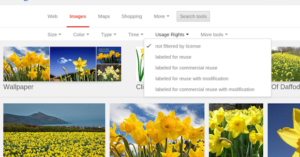
In a move that will be popular with many bloggers and, perhaps, less popular with many photographers, Google …
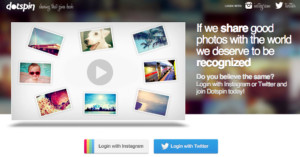
There's a brand new service in town that's looking to help out those photographers who choose to share their images for free with the online community. Powered by Creative Commons, the new website Dotspin uses a hashtag and voting system to determine a photo's quality and give the photographer a chance to earn credits towards rewards such as restaurant gift cards.
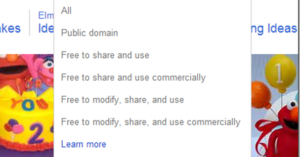
As the saying goes: "better late than never." In a move that puts Bing on par with the likes of Google's and Yahoo's image search engines, Microsoft's search giant has just added licensing refinements to its image searching capabilities as well.

Unsplash is a new Tumblr creation by the folks over at ooompf that allows photographers to share a set of images for free (in exchange for exposure, we assume) while simultaneously allowing those in need of high-quality imagery a place to find it.
If you're interested in donating your images to the public at large, Wikimedia Commons just made it that much easier. For a while now, their online media archive has brought together a huge library of free-to-use content under one roof; and because images uploaded to Commons must be licensed as public domain, GFDL, CC attribution, or CC attribution/share alike, everything is free to use and/or share.
Now Commons is releasing a new app (formerly only available in beta) that will allow users to upload photos to the Commons archive right from their phone and, it's their hope, encourage more people to contribute "high quality educational photos."
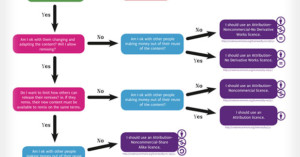
Creative Commons is a non-profit organization founded in 2001 that, over the years, has released a set of licenses that enable creative types to share their work with others. The content creator allows others to use their work, just as long as the users follow the guidelines set forth in that particular license. It's a "some rights reserved" system rather than an "all rights reserved system."
In the photographic community, some aren't fond of CC licensing while others are downright prolific about it. But if you're looking to license some of your content in this way, this useful infographic put together by CC Australia will help you navigate the common licensing combinations.

One of the benefits of the digital age is widespread access to archives that might otherwise never be seen by more than a few people. A good example is The New York Department of Records' database of over 870,000 photos of NYC, and a new case in point is PhotosNormandie.
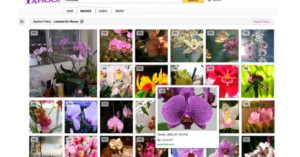
We're used to Google frequently improving things on its end -- most recently adding pan and zoom to Google+ -- but a constantly improving Yahoo! is a fairly new thing.
After numerous improvements to Flickr and a new Flickr app, Yahoo! has turned its photographic eye on Yahoo! Image Search. From here on out, you'll be able to search all of Flickr's creative commons images straight from Yahoo!
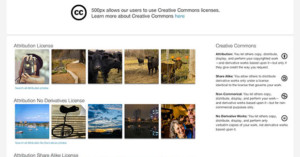
Creative Commons licensing is becoming a common option on major photo and video sharing services -- Flickr and YouTube, for example -- but it's not something that 500px offered -- until now. The fast-growing Flickr rival is now onboard with flexible copyright agreements, rolling out Creative Commons licensing options for all of its users yesterday.
Flickr's Creative Commons licensing options allows its users to grant licenses that allow creators to make use of the photographs under a set of terms (e.g. attribution, non-commercial). Most photo sharing services have yet to bake Creative Commons licenses into their websites, but starting today, Instagram users can now release their photos under CC -- albeit through a third-party solution.
It's called I Am CC, and is a project started by LocalWiki founder Philip Neustrom that aims to "make the world a better, more creative place."
Typical photo books and resource books for photographers come printed and bound, which is not a bad thing. Digital as our photography has become, displaying it, or teaching people how to replicate it, are two areas in which ink on paper still rule. Dan Nguyen's The Bastards Book of Photography, however, breaks these rules, and in the process becomes both a great resource for beginners, and a re-think on book distribution and creation.
David Shankbone (real name David Miller) has been called "arguably the most influential new media photojournalist in the world." And if you've never heard of him you may wonder: How did he achieve such a status? How did he get his work published by The New Yorker, Vanity Fair and Forbest all while his actual day job isn't even as a photographer? He did it all by giving away his photography for free.
Here’s a great 6-minute video in which PBS Off Book examines the impact three Internet phenomena — …
Could allowing the use of your photos for free actually be a way to increase income? Portrait photographer Jonathan Worth -- the man behind Coventry University's free photo courses -- used to send take-down notices to any website that shared his work without permission. Then he met author Cory Doctorow, a proponent of Creative Commons licensing, who suggested that he try giving away his work for free. Worth then made a high-res photo freely available online and quickly sold 111 signed prints, netting him £800 (~$1,270).
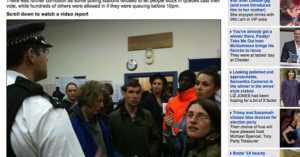
Earlier this month, the Daily Mail published some photos taken at a Dalston …
ImageStamper is an online tool that acts as …