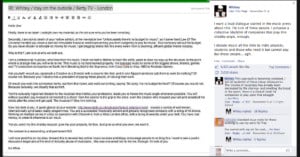
This comment posted (and deleted) by Reddit user WonkoTheLucid shows why photographers need to make sure their websites are secured properly:
My friends wedding photos were posted with watermarks on a photo reprint site for sale. The prices were a bit outrageous. Another friend who does web design clued me into manually entering the photo address to display a full resolution photo without a watermark. I wrote a script and downloaded 500 free high res photos. Burnt many dvd copies and mailed them to a bunch of random people who were at the wedding.
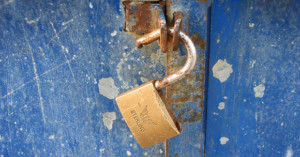
If you’re a professional photographer that lets clients review proofs online, make sure the high-res, non-watermarked versions of the photos aren’t accessible by simply changing a portion of the URL.
As a professional photographer, this really makes me angry [Reddit]

The Daily Mail is no stranger to copyright infringement accusations, but this time they’ve taken it even further — publishing a photo after the owner denied them permission to do so. Alice Taylor of Wonderland recently snapped a photo of a “dangerously emaciated” mannequin promoting GAP’s “Always Skinny” line of clothes. As the photo started spreading on the web, The Daily Mail emailed Taylor to ask for permission to use the image, which she agreed to — on the condition that the newspaper donate £250 to a charity of her choice. When they balked at the price, she gave them a flat out “no”.
That same day, they published an article (which has since been taken down [Update: It's back up]) using both the photo and quotes lifted from The Washington Post without include any linkbacks. Taylor is now demanding that they cough up a £2000 donation for the unauthorized use.
(via Wonderland via Reddit)
Update: The Daily Mail has apologized for publishing the photos, which was apparently due to a breakdown in communications. They’re planning to settle with the Taylor.

There has been a lot of discussion regarding social media sites and their scary-sounding terms of services that always sound like rights-grabs. Here’s what Photoshop guru Scott Kelby had to say after trying out Google+:
Of course, when it comes to posting photos on any social media site, the discussion always turns to copyright issues, and honestly I don’t personally have any problems with Google+’s terms. I don’t think Google is going to steal all my photos and use them for their own evil purposes (in fact, I’ve never read a single story about some big photo-sharing site misappropriating a photographer’s photos, or anything along those lines, so I just don’t sweat it. I know, I know….I’m totally naive—the big corporations are actually secretly out to get…..[wait for it...wait for it]…free photography).
Here’s what I do know: any time lawyers get involved in stuff like this, you’re going to have a lengthy legalese document that makes it sound like Google+ (or Facebook, or Twitter) is going to grab all your rights for now and eternity, when all they’re actually trying to do is keep their client (Google+ in this case) from getting sued.
Scott also writes that the magazine he publishes (Photoshop User) has similar scary-sounding terms that his lawyers tell him are needed to avoid “getting sued into oblivion”.
I’m Kind of Digging Google+ [Scott Kelby's Photoshop Insider]

Here’s an update to the whole monkey copyright story that’s been swirling around the blogosphere as of late: TechDirt points out that works that aren’t the product of human authorship cannot support a copyright claim. Section 503.03 of Compendium II of Copyright Office Practices published by the US Copyright Office reads:
503.03 Works not capable of supporting a copyright claim.
Claims to copyright in the following works cannot be registered in the Copyright Office:
503.03(a) Works-not originated by a human author.
In order to be entitled to copyright registration, a work must be the product of human authorship. Works produced by mechanical processes or random selection without any contribution by a human author are not registrable. Thus, a linoleum floor covering featuring a multicolored pebble design which was produced by a mechanical process in unrepeatable, random patterns, is not registrable. Similarly, a work owing its form to the forces of nature and lacking human authorship is not registrable; thus, for example, a piece of driftwood even if polished and mounted is not registrable.
Is a photograph taken by a monkey the product of human authorship? On one hand, the monkey pressed the shutter, but you also can’t argue that a human author didn’t contribute, since they had to have provided the camera in the first place (unless the monkey stole it or something…). TechDirt believes the photos are in the public domain.
(via TechDirt via Boing Boing)
Image credit: Driftwood Eagle by Port of Tacoma

At what point does inspiration turn into plagiarism? That’s the question that popped up last year when Rhianna was sued by David LaChapelle over scenes found in one of her music videos, and it’s the same issue with a lawsuit recently filed by photographer Janine Gordon against photographer Ryan McGinley. Gordon claims that 150 of McGinley’s images — including some used for a Levi’s ad campaign — are “substantially based” on her photos. In the three pairs of disputed images shown above, the ones on the left are by Gordon and the ones on the right by McGinley.
Read more…

Just as the monkey photography story was dying down, a new twist emerges: on Monday tech blog TechDirt received an email from Caters News, the agency representing wildlife photographer David Slater, whose camera was hijacked by a monkey and used to shoot a number of self-portraits.
Read more…

When we shared the story of how monkeys hijacked photographer David Slater’s camera and unwittingly snapped some self-portraits, we asked the question “doesn’t the monkey technically own the rights to the images?” Techdirt, a blog that often highlights copyright issues, went one step further and dedicated a whole post to that question.
Read more…

The legal battle between photographer Mike Hipple and sculptor Jack Mackie over a photo of Mackie’s public art piece “Dance Steps on Broadway” has ended with Hipple paying a settlement out of court. Mackie writes,
Anyone can make photographs of any public art and do most anything they want with the photograph. Private photos are most likely not infringements. People can frame them and give them to their uncles and aunts as gifts, they can post them on their facebook pages, or they can make Valentines with them and give them away. What they can not do, and this was the basis for the lawsuit, is offer to commercially sell them, which Mr. Hipple did, at least twice.
[...] The legal issues surrounding this case have always been clear and obvious. Instead of acceding to the clarity of the law, Mr. Hipple attempted numerous defenses. Mr. Hipple pleaded that because my art work is popular I should no longer be allowed to hold copyright. Tell that to Walt Disney. Mr. Hipple pleaded that one can not copyright public art. Tell that to the US Registrar of Copyrights. Mr. Hipple claimed that my art work is “instructional” and that his photograph “depicts dancing.” Taking him up on this argument we produced an image of his photograph containing my Dance Steps juxtaposed to an image of his carefully posed shoe model on a blank sidewalk [shown above]. Does his image without the Steps “depict dancing?” You decide.
Our initial post on this case in early 2010 sparked quite a bit of debate in the comments, with plenty of people arguing both sides.

Three years ago wildlife photographer David Slater spent three days photographing a group of crested black macaque monkeys in an Indonesian national park. As he was trying to fend off some monkeys, another monkey approached his tripod-mounted Canon 5D and started playing with the remote shutter release.
They were quite mischievous, jumping all over my equipment. One hit the button. The sound got his attention and he kept pressing it. At first it scared the rest of them away but they soon came back – it was amazing to watch. [#]
Afterward, he found hundreds of photos taken by the monkeys on his memory card, including some self-portraits and even a portrait of Slater.
Read more…

In 2009 Andy Baio of Waxy.org — founder of Upcoming.org and former CTO of Kickstarter — created Kind of Bloop, an 8-bit tribute album to the best-selling jazz album of all time, Kind of Blue by Miles Davis. While Baio meticulously licensed all the music he used to create the album, he released a pixelated version of the original album cover (top, second from left) without licensing it, believing it was different and low-res enough to be considered fair use. He was then sued by the photographer, Jay Maisel, who “felt violated to find his image of Miles Davis, one of his most well-known and highly-regarded images, had been pixellated [...]“.
Read more…