Posts Tagged ‘contrast’

Striking Black and White Portraits of Art Painted on Faces

Striking Black and White Portraits of Art Painted on Faces painted1 mini

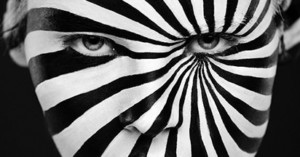
Moscow-based photographer Alexander Khokhlov has a striking series of portraits of models with various designs painted onto their faces. The faces are either painted completely black or completely white, and then used as a canvas for some kind of artwork (e.g. a Mickey mouse face, a silhouette, a keyhole). Khokhlov calls the series Weird Beauty.
Read more…

Coming to a Camera Near You: Autofocus As Fast as the Human Eye

Coming to a Camera Near You: Autofocus As Fast as the Human Eye autofocus mini 1

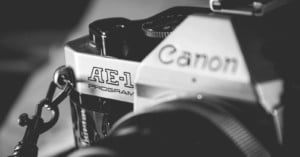
Contrast detection is one of the two main techniques used in camera autofocus systems. Although focusing speeds continue to improve, the method uses an inefficient “guess and check” method of figuring out a subject’s distance — it doesn’t initially know whether to move focus backward or forward. UT Austin vision researcher Johannes Burge wondered why the human eye is able to instantly focus without the tedious “focus hunting” done by AF systems. He and his advisor then developed a computer algorithm that’s able determine the exact amount of focus error by simply examining features in a scene.

His research paper, published earlier this month, offers proof that there is enough information in a static image to calculate whether the focus is too far or too close. Burge has already patented the technology, which he says could allow for cameras to focus in as little as 10 milliseconds.

(via ScienceNOW via Fast Company)


Image credit: 2011 12×12 Vancouver Photo Marathon by 12×12 Vancouver Photo Marathon

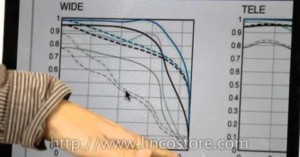
How to Read an MTF Curve to Gauge the Sharpness of a Lens

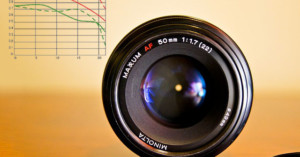
One of the things you’ve likely seen when looking at product or review pages for lenses is an MTF chart, used by manufacturers to give consumers an idea of how sharp a particular lens is. If you’ve never gotten around to learning how to interpret these charts, here’s a helpful 10-minute video tutorial on the subject. Luminous Landscape and Cambridge in Colour have great tutorials on this as well if you’re more comfortable with text-based tutorials.