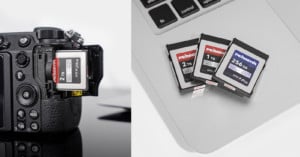
Pergear’s New CFexpress Cards Are Incredibly Cheap
Pergear has announced a set of new CFexpress Type B cards that not only boast high read and write speeds as well as high capacities but also come in significantly cheaper than the competition.
Pergear has announced a set of new CFexpress Type B cards that not only boast high read and write speeds as well as high capacities but also come in significantly cheaper than the competition.
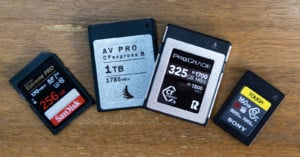
If you’re a photographer, you’re likely familiar with memory cards. They’re what our photographs are stored on -- removable flash media that we insert into a slot (or slots) in our camera, take photos, and then (sometimes) remove and insert into a card reader or card slot on our computer.
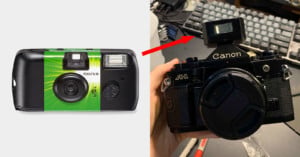
Recently I bought a film camera from the 1970s, the Canon A-1. Considering that the camera is almost three times older than me, it was no surprise that there are a few issues with it.
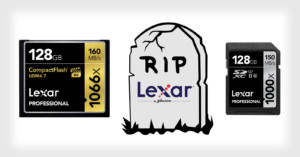
If you're a fan of using Lexar memory cards in your cameras, there's some sad news for you today: they're being discontinued. Micron, the parent company of Lexar, is announcing that the entire Lexar removable storage retail business is being shuttered.
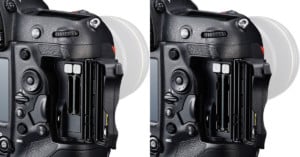
The new Nikon D5 is available in 2 different versions: one with dual CompactFlash memory card slots, and one with dual XQD slots. Both cameras cost $6,497 right now, and you'll need to make a decision on which one you want when you purchase.
But there's some good news: the decision isn't permanent. If you decide you'd like to use the other format later on, Nikon will take your camera and exchange the memory card slots for you.
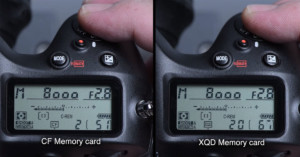
Nikon Asia just posted this performance test video showing how much faster XQD memory cards are than …
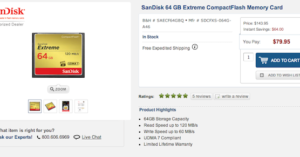
If you've been waiting for a good deal before you stock up on some CF memory cards, that deal has arrived over at B&H Photo. Today only, you'll be able to get steep discounts on SanDisk Extreme and Extreme Pro CF cards.
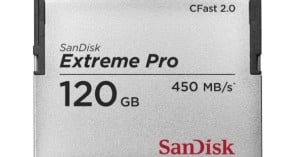
SanDisk made it clear last September that it would not be pursuing the XQD memory card format, but instead would focus its energies on CFast 2.0, the then newly-announced high-speed CompactFlash spec.
Almost a year later, SanDisk has finally debuted the fruits of that decision: a card that is both the world's first CFast 2.0 card, and the world's fastest memory card of any kind.
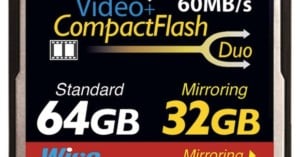
When it comes to data, redundancy is the best policy; backup, backup and backup again. This is doubly true where photos are involved, which is why professional photographers have gotten in the habit of keeping several external backups or using multiple cards for backup in DSLRs that support twin slots.
And now, Japanese company Amulet is hoping to add yet another layer of safety (and peace of mind) between you and the potential loss of your photos with its upcoming 'Wise CF Card Duo.'

A week ago we shared some reports that Toshiba was developing a re-focusable smartphone camera, but it looks like its sights are set on bigger fish than just Lytro's market. While the photo world was focusing on the tiny re-focusing camera, Toshiba officially announced a new line of high performance CF cards that should blow the competition away and, the company hopes, secure one third of the CF market by 2015.
The new cards -- dubbed the Exceria Pro series -- are set to launch in Spring of this year and bring with them read and write speeds very near the theoretical 167MB/second max provided by the CF's UDMA 7 interface.
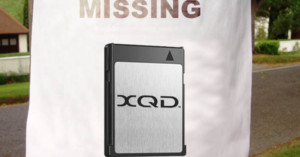
When XQD memory cards were announced in December 2011, the CompactFlash Association touted the format as the successor to CompactFlash cards. We definitely seemed to be moving in that direction at first: one month after the unveiling, Nikon's flagship D4 DSLR was announced with XQD card support. The day after that, Sony became the first major memory card maker to announce a line of XQD cards. Six months later, Lexar also announced its intentions to join the party.
Since then, things have died down to the point where you can hear grasshoppers chirping. Not a single XQD-capable camera was announced at Photokina 2012 this past week. Despite being the first to make them, Sony strangely decided to leave the cards out of its top-of-the-line cameras as well.
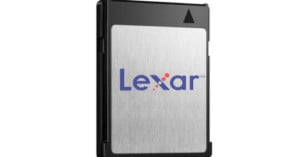
Up until now XQD cards have had a bit of a tough time getting off the ground. With only one compatible camera option in the Nikon D4, one manufacturer in Sony, and prices as large as the speeds they offer are impressive, people may have been starting to wonder if the format is here to stay. The answer, it seems, is yes -- due in large part to Lexar's newly announced interest in producing the cards by later this year.
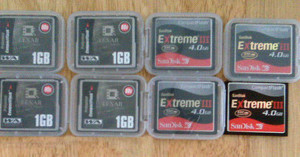
At the end of last year a new format called XQD was unveiled as the eventual replacement …

Well, well, well, look who’s first to the XQD game. It’s not Sandisk or Lexar, but Sony. On the …
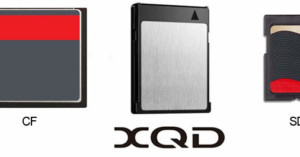
Perhaps in response to the growing capacities and falling prices of SD cards, the CompactFlash Association has announced a …
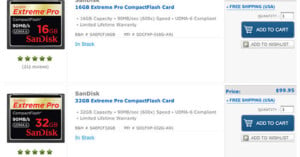
In the market for memory cards? B&H is currently offering SanDisk Compact Flash cards at crazy prices. They're listing Extreme Pro cards at less than 50% of the price offered at other retailers. For example, a 16GB Extreme Pro card currently costs $60 (with free shipping in the US) from B&H but $130+ at most other places.
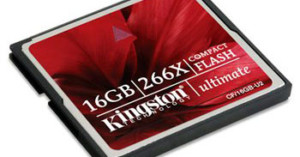
Deal alert: you can buy a 16GB Kingston 266x CompactFlash card over at …

Photographer Linhbergh recently purchased a used camera from B&H Photo Video and found a Compact Flash card left inside the camera containing photographs taken from inside the store offices. They offer an interesting glimpse into the operations at the largest non-chain photo equipment store in the United States.
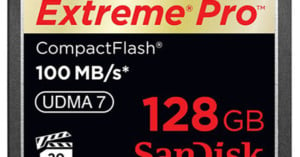
Sure Lexar just launched a 128GB SDXC card, but that only transfers at a meager 20MB/s. SanDisk’s …
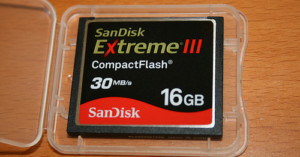
Nikon, Sony, and Sandisk have announced that they’re teaming up to develop a set of specifications for the next …
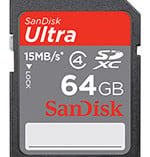
SanDisk just released its 64GB Ultra SDXC (extended capacity) memory card, the largest capacity for the Secure Digital format. It …