Posts Tagged ‘colorphotography’

William Eggleston and the Validation of Color Photography as Legitimate Art

William Eggleston and the Validation of Color Photography as Legitimate Art eggleston

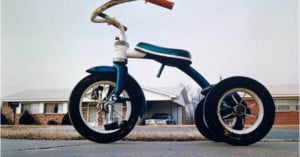
William Eggleston didn’t invent color photography, but his landmark 1976 exhibition at the Museum of Modern Art gave it dignity, and began the four-decade process of acceptance by curators and collectors as an art form to rival oil painting.

Shot in 1970, “Untitled (Memphis)” – shown above – was one of the 75 photos in the show, and also featured on the cover of the catalogue. Now it’s included in a retrospective of Eggleston’s early work at the Metropolitan.
Read more…

Exhibition Explores Racism in Early Color Photography

Exhibition Explores Racism in Early Color Photography polaroidracism

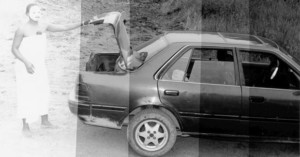
One would hope that the medium of photography was immune to racial prejudice, but an exhibit by London-based artists Adam Broomberg and Oliver Chanarin shows that this was not always the case. The artists’ exhibit, on display at Johannesburg’s Goodman Gallery, explores the marks that racism left on early color photography.

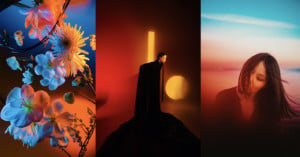
Using film designed to capture white faces and a camera that became infamous for helping further apartheid in South Africa, Broomberg and Chanarin took photos of beautiful South African flora — putting the once-racial implements to better use. Read more…

Albert Kahn’s Documentation of Humanity Through Early Color Photography

Albert Kahn’s Documentation of Humanity Through Early Color Photography albert1 mini

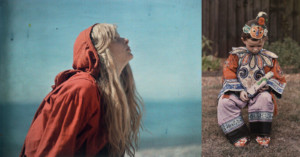
Albert Kahn was a wealthy French banker who launched a project in the early 1909 that aimed to create a photographic record of the world. The first commercially successful color photography process, Autochrome Lumière, had just arrived two years earlier, and Kahn decided to use the medium to both document human life and to promote peace. He sent out an army of photographers to 50 different countries, amassing 72,000 photos and 100 hours (183,000 meters) of film that became one of the most important collections of images in human history.
Read more…

The Work of Russian Color Photography Pioneer Sergey Prokudin-Gorsky

The Work of Russian Color Photography Pioneer Sergey Prokudin Gorsky color0

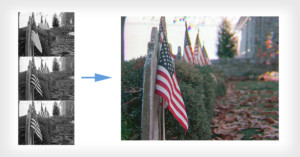
Back in the late 1800s and early 1900s, while the world was still shooting black and white photographs, Russian photographer Sergey Prokudin-Gorsky was busy inventing techniques for creating color images. Credited with capturing the only known color photo of Leo Tolstoy, Prokudin-Gorsky’s technique involved capturing three separate monochrome photographs of the same scene, each captured through a red, green, or blue filter. He would then project the three slides using colored lights, which reconstructed the original color scene. Since the images were captured at different times, any changes in the scene caused my movement show up as ghosted images (similar to what happens in HDR photography).
Read more…

Color Photography Turns 150 Years Old

Color Photography Turns 150 Years Old firstcolorphoto

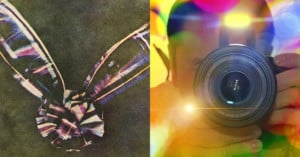
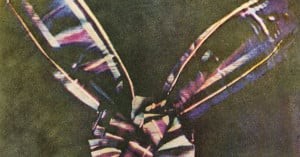
Color photography was born on this day 150 years ago in 1861 when Scottish physicist and mathematician James Clerk Maxwell and photographer Thomas Sutton — inventor of the SLR camera — shot the above photograph of a colored ribbon.

[...] Maxwell proposed that if three black-and-white photographs of a scene were taken through red, green and violet filters, and transparent prints of the images were projected onto a screen using three projectors equipped with similar filters, when superimposed on the screen the result would be perceived by the human eye as a complete reproduction of all the colours in the scene.

During an 1861 Royal Institution lecture on colour theory, Maxwell presented the world’s first demonstration of colour photography by this principle of three-colour analysis and synthesis, the basis of nearly all subsequent photochemical and electronic methods of colour photography. Thomas Sutton, inventor of the single-lens reflex camera, did the actual picture-taking. He photographed a tartan ribbon three times, through red, green and blue filters. [...] Because Sutton’s photographic plates were in fact insensitive to red and barely sensitive to green, the results of this pioneering experiment were far from perfect. [#]

Thus began modern color theory and the fundamentals behind how your DSLR captures color.

(via Popular Photography)