CNN Severs Ties to Photographer With Alleged Links to Hamas
CNN says that it has severed ties with a photographer who was allegedly embedded with Hamas during the October 7 attack on Israel.
CNN says that it has severed ties with a photographer who was allegedly embedded with Hamas during the October 7 attack on Israel.
Drones have been heavily used in by the Ukrainian defense forces to push back against the Russian invasion. One pilot explains that they have recently had to change their strategy to prevent Russians from tracking their movements with DJI technology.

Over the last several years, smartphone cameras have started to meet and exceed expectations when it comes to photo quality. For example, it could be argued that the current iPhone camera can capture better photos than the Nikon D100 from just over a decade ago, and is much smaller and easier to use.
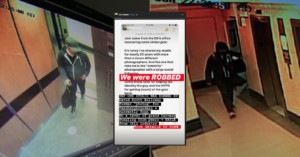
Earlier this year, a group of well-known professional photographers was robbed... by another photographer. Approximately $12-$15K worth of gear was taken from their studio by a peer almost three months ago, and they were only able to recover the gear earlier this week, though they still don't feel they've received anything resembling justice.

The Columbia Journalism Review recently surveyed 30 veteran freelance photojournalists to find out what publications treat photographers best, and how much they pay. What they found is revealing, maybe even encouraging, and definitely useful information for the photogs out there.
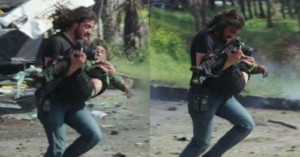
Syrian photographer and activist Abd Alkader Habak is being praised today, not for a photo he took, but for one he decided not to take. After being blown over by a massive explosion that took out a convoy of busses filled with evacuees, he stopped shooting and attempted to help the young victims instead.
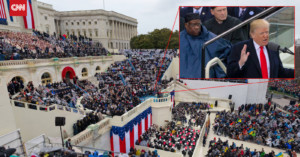
Using gigapixel technology, CNN managed to capture an ultra-high res, interactive, 360° photograph of the presidential inauguration on Friday—a great way to explore the crowd in detail and maybe (just maybe) spot yourself in the crowd.
The news that Casey Neistat and his team at Beme was going to be joining CNN to do ... something? ... and that this acquisition cost CNN a reported $25 million has been met with mixed reactions. Here to set the record straight on a few FAQs about the deal is Neistat himself.
Last week, we told you that Casey Neistat was saying goodbye to his hugely popular daily vlog. Today, we found out what he's planning to do next.
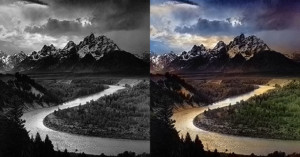
Colorizing old black-and-white photos with Photoshop has been a popular subject on the Internet over the past few years, as skilled retouchers use their time and skills to offer a new view of vintage images. In the future, though, software may be able colorize B&W photos with the click of a button.
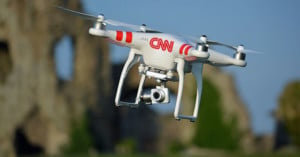
Last week we reported that an Arizona realtor has become the first in the US to receive Federal Aviation Administration approval for using a drone for real estate images. Yesterday, CNN announced that it has also received a nod of approval from the FAA.
The news company says it will partner with the FAA to "advance efforts" in using camera drones for "news gathering and reporting."
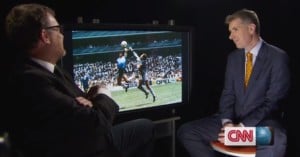
With the World Cup in full swing, CNN Digital's director of photographer, Simon Barnett, has his hands full. Each day of the cup, his job is to look through somewhere in the neighborhood of 10,000 images and decide which make the cut.
In this short video above, he explains what separates the amazing images from the great-but-not-good-enough crowd, and takes us through what it is that made two iconic soccer photographs so iconic.
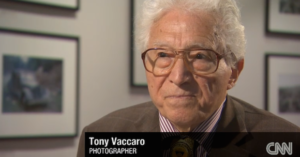
On this, the 70th anniversary of the D-Day invasion of Normandy, it seemed appropriate that we cap off the day and the week with the story and images of a remarkable photographer who was there: US Army Private Tony Vaccaro.
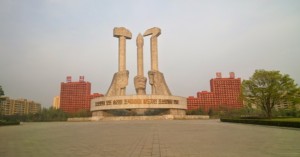
While Google Glass user Kenny Zhu was in North Korea this past April, he took advantage of the small and comparatively inconspicuous size of the device on his head to snap what appear to be the first images taken in North Korea using the wearable tech.
In a world where cell phone photography and videography is as prevalent as it is, CNN’s iReport has manage to become a fairly successful citizen journalism service, allowing users from across the globe to upload their eye-witness and breaking news. The service essentially crowdsources breaking news, but iReport is about to take it a step further than even the smartphone allows for.
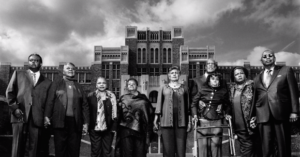
It seems CNN is planning to do a whole series with famed portraitist Platon, because only a couple of weeks after they released his BTS account of the portrait he took of Vladimir Putin, they've put out another, much more powerful video.
Back in 2007, world-renown visual storyteller Platon took on an assignment to capture a photograph of Russian president Vladimir Putin. In what would end up being one of the scariest assignments of his life (which is saying a lot given some of the stuff he's covered), his portrait session for TIME's person of the year award involved just a few more guns and guards than most.
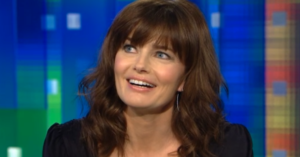
Here's an interesting video that offers a perspective we don't often get on the whole "anti-Photoshop," "what really is 'Beauty'" debate. In this short interview, former supermodel Paulina Porizkova gives her take on an industry she left behind in the mid-nineties.

Nikon found themselves at the center of a controversy this last weekend after they decided to cancel a sensitive photography exhibit without giving a reason why. The exhibit, a photographic documentary on the theme of "Comfort Women" (Korean women used as sex slaves during WWII in Japan), was put together by Korean photographer Ahn Sehong and set to start on June 26th at the Nikon Salon in Tokyo -- until Nikon cancelled it.

CNN created quite a stir yesterday after laying off a dozen photojournalists due to the rise of …

Roughly 50 staffers at CNN were given pink slips today, including nearly a …
Update on 12/18/21: This video has been removed by its creator. This weekend, CNN is featuring this video showing renowned …
CNN recently published a pop-quiz with 10 photos and a simple question: was …
Update on 12/18/21: This video has been removed by its creator.
CNN made this creative video highlighting the fact that there's still a remnant vibrant community of film shooters in New York City. It's seen from the perspective of someone typing in "analog photography" into a futuristic Qwiki-esque search engine.

CNN recently did a story on NYU professor Wafaa Bilal and the camera he had implanted on the back of his head. The video above gives you a glimpse into what it looks like and how the system works. Turns out it wasn't a working camera that was permanently embedded into Bilal's skull, but rather a baseplate to which the wired camera can be mounted magnetically.