Posts Tagged ‘cmossensor’

Canon Unveils a 35mm Full Frame Sensor for Video That Can See in the Dark

Canon Unveils a 35mm Full Frame Sensor for Video That Can See in the Dark canon35mmsensor

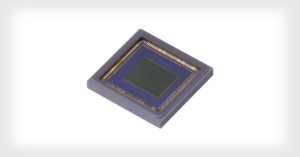
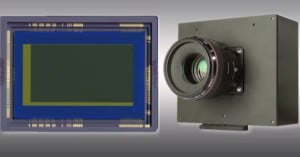
Frustrated with how your camera’s CMOS sensor performs in dimly-lit situations? Canon has just announced a new CMOS sensor that’ll put a smile on your face. It’s a new 35mm full-frame sensor that’s designed specifically for capturing video in “exceptionally low-light environments.” Canon claims the sensor can capture high quality video with high-sensitivity while keeping noise very low.

Here’s how sensitive the new sensor is: it will reportedly be able to see meteor shows, rooms lit with incense sticks, and scenes lit only by moonlight.
Read more…

What a DSLR’s CMOS Sensor Looks Like Under a Microscope

What a DSLRs CMOS Sensor Looks Like Under a Microscope cmosmicrograph 1

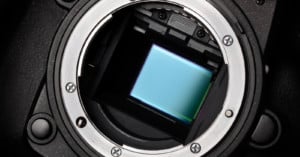
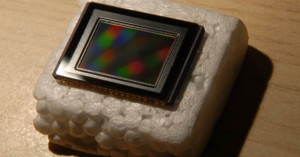
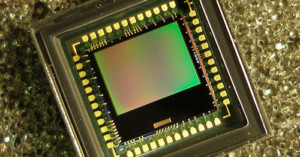
Jack over at the astrophotography blog The Landingfield has published a series of photographs showing what a digital camera’s CMOS sensor looks like when viewed through a microscope. The sensor (seen above) was taken from a broken Nikon D2H — a DSLR from back in the early 2000s.
Read more…

Samsung Sensor is First to Capture Image and Depth Data at the Same Time

Samsung Sensor is First to Capture Image and Depth Data at the Same Time depthsensor mini

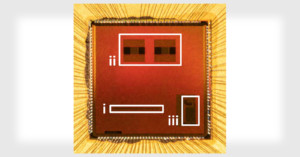
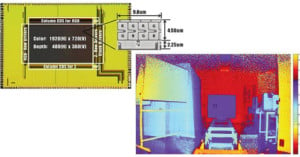
Samsung has developed what the company claims is the world’s first CMOS sensor that can capture both RGB and range images at the same time. Microsoft’s Kinect has received a good deal of attention as of late for its depth-sensing capabilities, but it uses separate sensors for RGB images and range images. Samsung’s new solution combines both functions into a single image sensor by introducing “z-pixels” alongside the standard red, blue, and green pixels. This allows the sensor to capture 480×360 depth images while 1920×720 photos are being exposed. One of the big trends in the next decade may be depth-aware devices, and this new development certainly goes a long way towards making that a reality.

(via Tech-On! via Gizmodo)

Fuji’s Upcoming Mirrorless Camera May Pack a Revolutionary Organic Sensor

Fujis Upcoming Mirrorless Camera May Pack a Revolutionary Organic Sensor fujisensor mini

If you’re a fan of Fujifilm’s X100 and X10, then you might want to brace yourself: the company’s next camera might be the one mirrorless camera to rule them all. Fujifilm’s upcoming mirrorless camera will likely have the same sleek styling as the X100, but with one colossal difference: a revolutionary new “organic sensor”. Fuji has been developing the technology for years now, and the new camera — supposedly named the Fujifilm LX — is rumored to be the first to pack the sensor.
Read more…

Lower ISO Doesn’t Always Lead to Higher Quality Images

Lower ISO Doesnt Always Lead to Higher Quality Images cmos

When learning about ISO, you’ve probably heard that the lower the number, the lower the noise and the higher the image quality, but did you know that this isn’t always the case? The reason is something called the base (or native) ISO of a camera — the ISO achieved without amplifying the data from the sensor. This is usually somewhere between ISO 100 and ISO 200. Why does this matter? Bob Andersson of Camera Labs explains:

We all know that using high ISO numbers results in more sensor noise. More surprising, perhaps, is that using an ISO number below the native ISO number also degrades the image.

An interesting example is that when shooting on a Canon EOS 1Ds MkII, ISO 50 has roughly the same signal to noise ratio as shooting at ISO 800. This explains why the lowest possible ISO numbers can only be accessed through custom functions on some cameras.

Know your Base (or Native) ISO (via Reddit)


Image credit: Photograph by Filya1