There’s something to be said about lens manufacturing. You could even go so far as to say it, in itself, is an art form, with the hands of skilled and methodical workers ever-so-delicately assembling the glass we use to take photos.
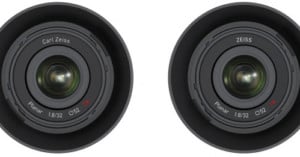
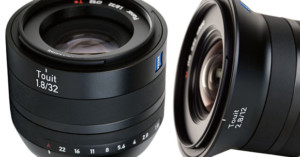
Speaking of lens manufacturing, Carl Zeiss Lenses has just posted an short, yet interesting, video behind the manufacturing process of their Touit lens line (for what it’s worth, the video is also available in 3D, if you need an added dimension to your viewing experience). These lenses come as 12mm f/2.8 or 32mm f/1.8, and are available for both E-mount and X-mount cameras starting in June. Read more…
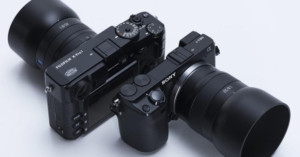
At Photokina 2012 last September, Zeiss announced that it was working on a new family of lenses for mirrorless cameras. This past March, we got a closer look at the lenses, which were outed as a 12mm f/2.8, 32mm f/1.8, and 50mm f/2.8 for Fuji’s X mount and Sony’s E mount.
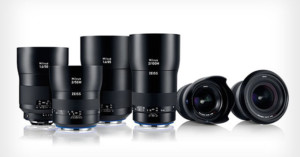
Today, the company revealed even more details about the lenses, which are branded “Touit,” publishing specs, product pages, and sample photographs. Read more…
Carl Zeiss’ legendary glass is coming to Fuji X and Sony E mount cameras. If you have an X series or NEX mirrorless camera, you’ll soon be able to purchase a 12mm f/2.8, a 32mm f/1.8, or a 50mm f/2.8 macro. In 35mm terms, these lenses are equivalent to 18mm, 48mm, and 75mm lenses, respectively. Here’s a sneak peek at what will soon be arriving for your system. Read more…
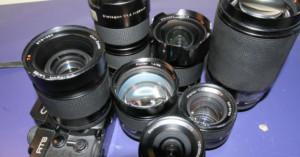
When your grandfather was Dr. Erhard Glatzel, one of the great lens designers of the twentieth century, it won’t come as too much of a shock to find out that you’ve inherited two lenses that, by all accounts, don’t officially exist. Other people? Well, they might be a little bit surprised… and a lot bit jealous. Read more…
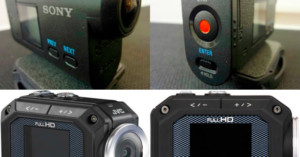
Where the action cam market is concerned, GoPro is king. For the last few years if you wanted to go sky diving, snowbording, mountain biking, or any other extreme sport and video tape yourself doing it, you’d probably be strapping a GoPro to one of your appendages. Sony and JVC, however, are looking to get in on some of the extreme sports action — and both are doing it in style with new action cam offerings. Read more…
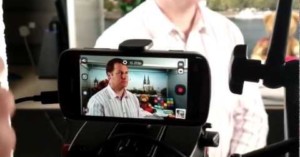
Nokia made quite a splash earlier this year by unveiling the PureView 808 — a smartphone with a large 41-megapixel sensor and a high quality Carl Zeiss lens. The 8-minute behind-the-scenes video above — filmed entirely with the phone, by the way — is the story of how this device was born, starting from a napkin sketch in a Tokyo bar. Nokia is currently the world’s largest manufacturer of cameras, and devoted 400 employees toward the creation of the PureView 808.
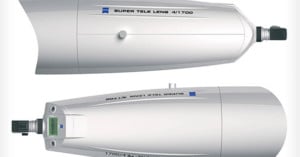
If you thought Nikon’s 6mm Fisheye lens from a week ago was crazy, get a load of this Carl Zeiss telephoto lens announced at Photokina back in 2006. The made-to-order lens was called the Apo Sonnar T* 1700 mm F4, and that little nub at the end? That’s a Hasselblad 6×6 medium format camera.
The monster weighed in at 564lbs and had to use a special focusing method because of the sheer weight of each glass element. At the time this was the biggest non-military telephoto lens in existence, which begs the question: What does the biggest military zoom look like!?
For another look, check out this picture of the lens being showed off at Photokina.
Want to see how high end camera lenses are tested for durability? Here’s a video in which Carl Zeiss researcher Norbert Wittekindt shows off the various tests lenses are subjected to, ranging from temperature tests to mechanical vibrations.
The Micro Four Thirds system is apparently headed somewhere big, as more and more lens companies are joining in on the action. Just a few days ago Schneider Kreuznach announced they would be joining the system, and now Carl Zeiss is joining too, bringing 160+ of producing quality glass to future MFT cameras.
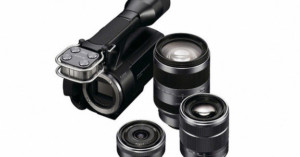
Canon and Nikon broke ground when they launched DSLRs that have HD video capabilities. Now Sony’s taking a different approach by offering a comparatively affordable HD video camera with all the attractiveness of interchangeable lenses, plus the ability to take high resolution stills.
Not only will the camcorder share the same Sony E-mount as the NEX series (it comes standard with a kit 18-200mm f3.5-6.3 lens), Sony DSLR owners will be pleased to know that with a separate adapter, the camcorder can be mounted with any A-mount lenses — including Sony G and Carl Zeiss lenses.
The camcorder also has the same Exmor APS HD CMOS sensor as the NEX-3 and NEX-5. The DSLR sized sensor alone gives the camera a lot of extra real estate to work with; Sony boasts the sensor to be approximately 19.5 times larger than the standard sensor of conventional camcorders.
The NEX-VG10 can shoot 1920×1080 high def video at 60 fps, which Sony says is ideal for Blu-Ray recording. And for stills shooting, it can capture 14 megapixel images with a continuous burst of up to 7 fps.
Some benefits of using the NEX-VG10 over a video DSLR is that the camcorder has the right ergonomics and image stabilization for shooting video, and doesn’t have the same limited clip time that plagues DSLR video shooters — it can shoot up to 315 continuous minutes. Also, Sony says the NEX-VG10 has a silent auto-focus system that could cut down on noise typical on video DSLRs.
Stills shooters may appreciate the camera’s Auto HDR mode, but the fact that it doesn’t shoot RAW images could be a dealbreaker.