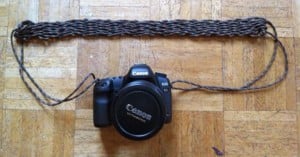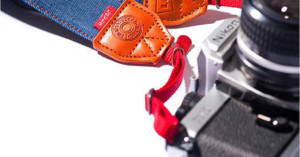
Eddie had a hard time finding a camera strap he liked, so he decided to make his own in the style of some rifle slings he found online. The slings were weaved together using 550 Paracord (parachute cord), which has a breaking weight of 550 pounds. He found some for sale for $7 at his local army-navy store, and weaved together his own rugged DIY camera strap.
Read more…

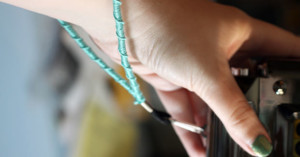
Here’s a weekend project idea: personalize your camera’s wrist strap by making it look like a friendship bracelet! All you need is some embroidery thread and some time. Simply repeat a simple knot over and over and your strap will magically be covered with a neat repeating pattern. Head on over to KEH for the step-by-step tutorial.
Camera Wrist Strap Cover: How-To [KEH Camera Blog]

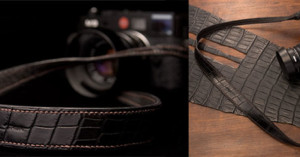
Now here’s a camera accessory you don’t see every day: over in Japan there’s an artisan named Takuya Okamoto who handcrafts unique camera straps out of crocodile hide. The straps cost a whopping $1400 apiece.
Crocodile Hide Camera Straps (via Map Camera via tokyo camera style)

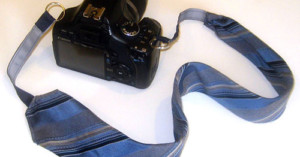
Ties are meant to be soft and comfortable around the neck, so they’re a perfect fit for a do-it-yourself camera strap project! Besides an unwanted tie, you’ll need some sewing supposed, some ribbon for the ends, and a couple rings for attaching the strap. Check out the step-by-step tutorial over on Ecouterre.
Recycle a Necktie Into a Camera Strap (via Lifehacker)

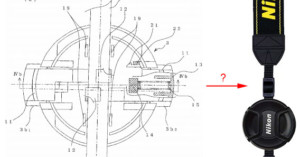
We’ve seen all kinds of ideas for keeping track of your camera’s lens cap when it’s not being used, including velcro, special mounts, fashionable pouches, and even a retractable cap, but Nikon has come up with the best idea yet: a lens cap that attaches to camera straps! A patent filed by the company in 2009 and published yesterday shows a lens cap that can easily clip onto a strap when not in use — a simple solution to a small problem that apparently many entrepreneurs have been interested in solving. Sorry, but Nikon wins this one.
(via Egami)
-
Vadim Gordin · Jun 27, 2011
-
Editor’s note: The guest author of this DIY tutorial, Vadim Gordin, is also selling DIY kits and ready-made Lens Loop slings for $15 and $25, respectively. You can find the project over on Kickstarter.

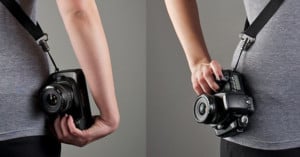
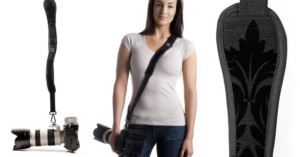
Here’s a DIY camera strap I came up with 2 years ago and have been steadily revising as I use it while traveling and shooting all over the country. The design is simpler, more comfortable, and more attractive than any of the other commercially available slings. I hope that by sharing my design here, I can generate interest in my project and help DIYers make a great camera sling on their first try.
Read more…

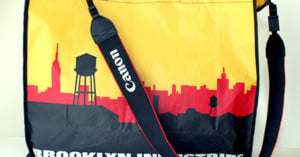
Have an unloved camera strap lying around? You can repurpose it as a strap for a shoulder bag! This could be a good upgrade for a bag that doesn’t fit very nicely over your shoulder, or could be a fun gift idea for your photography-lovin’ girlfriend or wife. You can find a tutorial on how to do this over on Photojojo.

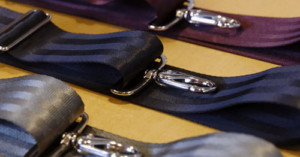
The LoopIt is a new camera sling by Luma designed to be smaller, lighter, and more affordable than the Luma Loop. Both slings use a lanyard and connector that slide along the camera strap and connect to cameras via any available strap mount point. The push-to-release swivels are manufactured at the same factory that invented the swivel used by the US military, with tolerances that supposedly exceed the ones used in combat.
Read more…

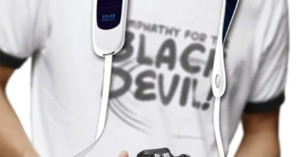
Now here’s a clever idea: Olympus has filed a patent in Japan that allows you to use your camera strap as a makeshift LCD glare shield, shielding your screen from direct sunlight.
(via Photo Rumors)

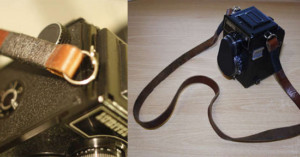
I have a small obsession with cameras, also, a slightly smaller obsession with film cameras. My favourite camera is Lubitel 166B. It is a medium format camera, this basically means it has a large image area to capture photos, using the larger 120mm film. The Lubitel’s were twin lens reflex (TLR) cameras. They have a little pop up cover on top, you then look down through the viewfinder. The nature of holding the camera like this will getting the settings set up for the shot can sometimes be a pain, so having a nice strap to hold it at the correct height, and nice and steady is a great idea.
Read more…