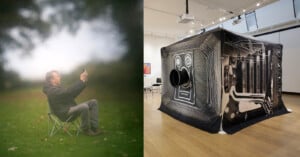
The World’s First Camera Obscura That You Can Take Selfies With
A photography teacher has created the world's first camera obscura that people can take selfies with by using their smartphone.
A photography teacher has created the world's first camera obscura that people can take selfies with by using their smartphone.
I write about a lot of things here at PetaPixel -- reviews, guides, technical articles, opinion pieces -- but one of my favorite topics to write about is the history of photography. As an avid user and collector of vintage cameras and lenses, I have passionately absorbed as much knowledge about their history as possible over many years. Like studying world history, there is much value in understanding where we came from and what got to us where we are now.
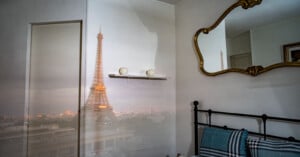
French photographer Mathieu Stern is no stranger to taking photos with unusual cameras. However, his latest camera is perhaps his oddest as he turned Paris apartment into a giant camera obscura and captured a beautiful photo of one of the world's most famous sights, the Eiffel Tower.
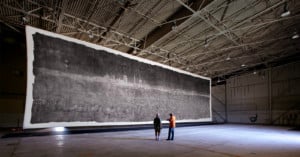
The world's largest photograph taken on the world's largest camera has returned home to California after being exhibited around the world.
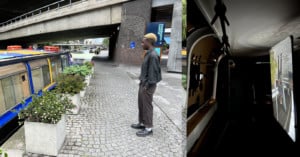
Photographer Brendan Barry transformed the Electric Barge into a giant floating camera obscura that not only captures photos but also works as a processing facility thanks to its built-in darkroom.
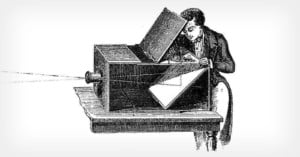
Modern cameras are complicated pieces of technology but in the camera's earliest form, the concepts that led to its invention were formed in the most basic manner, simply the interplay of light, reflection, and shadow. Since our earliest history is unrecorded, we'll never know the exact date some of these techniques were first discovered and who deserves credit for any undocumented observations that contributed to this area of study in the distant past.
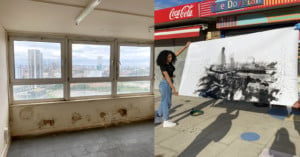
United Kingdom-based photographer Brendan Barry used four empty apartments and turned them into a multi-lens camera obscura in order to create massive panoramic prints.
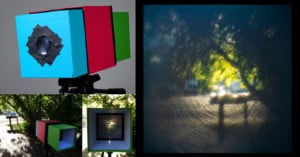
If you ever find yourself stuck indoors and in need of a fun and educational project, try building yourself a camera obscura. Here's a 7-minute video by Fotodiox showing how you can put together a small DIY one with ordinary craft store supplies.
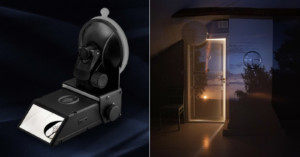
Finnish company Bonfoton has launched the BonfotonUP, a new device that allows users to project a camera obscura image right-side-up in contrast to how the visual phenomenon -- projected onto walls -- is traditionally formed upside-down.
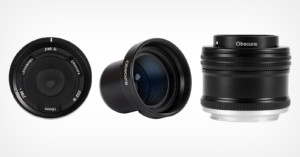
Lensbaby, a company known for making unconventional lenses and unique optics, has announced its latest lens: a three-in-one Pinhole-type optic called The Obscura.
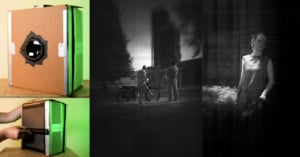
Camera accessory manufacturer Fotodiox has published a video that explains how to make a digital camera obscura that can be used for both video and photo capture made from a box, a magnifying glass, and frosted plastic.
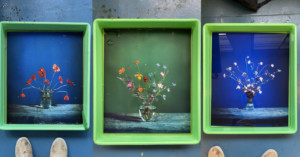
Photographer Brendan Barry has been shooting 20x24-inch color still-life images directly onto photo paper via a camera obscura using a color reversal process. In this short 3-minute video, you can watch how he does it.
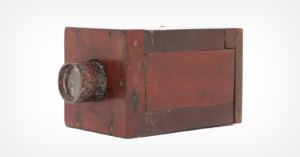
This early experimental "mousetrap" camera constructed out of wood, brass, glass, and bone may be the oldest ever to be sold once it clears auction. Purportedly from around 1840, it is expected to sell for between $65,000 and $91,000.
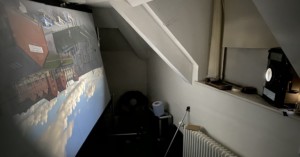
Photographer Brendan Barry—known the world over for turning just about anything you can think of into a functional camera—recently completed one of his most ambitious projects. He turned a room Custom House in Exeter, UK into a giant camera, which he then used to shoot and develop some massive ultra-large format photos.
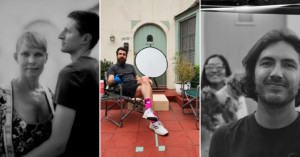
Photographer Kyle Roper is no stranger to unique camera creations; he was the producer for the viral Skyscraper Camera Project. But his latest project is a bit smaller and more intimate. Amid the pandemic, he turned his front door into a camera to capture beautiful large-format black-and-white portraits of his neighbors.
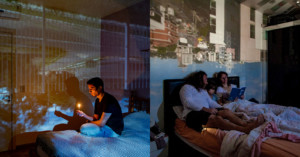
Billions of people around the world have had their lives turned upside down by the COVID-19 pandemic, and Brazilian photographer Bruno Alencastro recently came up with an interesting concept for capturing what life is like during these difficult times. He and other photographers turned their homes into camera obscuras and created portraits in their isolated upside-down worlds.
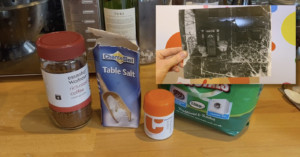
Last week, photographer Brendan Barry created a timely tutorial on how to turn your bedroom into a giant camera, and use it to take actual pictures. But what if you don't have any photographic chemicals around for developing and fixing those images? Barry's got you covered.
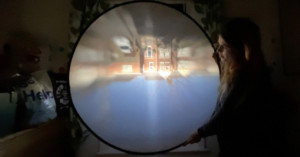
Photographer Brendan Barry has put together a detailed step-by-step tutorial that might help you stay busy while you're stuck inside. In this video, he'll show you how to take and develop photos by turning your bedroom into a camera obscura, and your bathroom into a makeshift darkroom.
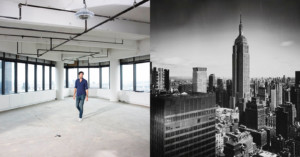
Brendan Barry is a UK-based photographer who's known for turning all kinds of unusual things into working cameras, from food and mannequins to shipping containers and camper trailers. But his latest project was his most ambitious yet -- turned a Manhattan skyscraper into a giant camera.
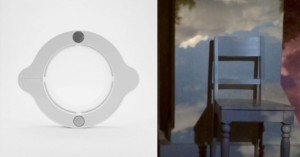
The new Bonfoton Camera Obscura Room Lens is a small lens that helps project the outdoors indoors, turning any room into a giant camera obscura.
"Camera obscura" refers to a device for viewing an image that makes use of the principles of pinhole imagery, and is usually made with a box of sorts. It's this that was eventually turned into the first pinhole camera - and now you can make your own!
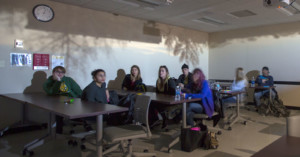
A photography professor in Oklahoma recently had an awesome idea for teaching his students about the beginnings of photography: he turned his classroom into a giant camera obscura.
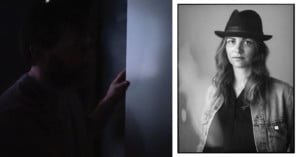
It's not every day that you come across a camera that's big enough for the photographer to stand in. But that's what photographer Ross den Otter built for the recent Capture Photography Festival in Vancouver, Canada: he shot portraits from inside a 4x8x8-foot camera obscura.
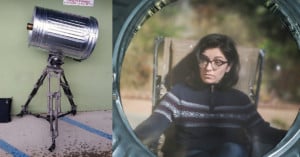
I recently built a Trash Cam out of a trash can, large format lens, and Sony a7S II. The project was an attempt to find an inexpensive housing for a large format lens.
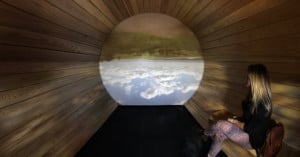
Installation artist duo Anna Heinrich and Leon Palmer loved the landscape around Hadleigh Country Park in Essex, England so much, they decided to capture it forever through the magic of the Camera Obscura. Thus was born "The Reveal."
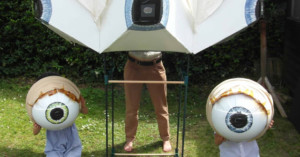
The "Tri-clops," created by pinhole photographer Justin Quinnell," is the world's first multi-screen, wearable camera obscura. The device (and two extra I-scuras, as seen above) will be making the founds at several art and science festivals (e.g. Sidmouth and Green Man) in the UK over the coming months.
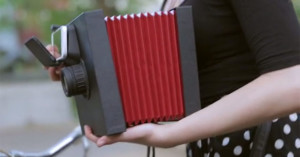
If you have ever dreamed of taking photographs through a camera obscura, then we have some great news for you! Former fashion photographer and inventor Valmont Achalme has designed the Lumigraphe, “a camera obscura for your smartphone”. The project is currently on Kickstarter seeking $49,276 with the promise of helping you capture “beautiful effects” starting around $100.
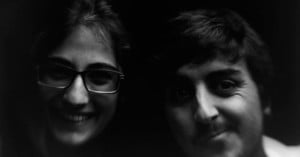
Photography enthusiasts Diego Veríssimo and Ana Magalhães (seen in the portrait above) recently shot a series of portraits using a gigantic camera they built using a room and about $10 in materials.
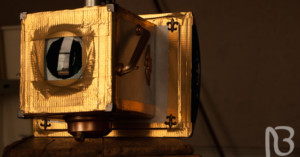
Joe Barone is a recent college grad who enjoys the process as much as the result. Inspired by his love for old objects, knack for tinkering with things and growing up in his parents’ hardware store, Barone brought the camera obscure into the 21st century recently with the help of an old scanner, a magnifying glass and duct tape... well, gold duct tape.
The result is a glorious steampunk-esque contraption that yields some rather impressive images.
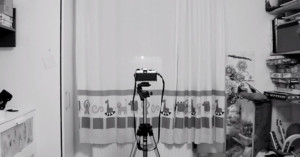
Photographer Daniel Tellman is an experimenter, and his ideas often lead to beautiful results. After turning his daughter's room into a giant camera obscura, he decided to have some fun by closing the drapes and turning them into a makeshift projector screen.
He then set up a camera in front of the drapes to capture images of the world outside passing by over the course of a day. The time-lapse video above is a gorgeous compilation of those images.
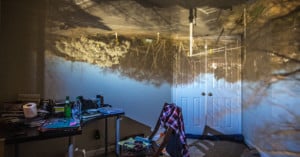
We heard how dangerous it could get outdoors with all of the traffic-crossings, pollen, UV rays and so on, and so we decided to stay inside and paint our walls with a live stream of the outside world...
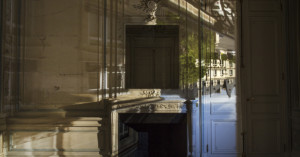
There's nothing new about time-lapse photography, and calling the camera obscura new borders on insanity, but when you put the two together you get a pretty cool combination that might just qualify as novel, if not unique.
That's what photographers Romain Alary and Antoine Levi have created with their series of "pinhole movies," shot time-lapse style inside massive camera obscura rooms in Paris, India, and even inside a boat cabin.
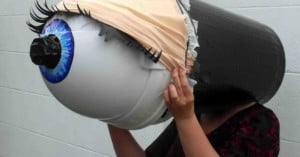
Photographer Justin Quinnell is a pinhole photography master. Over the years we've featured his work taking six-month long pinhole exposures that show sun trails, as well as his DIY camera obscura kit that allowed you to display an upside-down version of the outside world in the room of your choice.
His latest project, however, is different from any we've seen before. Meant to be used as a game on the festival circuit, the I-Scura (as he calls it) is a massive DIY camera obscura you wear on your head like a helmet.
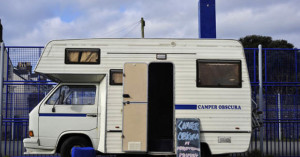
If you're ever in England and come across an old camper van with the words "Camper Obscura" splashed across the side, knock on the door and say hi to photographers Jonathan Blyth and Matthew Pontin. Since the summer of 2010, Blyth and Pontin have traveled widely around the South West of England, teaching people about photography from the rear cabin of the vehicle.
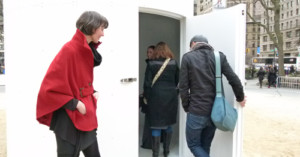
In an effort to educate the general public on the age-old art of the camera obscura, New York artists Sandra Gibson and Luis Recoder have set up a 10-foot by 10-foot walk-in version in the city's Madison Square Park.
Surrounded by the Flatiron District, the installation offers an inverted look at the neighborhood, as well as the opportunity to learn a little bit about photography's roots.
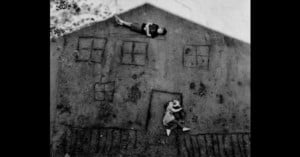
We've shared several articles featuring the camera obscura and the many uses it has been put through over the years. From a roaming camera obscura used for photography workshops, to the possibility that some of painting's greatest names used them as an aid, the "technology" has really gotten around.
We've even shared videos and kits you can use to turn any windowed room in your house or apartment into your very own camera obscura. But what happens when a professional photographer grapples with the concept? If Cuban-born photographer Abelardo Morell is any indication, some pretty amazing inverted landscapes.
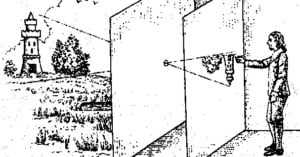
Did you know that some of the most famous master painters from centuries past may have actually used camera "technology" to aid them in creating their masterpieces? According to the hotly debated Hockney-Falco thesis, some well-known artists likely used rudimentary camera obscura rooms as a tool -- essentially "tracing" parts of their work.
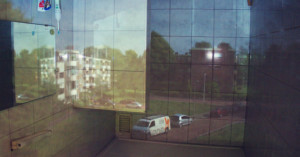
The camera obscura has been around for a long time (Middle Ages long) and typically consisted of a box or room with a hole in one side through which an image of its surroundings could be formed. As you can see from the example above, any room -- in this case a bathroom -- can be turned into a camera obscura given a small enough "aperture." Unfortunately, most rooms have big, blaring windows that let in too much light, and the only image formed on the opposite wall is a shadowy blob.
In the name of forensics, however, Antonio Torralba and William Freeman from MIT have discovered a technique by which they can turn any windowed room into a camera obscura, using a couple of stills of the room to magically gather an image of the outside world.
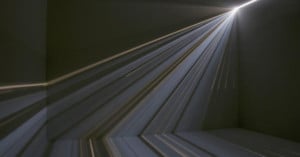
Artist Chris Fraser creates beautiful light displays by turning rooms into giant camera obscuras. Rather than use a single pinhole as the lens, he bores numerous holes into the walls to create layered patterns of light. He writes,
My light installations use the ‘camera obscura’ as a point of departure. They are immersive optical environments, idealized spaces with discreet openings. In translating the outside world into moving fields of light and color, the projections make an argument for unfixed notion of sight.
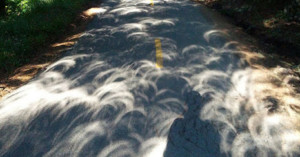
If you went outdoors to observe the solar eclipse yesterday, you might have noticed that the shadows cast by trees had suddenly become quite strange. The tiny gaps between leaves act as pinhole lenses, projecting crescent shaped images of the eclipsed sun onto the world below.