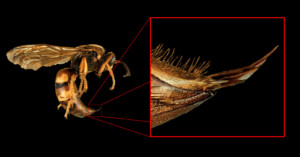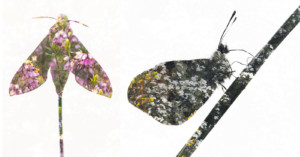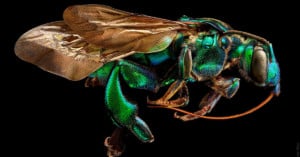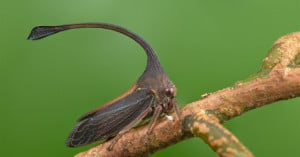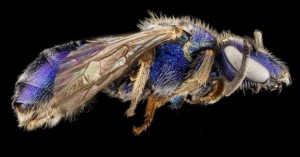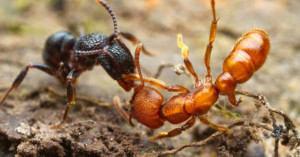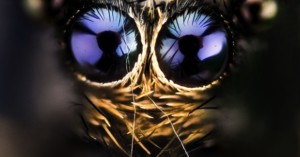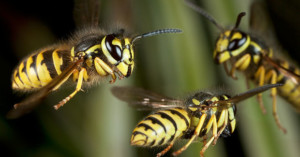
Photographer Nicolas Reusens has always been interested in insects, so when he purchased his first DSLR three years ago, he immediately dove into the art of macro photography. By using the technique known as focus stacking — combining several images taken at different depths of field — he’s generated some truly eye-popping photos of creepy crawlies from all over the world. Read more…

Back in 2010, we featured the beautiful macro bug photographs of a Belgian photographer named Frans, who uses a custom laser camera rig to capture insects mid-flight. Inspired by fotoopa’s work, biochemist and photography enthusiast Linden Gledhill decided to pursue the same photographic subject.
Read more…

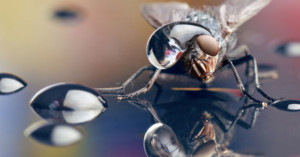
Dmitriy Yoav Reinshtein is a 26-year-old photographer based in Tel Aviv, Israel. He works as an advertising photographer and creative retoucher, but one of his personal passions is shooting highly detailed macro photographs of tiny insects. While all of his macro photographs are amazing to look all, there’s a particular subset that caught our eye: Reinshtein managed to capture a number of insects with water drops sitting on their top of their heads.
Read more…

Stop motion animation was already being used in the late 1890′s as a way to make objects in films move by “magic,” but full stop-motion animated films like the ones of today didn’t come to be until around 1910. When they did, one of the great pioneers of the technique was Russian photographer and entomologist Wladyslaw Starewicz. Read more…

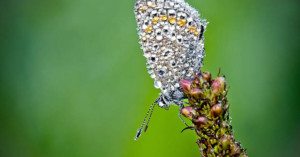
French photographer David Chambon is a master of macro insect photography. An amateur photographer for over 10 years, his goal is to capture the magical beauty of nature through his imagery. All of his macro shots are amazing, but it’s his morning dew series that stands out from the rest. He ventures out early in the morning, and photographs various insects perched on flowers and leaves, glowing from the tiny beads of dew that coat their bodies.
Read more…

Malaysian photographer Peiling Lee captures beautiful, dreamlike macro photographs of tiny critters she finds in her garden. She uses a Canon 50D and a 100mm Macro lens. Her work reminds us of Nadav Bagim’s Wonderland project that we shared last year.
Read more…

The photographs in Nadav Bagim‘s project “WonderLand” might look like paintings or computer generated images, but they’re actually real photographs captured at home using ordinary objects and creative artificial lighting. His tools and props include things like vegetables, plastic bags, flowers, and leaves, and he captures the images using a Canon 60D and 100mm f/2.8 macro lens. Getting his “subjects” into the positions and poses he wants requires countless hours of patient encouraging.
Read more…

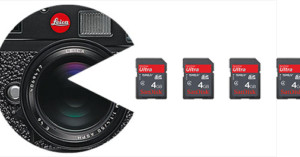
Some Leica M9 owners are discovering that their camera will suddenly stop functioning and render their SD card unreadable on any device. Photographer Gil Lavi writes on his blog,
A couple of weeks ago I got a new Leica M9. All excited, I put in the best SD card on the market, the SanDisk Extreme Pro 8GB. It took only a few hours of taking pictures before the card crashed and the camera become unresponsive until I removed the card. I wasn’t worried at the beginning. I was in love.
A few days after, I had a high profile portrait photo shoot for an important client. Of course I took the M9 and my beloved Leica 90mm with me, together with a new SanDisk SD card, not before installing the newest firmware update. It was a very long photo shoot with heavy production, a tight schedule and sweaty assistants. It was just before that end of the photo shoot that the other new SanDisk SD card Extreme crashed inside the M9, making the camera dead and the card unreadable in any device. With all the embarrassment, I had to reshoot everything all over again with my backup equipment.
Leica and SanDisk are currently investigating this issue after a number of customers have reported it, and currently recommend that SD cards be FAT formatted.
(via Pop Photo via 1001 Noisy Cameras)