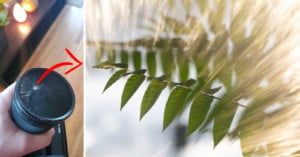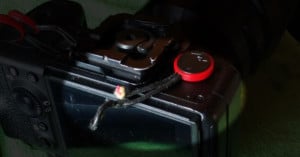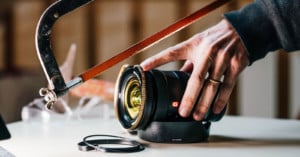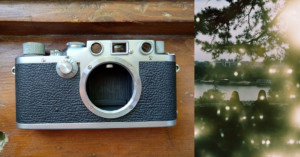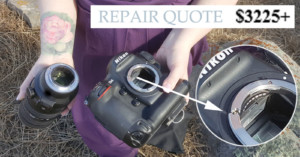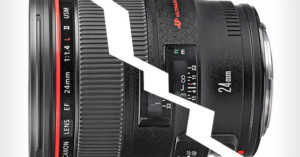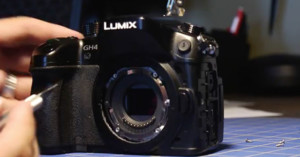
Freelensing is a relatively inexpensive way of getting the similarly unique effect of an expensive tilt-shift lens, where the focus plane is thrown out of whack with the added bonus of natural light leaks. No, this isnt anything new, and the look that an expensive tilt-shift lens gives has been around for a while, but I wanted to share with you my experience with it and how I did it. Read more…
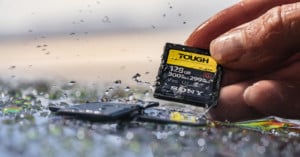
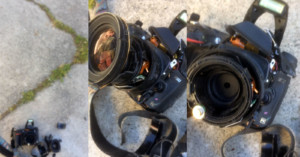
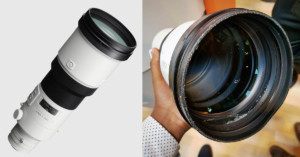
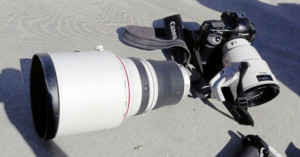
If you want to know what the market is like for high-end camera gear that has been destroyed by water damage, check out this eBay auction by a Hastings, Victoria-based Australian photographer who goes by the handle tallguy069. The poor guy accidentally dropped his Canon 1D Mark III DSLR and Canon 600mm f/4L lens ($10,000+ in gear) off a boat into saltwater, completely destroying the functionality of both pieces. Read more…
Yesterday we featured an interesting example of digital photographs being reintroduced into the real world in another form (Google Street View photos as life-sized portraits), and now here’s another one. For her project “Broken Houses“, NYC-based photographer Ofra Lapid created realistic models of abandoned buildings using printed photos, and then photographed them on an infinite gray background. Read more…
Photographer Jon Shireman has a cool project titled Broken Flowers that features photographs of flowers that were shattered. How do you shatter flowers, you ask? By freezing them with liquid nitrogen! Read more…
Phil Wright got his hands on the Sony RX100 — the camera David Pogue was raving about — shortly after it was released back in June. It didn’t survive very long.
Earlier this month, Wright was rushing to work in the darkness of the early morning when he placed his coffee and his black camera bag on top of his car. When he arrived at work 22 miles and 25 minutes later with coffee in hand, he suddenly realized that his camera was nowhere to be found. After panicked call to his wife back home, she made the discovery: camera roadkill 300 yards from their house. Read more…
One of the questions that comes back most often when people learn what I do for a living is: how do you manage not to drop your camera? Up until Saturday, I could (somewhat smugly) answer that I am being very careful and have been lucky so far. Read more…
Depending on your subject matter, it can be a very good idea to take out a damage waiver when renting camera equipment. Wildlife photographer Andrew Kane learned this recently after renting gear from LensRentals for a shoot in Yellowstone. Here’s his account of how the borrowed equipment ended up broken:
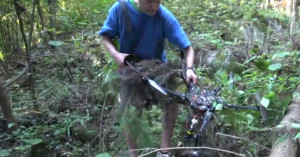
I recently rented a D4, Wimberly head, and 600VR from you, and the day before yesterday, I had a little bit of an accident. I was photographing a coyote here in Yellowstone and I followed it into the woods about 300yds away from the road. As I am taking pictures of the coyote, I heard twigs breaking behind me, and as I turned around I saw it was a grizzly bear. I picked up the tripod with the D4 and 600 on it and slowly started to back away. The bear got closer and closer as I tried to back up. When the bear got to within 20 yds. of me, I bumped into a brush pile that I could not lift the tripod over, so I had no choice but to leave the gear and continue away from the bear.
Now here’s a divisive photo series that will draw both anger and cheers: graphic designer (and former Apple employee) Michael Tompert teamed up with photographer Paul Fairchild for a project titled 12LVE that consists of photographs showing annihilated Apple products. Here’s the description:
12LVE [...] provides society a mirror, forcing us to question our infatuation with mere objects. By annihilating the adored, pulverizing the precious, and obliterating the beloved, 12LVE reminds us that although these objects have become quasi-religious icons, we will soon discard and replace them with the new crop—sleeker, faster, shinier.
YouTube filmmaker Casey Neistat‘s DSLR recently took a tumble, breaking a piece off of the built-in lens hood of his Sigma lens. Instead of sending the lens in for repairs, Neistat decided to do a thrifty repair himself. After finding a similar-sized jar lid on some peanut butter at a local grocery store, he created a replacement hood himself by drilling a large hole and a couple small screw holes into the lid. He calls the project “The Peanut Butter Solution”.
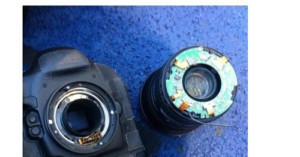
Canon’s 50mm f/1.8 Mark II is a terrific lens for its price, but its build quality definitely leaves something to be desired. Do a quick search, and you’ll find legions of broken-hearted Canonites who had their ‘Nifty Fifty’ split into two pieces after accidentally bumping or dropping it. Flickr user tastygiant is one such Canonite, but he subsequently discovered an awesome use for the broken lens:
Being a geek, I figured I could use the broken pieces in the future, so I shelved it and bought a new 50mm 1.8 Canon lens. One day, while taking shots around my apartment, I stumbled across the broken lens again and decided to reverse the “barrel assembly” onto the front of my intact 50mm. Everything was blurry of course, but I noticed if I got very close to an object the detail came into view. After adjusting the aperture to around f5.6, I had a clear image.
It’s important to note that you should switch to Manual focusing and rotate the focusing ring to “infinity”.