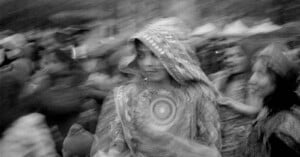
Motion Emphasizing Stillness in Photography
Breaking a pattern can work to bring attention to that pattern. You may not notice how quiet it is until some subtle noise disrupts that silence, reminding you of the context it is punctuating.
Breaking a pattern can work to bring attention to that pattern. You may not notice how quiet it is until some subtle noise disrupts that silence, reminding you of the context it is punctuating.
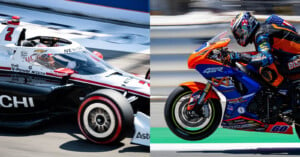
Photography is unique, as far as artistic media is concerned. Behind the camera, we can freeze time, turning once-in-a-lifetime moments into indelible mementos that have a good chance of outliving the gear that created them.
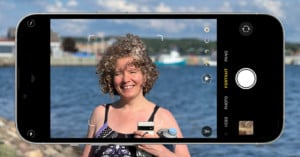
Your iPhone can nicely blur the background to enhance a photograph or video. A similar effect works well with video chat software, eliminating distractions and putting the focus on the subject. Whether you want to blur the background during a FaceTime call, snap a beautiful portrait photograph with your iPhone, or edit the background blur in pictures you've already captured, we'll explain how it works to help you get the blur you want from your iPhone.
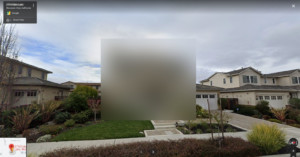
Google Street View cameras have now captured over 170 billion photos from 10 million miles around the globe. But if you're not comfortable with the fact that anyone can "visit" your home digitally, did you know you can request to have it blurred from public view?
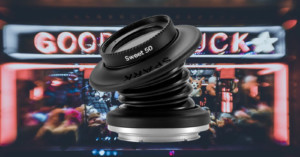
Lensbaby is known for making unconventional lenses that create unusual defocused areas, and the Spark is no exception. The Spark 2.0 adds support for eight mounts, both DSLR and mirrorless, as well as 15 optics introduced since 2008.
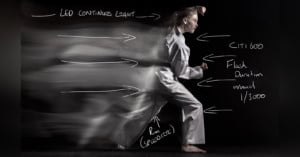
With so many ways to be creative in photography, I get really excited with many ideas for a photograph. One area I find very interesting is sports action photography, but with a twist. It's great to capture that split-second moment and have that frame frozen, but I wanted to explore capturing the motion and freezing the action all in one go.
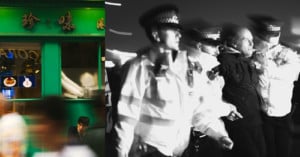
As with any genre of photography, there is no "one size fits all" solution for exposure in any given situation. There are as many different means of achieving a "look" as there are photographers practicing those methods, and any can be adapted to fit into the kind of photography you want to be doing.
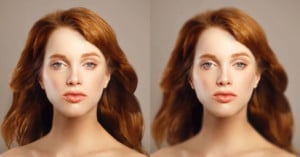
By carefully applying blur to a portrait, you can make it look like it was shot with a shallow depth-of-field using a fast (and expensive) lens. Here's a 12-minute tutorial by PiXimperfect that teaches the key to creating this faux blur in a realistic way.
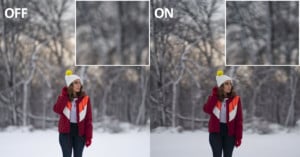
If your camera has an Electronic Front-Curtain Shutter (EFCS) feature and it's turned on, here's something you might want to know: it could be giving you noticeably worse bokeh when you're shooting at faster shutter speeds. Photographer Manny Ortiz shows the difference in the 4.5-minute video above.

When I read or watch reviews of lenses by folks in the photographic community, it often seems like one of the most important qualities to them is how the lens renders bokeh. It’s often made me wonder, do we sometimes forget that bokeh is just background? And is this fixation healthy? Or most importantly, how much does it matter to an average person who has never heard the term “bokeh”?
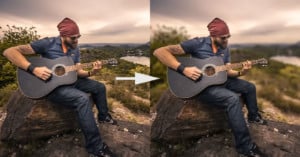
In this 20-minute tutorial by PiXimperfect, learn how to use Photoshop to create a realistic bokeh effect in your photo. Creating a shallow depth of field after you've taken the shot can be tricky to do convincingly, but this tutorial will show you one method for how to do it.
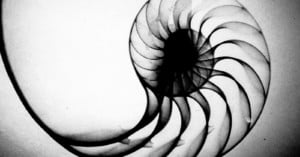
"Sharpness is a bourgeois concept." – Henri Cartier-Bresson

Instagram made a major announcement yesterday. In an attempt to 'foster a safer, kinder community,' the app will begin blurring content that it considers 'sensitive,' warning users and requiring that you click through to actually see the image.
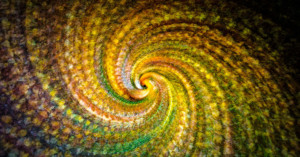
Natural Rotations is a photo series by Surrey, England-based photographer Simon Painter. Each of the images was created by spinning the camera while an exposure is in progress.
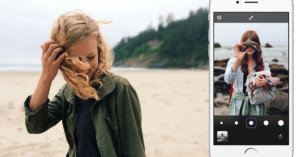
The iPhone 7 Plus has a new Portrait mode that artificially blurs backgrounds using info captured by the two rear cameras. If you want a similar look but don't have an iPhone 7 Plus, check out the new Patch app for iOS. It uses neural networks to generate faux depth and blur.

This foreground bokeh look is actually a setup I played around with a few times many years ago. I thought it would be a good, fun setup to share, as you can get some interesting results whilst playing around the much-loved bokeh.
Why do the new iPhone 7 phones have to simulate a shallow depth of field? The short answer: physics.

If you enjoy knowing the nitty gritty technical details of how photography technologies work, then you may enjoy the …
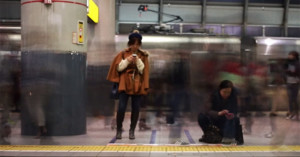
"In Motion" is a short film by photographer Aaron Grimes showing the city of Tokyo, Japan. It features a novel, surreal effect that was created by stacking video frames inside Adobe Photoshop and then recombining those stacked frames into a video again.
In the ongoing app battle to keep private photos safe and sound from unintended recipients (and the general public), a new app called Yovo – You Only View Once – brings an interesting technology to the table.
It's called D-fence, and is based around the idea that your eyes can see what's behind a slatted fence as you're driving by at a high speed.
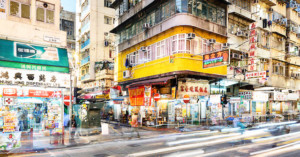
The idea of ‘average’ is strange, especially when it’s put into real-world situations and memories. The places most familiar to us change on a daily basis, even if it’s just the slightest bit, but when we look back, our brains piece together this conglomeration of what we’ve seen over the days, months and years to create a familiar, cohesive memory.
It was a similar line of thinking that inspired photographer Wolfgang Hildebrand to create his strangely chaotic compositions of city streets.
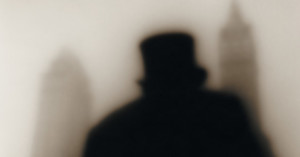
Ken Rosenthal received his MFA in photography from the School of the Art Institute of Chicago in 1993. His artwork is represented by Klompching Gallery, New York; Etherton Gallery, Tucson; Gerald Peters Gallery, Santa Fe; Dolby Chadwick Gallery, San Francisco. Rosenthal’s photographs are in many public and private collections internationally including The George Eastman House, Rochester, NY; Museum of Fine Arts, Houston; Art Institute of Chicago; National Portrait Gallery, London; Smithsonian National Portrait Gallery, Washington DC; Museum of Fine Arts, Boston; and the Wittliff Collections’ Southwest and Mexican Photography Collection, San Marcos, Texas, which recently established a major collection of his work.
Since 2002 his work has been featured in more than 150 solo and group exhibitions internationally. The first publication of Rosenthal’s work, Ken Rosenthal Photographs 2001-2009, was released in 2011, and was included on photo-eye’s Best Books of 2011 list.
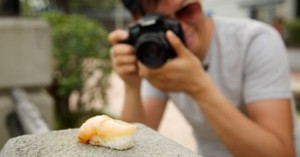
Defined by Google as, “the visual quality of the out-of-focus areas of a photographic image, especially as rendered by a particular lens,” Bokeh is a term that has become much more prominent in the past ten years or so than ever before, thanks to the photography community.
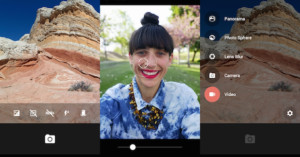
Google wants to give all Android users (or at least those running Android 4.4 and up) the opportunity to use a camera app designed by the same people who made the operating system, and so the company has decided to release a standalone 'Google Camera' app packed with a few features that will make it a very tempting download at the price of "on the house."
The Internet let out a collective gasp back in October 2011 when Adobe gave an advanced preview of a crazy new image deblurring feature it has been working on. The feature can take a photo that's blurry due to camera shake, calculate the movements that caused the blur, and "reverse it" to create a sharper photo.
It looks like the feature isn't too far off now. Today Adobe released the above video that offers a sneak peek at what the tool actually looks like inside an upcoming version of Photoshop. Just as with the demo from two years ago, this video will drop many jaws.
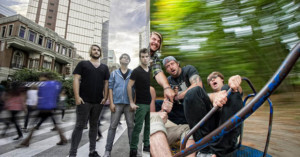
Here's a behind-the-scenes look at how I recently created two band photos that feature motion and blur. The premise for this shoot actually started as far back as a couple years ago. I was on the search for a fun and energetic band with which to create a couple of promo images that featured motion. It took 2.5 years to find the right band for the shoots, but when 604 Records recording artists Fighting for Ithaca came calling, the perfect fit had been found!
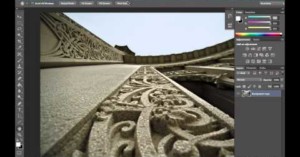
Photoshop CS6 will have a new Iris Blur tool that lets you quickly add blur to an image that …
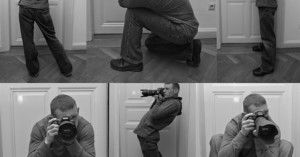
If you’ve ever tried shooting in a dark location without using flash or a tripod, you probably know how …
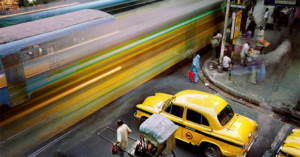
Metropolis is a project by photographer Martin Roemers that consists of long exposure photographs that show the bustle and chaos of large cities.
Specifically, I’m looking at the small stories of the street vendor, the commuter, the passer-by, the market stallholder and other pedestrians, who populate the street or are a part of the traffic. Despite the megacity and its mega-commotion, their environment still maintains a human dimension. I present this by photographing busy locations from above. Moreover, every photo has a long exposure time so that the big city’s vitality is shown through the movement of people and traffic while the image literally focuses on the small story in question. Every megacity is a theatre and every city has a different stage and different actors, but in the end every single one of them is trying to make its way in today’s modern society. [#]
The project was awarded 1st prize in the 2011 World Press Photo competition in the category "Daily Life".
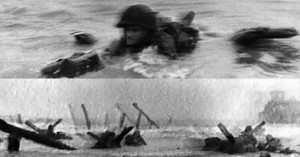
Update: We've removed this image to avoid fringing on the copyright held by Magnum Photos. Click the image below to see the original side-by-side comparison.
Still think Adobe's Image Deblurring technology is fake? Check out this before-and-after comparison showing what the feature does to one of the most famous camera-shake photos in history: Robert Capa's D-Day photograph of an American soldier landing on Omaha Beach.
Yesterday we shared some clearer comparison images from Adobe's jaw-dropping Image Deblurring demo. Cari Gushiken over on the Photoshop.com blog has written up a post that sheds a little more light on how the idea came about, the current challenges they face, and where they see it headed.
At the Adobe MAX 2011 event in LA last week, the company gave …
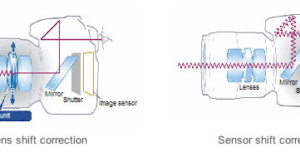
Nikon has a support page for people who wonder why the company hasn’t …
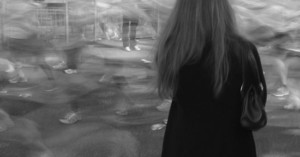
Runners in broad daylight aren't often captured as motion blurs, but that's exactly how Flickr user Justin (just big feet) shot the London Marathon. Just stick a neutral density filter or two onto your lens to restrict the amount of light entering your camera, allowing you to shoot at slower shutter speeds.
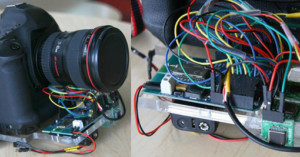
At SIGGRAPH 2010 in Los Angeles last month, Microsoft researchers showed off some new technology that improves existing digital blur reduction techniques by outfitting a camera with motion detecting sensors.
The team created an off-the-shelf hardware attachment consisting of a three-axis accelerometer, three gyroscopes, and a Bluetooth radio, attaching the setup to a Canon 1Ds Mark III camera. The researchers then created a software algorithm to use the motion information captured during the exposure to do "dense, per-pixel spatially-varying image deblurring".

Here’s a useful resource I found a while back that many of you might …