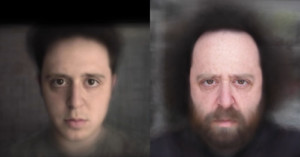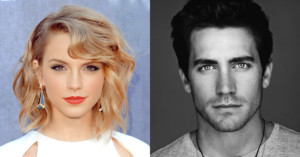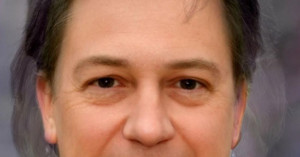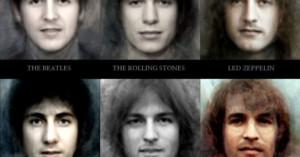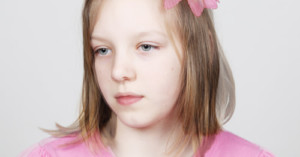
Yesterday, PetaPixel shared photographer Richard Prince’s composite portrat created by blending together 57 faces of girlfriends seen on Seinfeld. I also enjoy playing with the idea of image averaging, and can’t get enough of it. Late last year, I started experimenting with the idea of averaging faces by blending portraits.
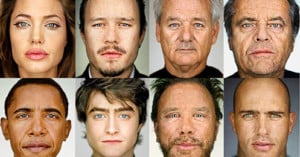
I needed a set of faces that were all semi-similar enough to create good averages with. Well, if you haven’t seen the work of photographer Martin Schoeller, you are missing out! He has a series of close-ups that are shot with very similar lighting styles and compositions of famous (and not-so-famous) people. It’s simply mesmerizing to see. I grabbed the shots above to try face averaging out with.
Read more…

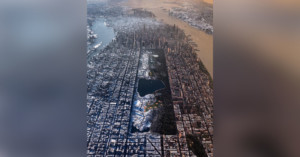
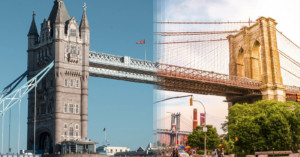
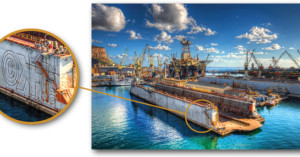
In 2010, photographer Seth Taras created a series of photographs for a worldwide marketing campaign for the History Channel with the message “Know Where You Stand.” The photographer shot photos at locations around the world where major historical events happened, and then blended old photos showing those events from the same perspective. It’s the same “then and now” concept that has become quite popular over the past few years.
Read more…

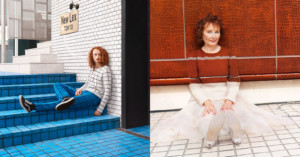
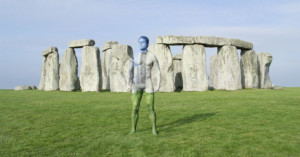
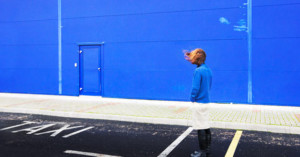
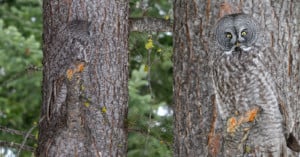
For his project Transform, Hungarian photographer Bence Bakonyi scouted out colorful locations around his city and found clothing that matched each of the main colors in the scene. By dressing up models and having them stand in just the right location, Bakonyi was able to create photographs that look as though his subjects are blended into the background.
Read more…

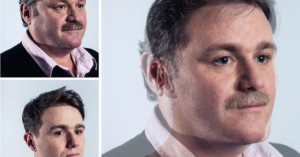
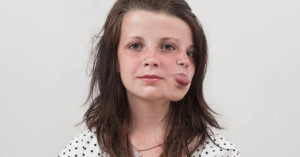
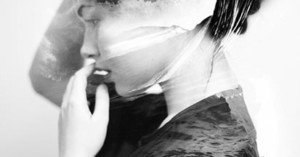
You know those Photoshopped optical illusions that involve combining two photos of a person’s face — one straight on and one looking to the side — into a single bizarre shot? Quebec, Canada-based photographer Ulric Collette put a spin on that concept with his new portrait series titled “Facade.” Instead of using negative space and two completely different angles, Collette had his subjects turn their heads slightly to the side for the second shot, and then merged the two photos together by aligning one eye from each shot.
Read more…

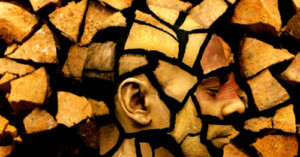
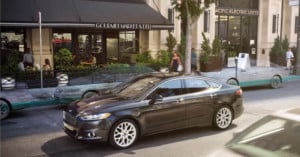
Chinese photographer Liu Bolin (AKA “The Invisible Man”) has received quite a bit of attention over the past seven years for his self-portraits showing himself blending into various scenes with a carefully painted body rather than digital manipulation. His photographs have attracted the attention of Ford, which recently commissioned Liu to create a series of advertisements to promote the 2013 Ford Fusion.
Read more…
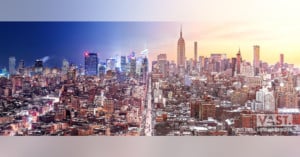
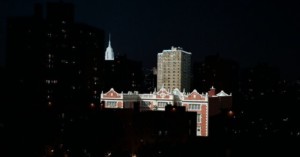
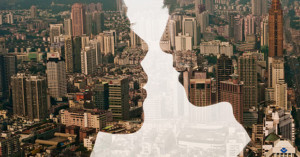
Now here’s a creative idea that we’ve never seen before… For this short film titled New York: Night and Day, New York City-based filmmaker and animator Philip Stockton blended daytime and nighttime images of his city into single shots. He explains,
New York: Night and Day is a combination of non-traditional video time-lapse and animation. I filmed day and night scenes from around New York City and combined them back into single sequences using rotoscoping techniques. The piece explores the relationships between night and day, by compositing together scenes shot in the same location over a time period ranging from 4 – 8 hours. I hope you enjoy it.
Read more…

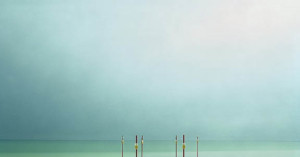
London-based photographer Tony Ellwood has a project called In No Time that deals with our perception and awareness of our passage of time. All the photographs are of the same pier on a beach that Ellwood visited over a period of six months. His technique, which took him 18 months to develop and perfect, involves visiting the location multiple times for each photo — sometimes up to three times a day for multiple days. Using a 4×5 large format camera, Ellwood creates each exposure across multiple sessions, as if he were doing multiple exposure photography, but of a single subject and scene. Each exposure time ranges from a few seconds to multiple hours.
Read more…

For his surreal series titled “Beibeees”, artist Alberto Seveso blended photos of women with smoke-like photographs of ink in water. To recreate this kind of look, try shooting smoke or ink against a pure white background and then use the cloudy formations as a layer mask on a portrait.
Read more…

Watermarks are a popular way of “signing” photographs and deterring theft, but having a giant logo overlaid on your images can ruin the viewing experience. Photographer Klaus Herrmann has one solution: integrated watermarks. He writes,
[Watermarking] seems to be a viable way of protecting your images from online theft, but a watermark can ruin a photo if placed carelessly. Indeed, with a semi-transparent giant piece of text (and maybe Comic Sans as a font) written straight across the image, many people won’t bother looking at the image for more than a second. I have been applying watermarks (or, to be more precise, signatures) to my images for some time now, but I use a different philosophy by making it an integral part of each image, almost as if it was there in the original scene.
He has written up a tutorial on how you can make your watermark look like part of your photo. It’s a pretty time-intensive process, but could be useful for sharing fine-art photography online.
Creative Watermarking – How to Integrate Your Signature into Your Photos [Farbspiel Photography]
Image credit: Photograph by Klaus Herrmann

Double Identity is a neat project by photographer Caroline Briggs in which she photographs portraits of identical twins wearing the same clothing and striking the same poses, and then overlays one on top of the other to show their similarities and differences. She writes:
My series aims to avoid direct physical comparisons between twins while allowing the viewer to acknowledge and accept the twins’ similarities and differences. For the twin, it gives them a different perspective on their double identities and poses questions about their relationship and their desire – or lack of desire – to live completely separate lives.
Briggs has the credentials to do this project — she’s a twin herself!
Read more…