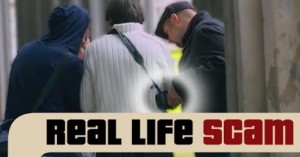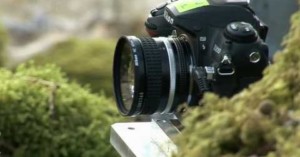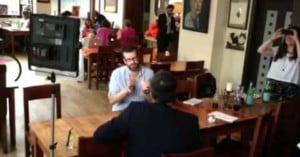
The next time you’re walking around with a DSLR around your neck and a stranger asks you for directions, you might want to keep a hand on your lens. Yesterday BBC’s “The Real Hustle” included a short segment in which they demonstrated how easy it is to steal a lens on the street. The con artists simply detach and pocket the camera lens of an unsuspecting photographer while pretending to ask for directions. Apparently this is a real con that thieves are using these days…
Update: It looks like the video was taken down by the uploader. Sorry guys.
Color is simply how our brains respond to different wavelengths of light, and wavelengths outside the spectrum of visible light are invisible and colorless to us simply because our eyes can’t detect them. Since colors are created in our brains, what if we all see colors differently from one another? BBC created a fascinating program called “Do You See What I See?” that explores this question, and the findings are pretty startling. Read more…
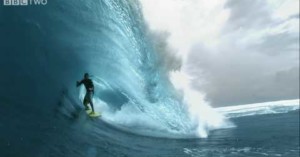
The Roman philosopher Seneca once said, “Luck is what happens when preparation meets opportunity.” This clip from the BBC documentary “South Pacific” shows Rudi Diesel capturing a once in a lifetime shot of surfer Dylan Longbottom in a massive 12-foot wave using a Typhoon HD4 high speed camera. It’s the first shot of its kind ever recorded, and one of the most amazing surfing shots you’ll ever see.
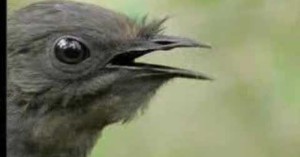
Lyrebirds are ground-dwelling Australian birds that have the remarkable ability to mimic sounds, both natural and artificial. In addition to copying the calls of other birds, they imitate whatever they hear around them, including the sound of cameras if photographers are working nearby.
This short BBC clip features a Lyrebird that makes realistic camera shutter sounds (including the motordrive sound). It only runs 3 minutes, but if you want to skip to the camera-related part it’s at around 1m50s.
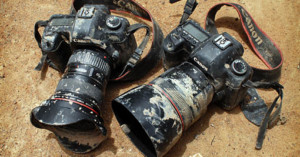
You know you’re a professional photojournalist when you try to take good care of your cameras but they still end up look like these.
These belong to photographer Timothy Allen, who photographs the world’s indigenous societies for the BBC documentary Human Planet. He uses two Canon 5D Mark II DSLR cameras with 16-35 f2.8, 50mm f1.2, 85mm f1.2, 200mm f2.8, and 400mm f4.5 lenses. You can see some of Allen’s jaw-dropping work here and here.
Image credits: Photograph by Timothy Allen and used with permission
In 1983 the BBC aired a series called “Master Photographers” in which they interviewed some of the biggest names in photography at the time, including Ansel Adams, Diane Arbus, and Henri Cartier-Bresson. The series can’t be found anywhere on DVD, but luckily many of the episodes have been uploaded to YouTube. If you’re at all interested in learning how historical greats worked and thought, this is a video series you have to bookmark and chew through. Read more…
If you’re yearning to take photos of the great outdoors, the BBC Wildlife Magazine website now offers free downloadable Masterclasses.
Each PDF contains a simple, topical lesson written by a pro wildlife photographer who provides tips and photo techniques, gear recommendations, and beautiful example photos.
The Masterclasses are archived pages from past issues of the magazine, but the tips they offer are timeless. These lessons are an inspiring read for photographers of any level.
Photographers often go through hours, days, or weeks of work to achieve certain photographs, and the dedication is usually reflected in the end result. That might seem like a lot of work to you if you typically only spend a few seconds framing and snapping a photograph, but what if I told you that a crew from BBC spent two years working on a 60 second clip?
The clip is of a tracking shot where a camera moves through the forest, showing a time lapse of the plant life growing over the course of a year. Now the hour or two you might spend on a photograph doesn’t seem all that long, huh?