Did you know that Leica was actually the company that first invented autofocus? Between 1960 and 1973 the company patented a number of autofocus technologies, and then showed off the technology at photokina in 1976 and 1978. However, the head honchos of the company believed that their customers knew how to focus and preferred focusing themselves, so they decided to sell the patent rights to Minolta.
Computer vision PhD student Zdenek Kalal developed a camera called “Predator” that learns from its mistakes while given difficult recognition and tracking tasks. It’s a pretty interesting glimpse at how powerful the autofocus feature on consumer cameras might be in the future. Imagine being able to teach your camera to recognize a particular moving subject, then having all the photographs taken show that subject in perfect focus! Cameras already have simple facial recognition features built in these days, but something like this would take it to the next level.
Head on over to Kalal’s project page, where you can even download the software to try out yourself.
Here’s a glimpse at how selecting an autofocus point works on the upcoming Fujifilm Finepix X100. The hybrid viewfinder — which overlays an electrical viewfinder view over the optical view — provides a rich user-interface previously impossible for fully optical viewfinders.
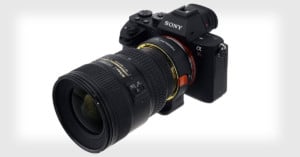
Owners of Sony’s NEX line of EVIL cameras can now autofocus A-mount lenses that are used with Alpha DSLRs. Previously A-mount lenses attached to NEX cameras via the $200 LA-EA1 adapter could only be manually focused, but with the firmware update Sony released today they can be autofocused for single shots at the blazing speed of 2 to 7 seconds per autofocus.
Wait, what?
Yes, apparently users may have to wait up to seven seconds for your camera to lock onto a subject. You might want to stick with that manual focus after all. The new firmware can be download here.
One of the features that Nikon emphasized when they announced the D3100 was HD video with continuous autofocus, the first of its kind in DSLRs. Sure it sounded great on paper, but how well does it work in the real world? Here are a couple videos showing the D3100′s continuous autofocus in action, created by Oscar Cheng.
I don’t know about you, but my impression is that the focus hunts too much, is too slow, and is too loud. Maybe (hopefully) this is due to using a bad lens in low light? Read more…
Self-described creative technologist Thiago Avancini hacked this Atari 2600 joystick into a shutter release cable — complete with an autofocus control for his Canon T2i. The controller is considerably larger than the average cable release or remote control, but it’s a pretty nifty. Avancini has more photos of the contraption on his site, but so far, no DIY instructions.
Verizon and HTC have recently unveiled the HTC Incredible phone, which runs on the Android 2.1 OS, and carries some pretty impressive camera functions.
Most notably, the Incredible has a whopping 8-megapixel camera, putting it a few megapixels shy of the average point-and-shoot on the current market.
Verizon announced in a press release that the phone provides “quick and easy access to Flickr for sharing and viewing pictures.”
The phone also has what looks like a fairly prominent, large lens (by camera phone standards), alongside two LED flashes. Additionally, the camera mode includes the ability to touch the screen in order select an autofocus point, along with impressive manual options to adjust brightness, contrast, saturation, and ISO from 100-1250.
Though it’s unlikely to edge out the point-and-shoot just yet, the Incredible certainly seems to be designed with the photo enthusiast in mind.
The HTC Incredible is available April 29th and will cost $199.