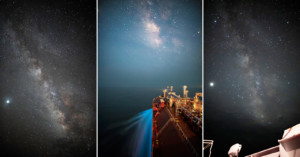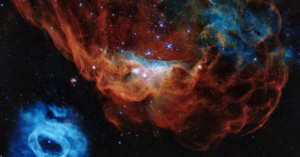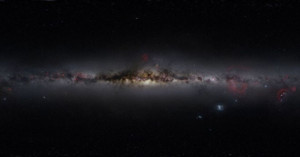
What you see above is the largest true-color photograph of the night sky ever created, shot by 28-year-old amateur astrophotographer Nick Risinger using six astronomical cameras. It’s not just the view of the sky from one location, but is instead a 360-panoramic view of the sky taken by trekking 60,000 miles across the western United States and South Africa starting in March 2010. The final image is composed of 37,000 separate photographs. Check out the massive zoomable high-definition version of the photo here.
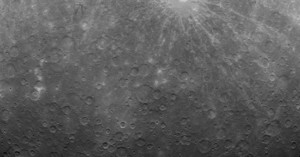
After a seven year journey that involved being slingshotted around the planets in our solar system, NASA’s MESSENGER probe entered Mercury’s orbit on March 17th, 2011. Yesterday the probe beamed back the first photograph ever taken of the planet from orbit (seen above). Read more…
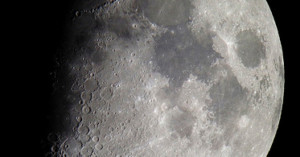
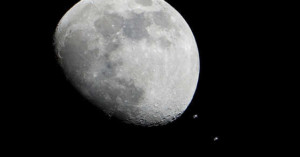
If you’ve been thinking of trying your hand at lunar photography, tomorrow night might present the perfect opportunity to do so. It’s when the Moon will be the closest it has been to the Earth in 18 years, making it 14% larger and 30% brighter than when the full Moon is furthest away. Miss this opportunity, and you won’t see a Moon like this until about 2029 — who knows what we’ll be shooting with by then!
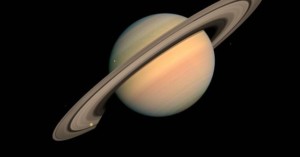
You probably won’t believe this, but this fly-by video of Saturn wasn’t created with 3D computer graphics. Instead, it was created using thousands of high-resolution still photographs captured by the Cassini orbiter.
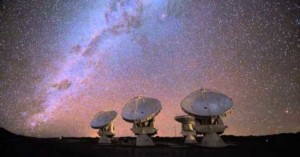
This is a stunning time-lapse video of an entire night at the ALMA Array Operations Site in Chile (the largest astronomical project in existence). The antennas point at the same part of the sky at any given moment, so their movements are perfectly synchronized. If you think watching a sunset is beautiful, wait till you see our galaxy come into view in this video.
P.S. This video could do with music. We recommend playing some Sigur Ros in the background while watching this.
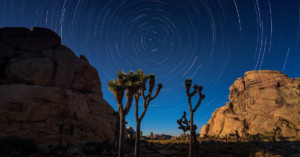
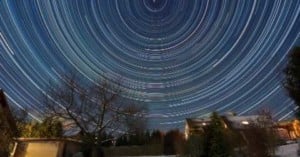
You don’t need fancy camera gear to capture beautiful images and video of the night sky. The above video shows a timelapse created using 1262 photos captured with a Canon 20D at 30 second exposures and ISO 800. At the end there’s a star trails photo created by combining all the stills into a single image. It’s a great 1.25 minute dose of relaxation and inspiration.
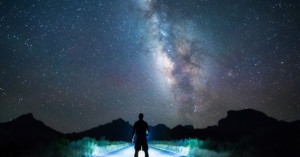
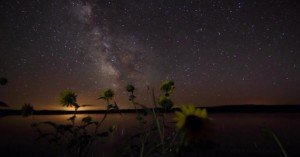
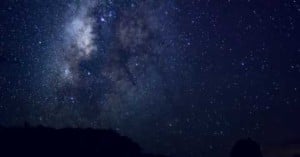
If you live in an urban area, you probably don’t see the night sky very clearly due to light pollution. Luckily, there’s videos like this one to remind us how beautiful the sky above is when there aren’t artificial lights drowning out the stars. This is a high-definition time-lapse of the Milky Way floating across the sky.
Warning: this might inspire you to learn more about time-lapse and astrophotography.
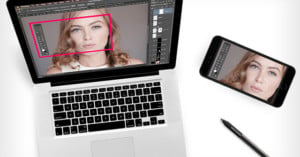
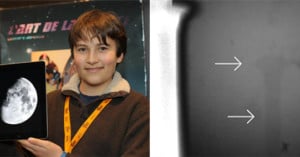
Believe it or not, the above photograph was made with an iPhone 4. jurilog created a tiny astrophotography kit using a small telescope you can buy online for ¥9,800 (~$115) and a miniature tripod mount. Read more…
Pacific Star is a photography project by Colin Rich in which he sends programmed cameras up to epic heights using homemade weather balloons. This is an interesting step-by-step look into what went into the second launch. After purchasing two Canon compact cameras on eBay, Rich programmed them to take 3 photos every 3 minutes, and shoot a minute of video every fourth minute. The cameras were then insulated in styrofoam, and sent up to 125,000 feet before the balloon burst. With the help of a parachute, the cameras descended for 35 minutes and landed about 15-20 miles away.
We’ve seen photos and videos of cameras launched before, but this one is interesting, informational, and well made.
This breathtaking timelapse was created by Tom Lowe of Timescapes, showing footage from his first film, “Southwest Light”. We love how camera movement adds another epic dimension to the footage, as if the stars spinning in the expanse overhead isn’t enough. If you have a minute and a half to spare, definitely take a look at this video.