
PaaS: Photography as a Service
The age of the camera is slowly coming to an end—especially the bulky DSLR and all its associated declinations.
The age of the camera is slowly coming to an end—especially the bulky DSLR and all its associated declinations.
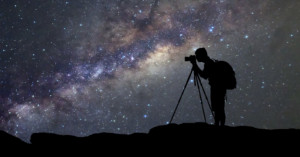
Skies and Scopes has released the findings of its study which analyzed the equipment used to capture the photos that made it to the final shortlist for the Astronomy Photographer of the Year competition over the past three years.

Earlier this year, Adobe partnered with a group of photographers to solicit a series of photos from the global photography community. An analysis shows what Adobe calls "unmistakable commonalities" in the moments that make up everyday lives, regardless of location.

Musician and YouTuber Tucker Tota has released a nearly one-hour-long video where he breaks down Bo Burnham's comedy special "Inside" and offers his thoughts on how he believes it was produced.
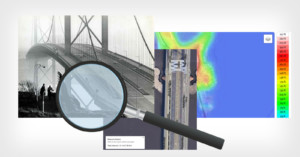
Here is a little exercise to show how we can do things in this modern world. This is not one of those whacky geo-location stunts, this is just ordinary research, some simple geometry, and some careful guessing.

It was so close to the first of April, it sounded like an April’s fool hoax: the gentle freedom-loving all sharing company would be selling to the greedy capitalistic money-making titan. Or, in other words, Getty Images was acquiring Unsplash. The two unlikely partners officially became at the end of April, sending ripples through the stock photography world and beyond.
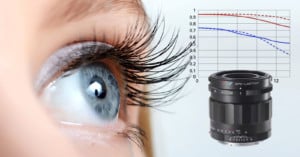
Many of us enjoy quality. Be it a car or a lens, there's a pleasure in using quality things. And in the case of lenses, how perceivable is the quality of the images captured?
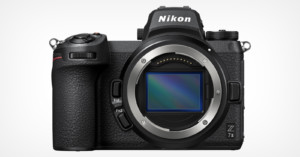
Nikon China recently invited members of the media to its headquarters in the region where the developers of the Z7 II answered many questions about the new camera and Nikon's future. After reading responses, Nikon expert Thom Hogan questions what Nikon has done to differentiate itself.
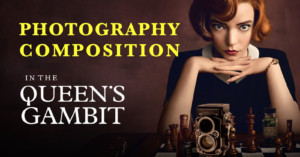
Now and then, it just so happens that I find a show or movie that visually amazes me. I was blown away by the colors of Grand Hotel Budapest and by the cinematography of Birdman. The hit Netflix series The Queen's Gambit is one of those surprises that I have discovered recently.

What many photographers aspire to do is to be able to tell a story with their images -- to create pictures that make the viewer keep looking as they dig deeper and deeper into layers of the photograph.
Over at Halide HQ, we’ve been busily working away on a very deep, technical analysis of what’s new in iPhone 12 cameras this year. All four of ’em. On Friday, we got our hands on the final iPhones in this year’s line-up, the iPhone 12 mini and the iPhone 12 Pro Max.
On the 14th of October, Nikon is set to announce its latest cameras. These are due to be updates to the Z 7 and Z 6 mirrorless cameras. There are a lot of expectations, but the biggest expected update for these cameras is... the second card slot.

On Saturday, while President Donald Trump was being treated for COVID-19 at Walter Reed National Military Medical Center, the AP distributed two handout photos taken by White House photographer Joyce Boghosian.
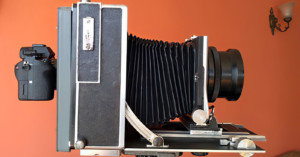
Large format photography still enjoys the status of a noble branch in image-making. Legendary names like Planar, Dagor, Heliar, Symmar, and Angulon -- to mention just a few milestones in lens’ history -- bear an almost supernatural aura of excellence.
A new op-ed published by the Deputy Editor of the Nikkei Asian Review in Japan is making waves in the industry today. The article strikes an ominous tone, foreshadowing difficult times ahead for the camera giants and blaming "excessive competition" for their financial woes.
When a few days past, the news circulated that Kodak Alaris had sold its paper division to Hong Kong-based Chinese company Sino Promise, reactions were mixed and ranged from disinterest over protectionist outrage to the fear that analog photography would finally meet its demise.
The photography industry has been shrinking and the COVID-19 pandemic has not made things any better. This smaller market is being shared by the same number of companies, which could mean some huge changes for the industry. As formats go, Micro Four Thirds isn’t looking strong through this time.
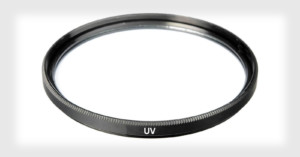
We’re going to ask a controversial question: What do UV filters do, exactly? A UV blocking filter, (not to be confused with a UV Bandpass filter, which has the opposite function) is perhaps the most standard lens filter out there. It’s sold with every beginner lens filter kit along with polarizers and ND filters, and sometimes it’ll even ship with your camera.

For Canon, Nikon and Panasonic/Leica/Sigma, 2018-2019 was the first year where they all truly “went for it” when it comes to full frame mirrorless. All three released full-frame mirrorless cameras, and all three seemed to have different priorities with those releases. In this three-part series, we’re looking at each of these companies in their first year and evaluate where each of them stands today in what is now a very competitive market.

Last night we got our first official glance at Canon's vision for their future in the R5 development announcement, and it looks to finally be an example of full-frame mirrorless taken seriously. In a morning discussion here at PetaPixel, the question was raised: why did Canon just now decide to wake up?

On December 19, 2019, Flickr (and SmugMug) CEO Don MacAskill posted a letter entitled “The world’s most-beloved, money-losing business needs your help.” MacAskill described how SmugMug saved Flickr from an imminent demise at the hands of Verizon, and how the company needed the photo community to step up to staunch the money-losing operation.
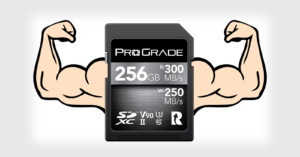
A few weeks ago, I wrote an article about Apple's latest laptop and a wish list for things that weren't included in its design. One of those things was a return to the built-in SD card reader.
For Canon, Nikon, and Panasonic, 2018-2019 was the first year where they all truly "went for it" when it comes to full-frame mirrorless. All three released full-frame mirrorless cameras, and all three seemed to have different priorities with those releases. In this first of three segments, we're going to take a look at each of these companies in their first year and evaluate where each of them stands today in what is now a very competitive market.

I know how easy it is to be upset at Adobe. Trust me, I feel like I'm in a constant state of that feeling for one reason or another, and for years I have been very hard on them repeatedly.
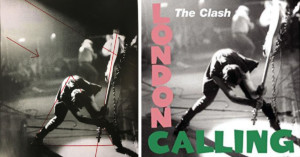
September 21st, 1979. Forty years ago, British rock photographer, Pennie Smith immortalized the destruction of a Fender P-Bass guitar by Paul Simonon of The Clash on the stage of The Palladium in New York City, on gorgeous B&W 35mm film.
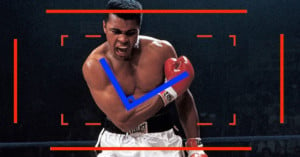
I'm Martin from the All About Street Photography channel, and today I want to talk about the photo "Muhammad Ali vs. Sonny Liston" by photographer Neil Leifer. I am going to take a closer at the story behind the photograph and why is this picture so iconic.
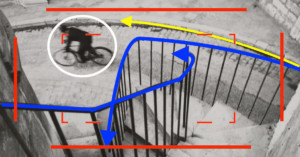
What's up photography fans? It's Martin from All About Street Photography, and today I want to talk about Henri Cartier-Bresson's iconic photo of a cyclist, titled Hyères, France. I am going to take a closer look at the composition as well as at the story behind the photograph.
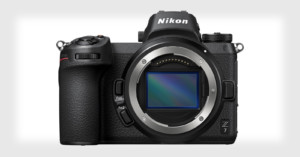
A few decades ago, Nikon was the number one manufacturer for high-end professionals. If you were a pro photographer who shot with a 35mm full-frame camera, you probably shot with a Nikon.

On May 30, 2019, controversial free stock photo site Unsplash announced that it crossed the 1 million images uploaded mark. That had much of the photo blogosphere up in arms.
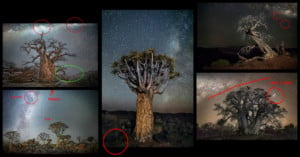
The night sky offers an unlimited source of markers (e.g. stars, constellations, Milky Way, etc.) that never lie about the time of year and location in the world you shot a night sky picture from. You don’t even need to be a professional astronomer or to double-check RAW files to prove it.
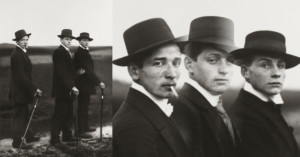
In 1914, German documentary photographer August Sander captured a famous photo titled Young Farmers, which shows three dapper men walking along the rural countryside. In this 9-minute video for PBS's The Art Assignment, famous author John Green dives deep into the photo and the story behind it.
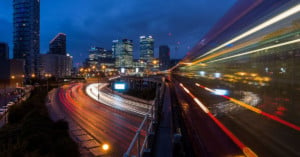
In this article, I am going to dissect how I took an image from both a technical and narrative standpoint. I hope this gives you some ideas for your own photography.
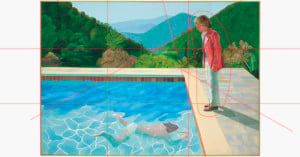
Last month, legendary British painter David Hockney's 1972 painting titled “Portrait of an Artist (Pool with Two Figures)” (shown above) sold for a jaw-dropping $90.3 million, the highest auction price ever for a living artist!
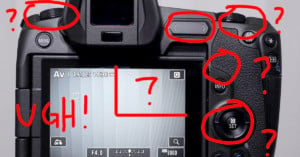
After buying the new EOS R, Canon's first full-frame mirrorless, photographer Michael Andrew of Michael the Maven was disappointed by the camera usability. Here's an 11-minute video in which Michael points out the things in the EOS R that drove him crazy.

After years of shooting portraits with Canon cameras, photographer Sean Tucker recently switched over to Sony gear. After many people warned him that his portraits would suffer from Sony's "terrible" skin tones, Tucker decided to put the cameras to the test himself in the 20-minute video above.
The Kodak moment is gone, but today Fujifilm thrives after a massive reorganization. Here is a detailed analysis based on firsthand accounts from top executives and factual financial data to understand how and why the destinies of two similar companies went in opposite directions.
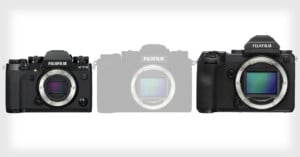
Of all the current camera manufacturers, if you were to call me a fanboy of any of them, Fujifilm would be the most accurate. There’s good reason too: it produces some of the best cameras on the market and its commitment to offering meaningful updates, after the fact, is uniquely wonderful.
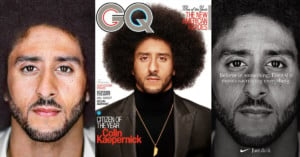
Nike and Colin Kaepernick broke the Internet this week with an ad campaign celebrating the 30th anniversary of “Just Do It.”
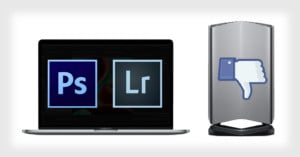
Last week, Apple and Blackmagic unveiled a new $699 external GPU (eGPU) that brings "desktop-class" graphics performance to MacBook Pros. But if you were hoping that it would be a godsend for speeding up your sluggish Photoshop or Lightroom for post-processing photos, you may want to check out this new 16-minute review by photoshopCAFE.
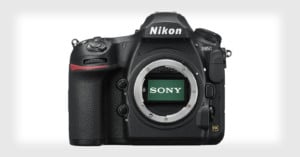
The Nikon D850 contains one of the most highly regarded sensors on the market today, and Nikon has touted the fact that it was designed entirely by Nikon and not simply an off-the-shelf sensor. But in case you were wondering who its manufactured by, a new report has now concluded that it's a Sony-made sensor.