
This is Apparently Why Your Instagram Photos Aren’t Reaching Your Followers
Instagram head Adam Mosseri claims that there are two reasons why your post isn't reaching all your followers and it's apparently got nothing to do with the algorithm.
Instagram head Adam Mosseri claims that there are two reasons why your post isn't reaching all your followers and it's apparently got nothing to do with the algorithm.

An investigation has found that the Instagram algorithm pushes suggestive footage of children and overtly sexual videos to adults on the platform who only follow children.

TikTok users in Europe will soon be able to opt out of its powerful content-selection algorithm as the app prepares to comply with the European Union's (EU) new Digital Services Act (DSA).

Instagram has revealed how it recommends content to users in order to dispel “misconceptions” about how the app’s algorithm.

The state of Arkansas is suing Meta and TikTok, accusing the social media platforms of misleading consumers about the safety of children on its "addictive" platforms and deceiving users about the protection of their private data.

An artist spent four years creating geometric art that forms photorealistic portraits when laid on top of each other.

TikTok is setting a 60-minute daily screen time limit for users who are under the age of 18.

TikTok has admitted that its own employees can decide what videos go viral on the platform.

Tech company executives could face jail time in the United Kingdom if their social media platforms knowingly fail to protect children online.
TikTok will start telling users why it has recommended videos in their feeds amid demands from campaigners for more transparency about its algorithm.

Instagram is expanding its Account Status page to better help users with professional accounts understand if and why their content is eligible to be recommended to non-followers, and what it can do to change that if it is not.

New data has revealed that the majority of creators feel "screwed" by large social media platforms and their algorithms.

Artificial intelligence-powered (AI) image generators have exploded in popularity and apps like DALL-E, Midjourney, and more recently Stable Diffusion are exciting and tantalizing technology enthusiasts.

What a week it has been for the world's largest photo-sharing app, although we are not sure if we can still call it that. Instagram, and its parent company Meta, has hit the headlines every day, and frankly, it has been a bit of a mess.

Instagram and Facebook are going to show even more posts from accounts that users do not follow -- after Meta CEO Mark Zuckerberg announced that the company plans to "more than double" the amount of "recommended" content that appears in users' feeds by the end of next year.

Artificial intelligence (AI) can use a person's brainwaves to see around corners and create images of objects the human eye can not directly see.
A photographer says he has tricked the Instagram algorithm into once again pushing his photos by leveraging the platform’s preference for Reels to his advantage.

According to a new report, Facebook has decided to make its feed feel more like TikTok in an attempt to better compete against what has become the biggest threat to the social media giant's bottom line.
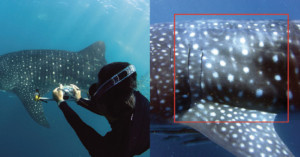
An algorithm that was originally developed to map the stars is also used to track whale sharks for the sake of conservation efforts.

A pair of Stanford University astrophysicists have proposed a new way to use gravitational lensing that would be up to 1,000 times more precise than current methods. The hope is to use the concept to take better photos of distant planets.

In good news for photographers who post their own images, Instagram are planning to tweak its algorithm to "value original content more."

Photographs are made with the help of light, but what if portraits of people could be made with the sound of their voices? AI researchers have been working on reconstructing the face of a person using only a short audio recording of that person speaking, and the results are eerily impressive.

A new report found that Facebook was accidentally elevating harmful content for the past six months instead of suppressing it. A second report found that its internal policies may have resulted in the underreporting of photos of child abuse.

Researchers from Cornell University have designed a photo-taking robot that understands aesthetically pleasing composition. It already excels at photos for Real Estate or AirBNB, but could be trained to use its skills anywhere.

A new bipartisan bill has been introduced into the United States Senate that takes aim at algorithmic-based feeds like those on Facebook and Instagram. The bill would direct two government agencies to investigate ways to add friction to content sharing.

Instagram, still scrambling to recover its public image amid repeated reports that its product is dangerous for young people, will push "potentially harmful" content farther down a user's feed, but won't hide it entirely.
A bipartisan group of House lawmakers has introduced a new bill that would make it mandatory for services that use algorithms to serve content to offer a version that allows users to turn that feature off.

A new report shows that Instagram is working on a new Favorites feature that will make it possible to tell the app what content it should prioritize.

Instagram is looking to focus its attention on competing directly with TikTok and as a result, its head Adam Mosseri says that the popular app is no longer a photo-sharing app, but will shift to entertainment, video, and shopping.

Instagram is reportedly testing a feature with a "small number" of users where its "suggested posts" feature will expand beyond just when you've reached the end of your feed and will be mixed throughout a browsing experience, possibly coming ahead of posts from those users follow.

Most social media platforms shroud the idea of "the algorithm" in mystery. Instagram appears to be breaking that mold as it has published a detailed blog that explains what its algorithm is and how it ranks feeds, Stories, Explore, and Reels.

During the height of Israeli-Palestinian violence that took place last month, several Facebook employees alleged that the company's algorithm on both the parent platform and Instagram were inadvertently censoring pro-Palestinian content because of the method by which it was shared.

Xiaomi today announced the Mi 11 smartphone which houses an impressive new low light technology. Quality nighttime photo-taking capability has been a thing for some time, but this latest device is the world's first to implement a Night Mode for video.

Google Photos has for some time asked users to verify its results for facial recognition or image content accuracy, but now the app is taking requests one step further: it's asking you to label all your images from scratch, not just verify results, to help train the algorithm.

Back in January of 2018, Twitter introduced an auto-cropping AI that detects the most interesting part of your image and crops the 'preview' photo to match. This works with everything from airplane wings to people, but as one engineer showed this weekend, it may suffer from some inherent bias.
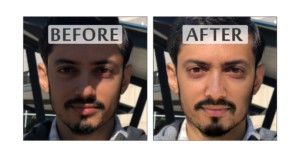
A team of computer scientists from Google, MIT, and the University of California, Berkeley have created an impressive AI-powered "shadow removal" tool that can realistically remove harsh shadows from portraits, while leaving natural shadows intact. The results are impressive.
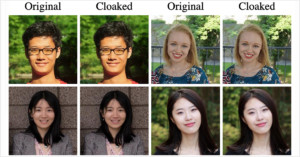
A team of researchers at the University of Chicago have developed an algorithm that makes tiny, imperceptible edits to your images in order to mask you from facial recognition technology. Their invention is called Fawkes, and anybody can use it on their own images for free.

Here's an interesting tidbit from the world of smartphone photography. Google is proposing a significant change to the Camera API in Android 11 that will prevent smartphones from using face altering algorithms that change geometry, skin tone, or apply smoothing.

Google has announced that its computer vision algorithm will no longer tag photos with gender. According to an email sent to Developers yesterday, the AI-powered tool will no longer use gendered tags like "woman" or "man," and will default to "person" instead.

In a technical article published earlier today, Facebook has reveled some of the Machine Learning (AKA 'AI') technology that decides what photos show up on Instagram's "Explore" tab—the main way IG users discover new accounts and content.