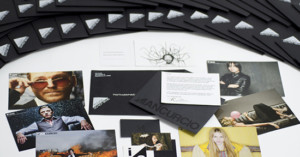
QR codes have become an extremely popular way of linking to digital things from the physical world, and more and more businesses are displaying them in order to direct customers to their websites. Photographer David Sykes (whom we previously featured here) decided to take advantage of the craze to promote his new website and blog. Instead of an ordinary QR code, however, he decided to create an 8-foot square model of the code using things such as boots, calculators, briefcases, boomboxes, and champagne bottles. He then photographed the code on film and mailed out limited edition prints. Read more…
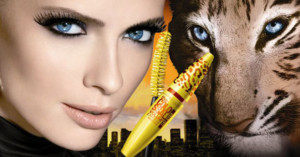
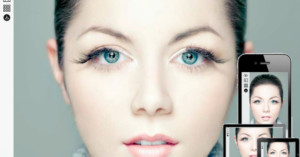
The US is following the UK’s lead in banning advertisements for having too much digital manipulation. The National Advertising Division, a US watchdog that imposes self-regulation on the ad industry, has banned a CoverGirl mascara ad by Procter & Gamble because Photoshop was used to make the girl’s eyelashes thicker than they were in real life. Even though the enhancement was disclosed in the ad itself, NAD wasn’t satisfied, saying,
You can’t use a photograph to demonstrate how a cosmetic will look after it is applied to a woman’s face and then – in the mice type – have a disclosure that says ‘okay, not really.’
The NAD says that it’s following the lead of its sister body in the UK, the Advertising Standards Authority. Back in June, ASA banned a makeup ad featuring Julia Roberts for being too manipulated.
As newspapers and magazines struggle to keep eyeballs from turning to the free world of the Web, more and more blogs are rising up to fill the niches once dominated by print. Despite the changing landscape, magazines are still able to command high advertising rates that blogs can’t match (yet). Wanting to find out whether magazines or blogs provided the best bang of each advertising buck, photographer Trey Ratcliff recently spent $26,000 placing ads in three major photography magazines, comparing the results to his online affiliate ad returns. His conclusion?

If I was consulting for one of these product companies that puts significant funds into magazine advertising, I would challenge them to try something new for six months: Try taking 50% of that money and put it into several hundred blogs, podcasts and review sites and measure the results. Cut the worst performers and find new ones.
Only one of the three magazines actually made Ratcliff money (the other two lost over ten thousand dollars) — the one that included an online ad rotation as part of the package.
A Lancome advertisement featuring Julia Roberts caused a stir back in July after it was banned by the UK for being too “Photoshopped”. Now a couple in the US are trying to bring stricter regulation to the United States. Seth and Eva Matlins, founders of Off Our Chests, have started the Self Esteem Act:
We’re asking for support to pass federal legislation requiring advertising and editorial that’s meaningfully changed the human form through photoshopping or airbrushing to carry “Truth in Advertising” labels. The labels will simply state that the models shown have been altered. No judgments, no morality, just clarity.
[...] Photoshopping, airbrushing, digital manipulation isn’t the issue. The issue is too many look at these images and theink they should look LIKE these images. And they can’t…because they’re not real.
So let’s call a duck a duck and modified picture a modified picture. All we’re asking is that if you do it – you tell us you did.
They’re currently trying to raise 10,000 signatures for the petition, which can be signed here.
Here are some fantastic compliations of commercials promoting Japanese camera companies. They aired from the 1970s to the 1990s. The video above is the Canon collection. Read more…
Photographer duo Joachim Guanzon and Marden Blake (AKA aesonica) created this short behind-the-scenes video showing how they recently shot and Photoshopped an Audi A4 photo for a print advertisement. You can read a longer how-to over on the aesonica website:
The goal is to make it look as if you had 20+ lights, grids, flags and reflectors to shoot your project. There is nothing better than hearing someone ask how many lights were needed to create your shot and revealing that you used only one. The trick is by doing something that could realistically be done with enough equipment and lighting skill, with only one light.
On the other hand, if you get too carried away, there is nothing worse than someone asking if you used Photomatix to compile your HDR garbage shot followed by “My 13 year-old has that program too!”
Recently we shared similar on how you can do composite lighting on homes and on an airplane.
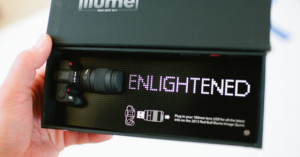
Last Friday, Olympus partnered with JetBlue for an Oprah-style giveaway: each of the 1000+ passengers traveling on Flight #001 from New York to Fort Lauderdale was given a newly-announced PEN E-PM1 Micro Four Thirds camera. The company documented the event using its own PEN cameras, and simply asked that everyone upload 20 of their favorite images captured to this website.
Perhaps if it was a flight full of photo-enthusiasts and the camera a top-of-the-line DSLR, the reaction would have been more enthusiastic.
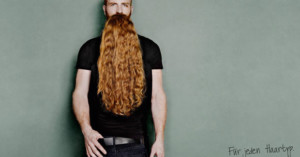
Photo fads are themselves growing as a fad — after “planking” became a worldwide Internet sensation earlier this year, it seems like every week a silly new idea is introduced as “the new planking”. Now, the Razor company Schick is trying to take advantage of the power of photography and Internet memes by introducing a photo fad of their own: “razorbombing”. It involves taking a razor and using it to create the illusion that it’s shaving something in the photo. Read more…