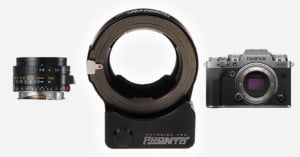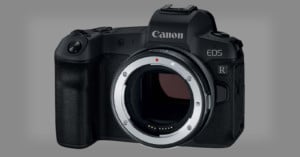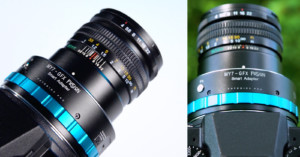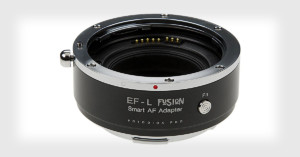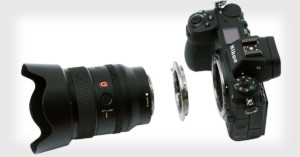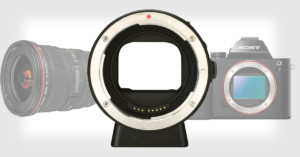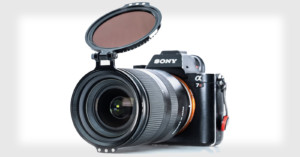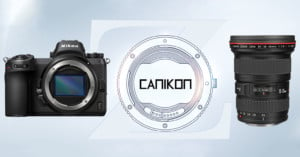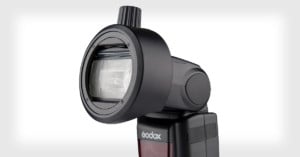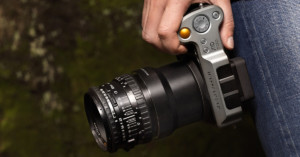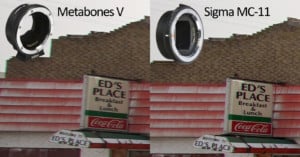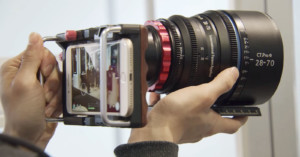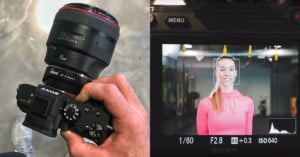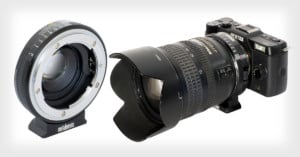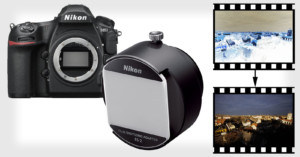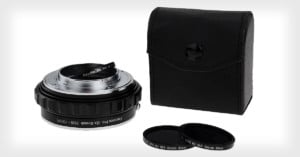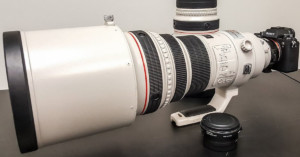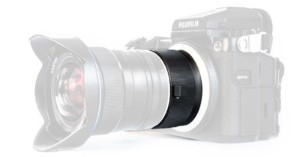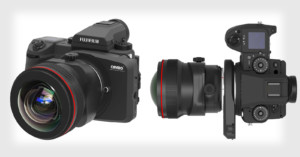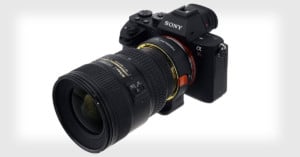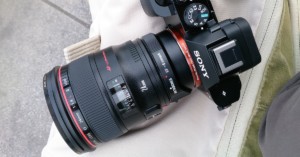
There are already options available for those people who want to use Leica lenses with their Fujifilm X-Pro1, but for those of you who prefer to use only equipment from your camera manufacturer themselves, you now have that option as well. The new M-Mount adapter from Fujifilm, priced at $199, will be available sometime in June and brings with it compatibility with Leica’s wide range of high-end M Lenses. Fuji will also be releasing a firmware update alongside the M-Mount adapter in order to maximize compatibility with Leica lenses. The adapter and the lenses it “adapts” for don’t come cheap (then again neither does the X-Pro1), but if you’ve been wanting to shoot digital images with Leica lenses without a pricey Leica digital rangefinder, this option is certainly attractive.
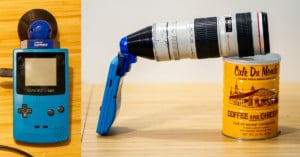
We really enjoy DIY projects for photographers, and as such we’ve featured everything from the ultra simple to complex light-painting robots. But what excites us about Instructables‘ DIY tilt-shift adapter isn’t just the durable plunger adapter you end up with, but rather the idea that one could manufacture their own camera accessories with a little bit of design skill and a 3D printer (check out Shapeways if you don’t have one sitting around).
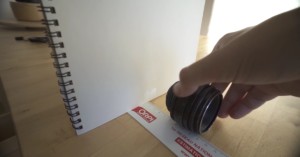
For this particular project you’ll need a camera, an extra lens, some digital calipers, 3D design software like 123D, and access to a 3D printer or 3D printing service. After that just follow the steps in this video and you can wind up with results like the ones you see below. Read more…
Here’s a brief glimpse showing Nikon’s new $59 WU-1a wireless adapter in action, being used to control a D3200 DSLR (the only camera supported at the moment) using an Android (the only mobile OS supported) smartphone. The video is in Chinese since it was created by Taiwanese website Mobile01, but it clearly shows the two main features of the adapter: transferring photos from cameras to phones and shooting remotely using the phone as a live view.
Photography enthusiast Jeff Vier made himself a cheap DIY grid spot using a $5 gutter downspout adapter he purchased from Home Depot and a $0.50 bag of drinking straws. Simply cut all the straws to the same length (the longer the straws, the more focused the light), carefully arrange them inside the adapter, and then use super glue to fix them into place. Vier found that his makeshift adapter fit perfectly over his Speedlight 580 EX II without any adjustments.
Want to attach your smartphone to your tripod without buying a special mount? Two large binder clips can do the trick. Simply attach the clips to your tripod and then use the handles to cradle your phone. playstationfive has uploaded a step-by-step tutorial over on Imgur.
Here’s a simple tip by photographer Benjamin Von Wong for traveling abroad: you can make recharging your devices overseas a breeze by building a charging station using a single power adapter and your own power strip.
Fujifilm announced back in January at CES that it was working on an M-mount adapter for the X-Pro1, a camera that looks strikingly similar to Leica’s digital rangefinders. The company is now showing off the adapter at the CP+ trade show in Japan. Leica film aficionados who want to play around with digital in style can now choose between paying $1700 for the X-Pro1 or $6000-$7000 for the Leica M8 or Leica M9.
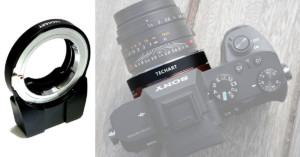
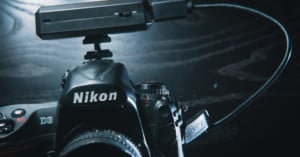
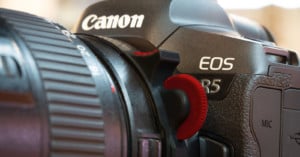
Hyperspectral cameras are capable of collecting and processing information across the electromagnetic spectrum and beyond what the human eye can see. The technology ordinarily costs a fortune to get a hold of, but scientists at the Vienna University of Technology have figured out how to create a hyperspectral camera using an ordinary DSLR (the Canon 5D) and an adapter made of off-the-shelf parts (PVC pipes, a gel filter, and three camera lenses). The camera still has a ways to go in many areas — it requires several seconds to exposes images rather than milliseconds — but it’s a big step towards showing what’s possible with consumer camera technology.
Nikonian DSLR shooters will soon be able to use their existing F-mount lenses with Nikon’s 1 System line of mirrorless cameras. The FT1 adapter launches next week in Japan on December 22nd for ¥23,310, or roughly $300. Most lenses in the mount system will be compatible, and AF-S lenses will have the added advantage of being able to utilize the cameras’ autofocus systems. Be prepared for massive crop though — the tiny sensor on the cameras mean that your lenses will have a crazy 2.7x crop factor. A 50mm normal lens will turn into a 135mm telephoto lens.
The RoundFlash is a new ring flash adapter that’s lightweight and collapsible. Setting it up from its collapsed state is similar to setting up a tent: simply take the rods and stick them into the holes to expand the adapter. Read more…