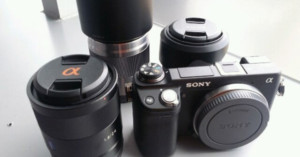
Sony NEX-6 Electronic Viewfinder Spotted in New Leaked Photo
Sony is attacking the mirrorless camera with a one-two punch this year. After announcing the Wi-Fi-equipped NEX-5R …
Sony is attacking the mirrorless camera with a one-two punch this year. After announcing the Wi-Fi-equipped NEX-5R …
On August 27, 2006, photographer Noah Kalina uploaded a highly influential video to YouTube. Titled everyday, the video was a time-lapse spanning six years of self-portraits showing Kalina staring expressionlessly into the camera. The video has since amassed tens of millions of views, and has spawned countless copycat projects and videos.
Luckily for the Internet, Noah has kept up his daily picture taking, and today he uploaded an updated version of the video spanning 12 years and 5 months. It contains over 4500 daily portraits and runs a little less than 8 minutes in length. This translates to roughly 10 frames every second, and 1 month every three seconds.

Mike Lerner is a freelance photographer who has worked with some of the music industries hottest stars. He is currently Justin Bieber's official concert photographer. Visit his website here.
PetaPixel: Can you tell us a little about yourself and your background?
Mike Lerner: I'm 27 years old and based out of Brooklyn, NY. I was born and raised on Long Island. I have been photographing professionally for about 2 years now, but started my interest in photography roughly 5 years ago.
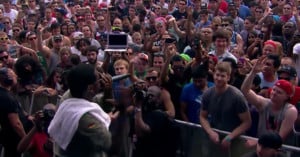
Redditor bottleface was watching the live stream of Jay-Z's first annual "Budweiser Made in America" festival this past weekend, when something caught his eye. One of the concert goers standing in the front rows had made a pretty unique camera choice: a Macbook Air. While the fans around him held up smartphones to snap photos and record videos, the Macbookographer was proudly holding up his laptop with the FaceTime camera pointed at the performance.
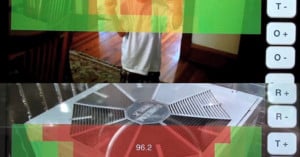
Modder Andy Rawson needed an easy way to find air leaks in his 100-year-old house in order to improve its energy efficiency. Not wanting to spend thousands of dollars on a thermal imaging camera, he decided to go the DIY route. He built a box containing a 64-zone temperature sensor, and managed to connect the device to his iPhone via the dock. By overlaying the temperature data onto the iPhone's camera display, the $150 attachment instantly turns the iPhone into a cheap thermal imaging camera.
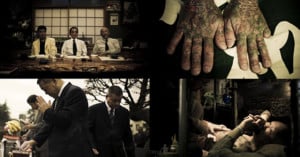
Steward Magazine has published a fascinating interview with photographer Anton Kusters, who spent two years documenting a yakuza gang in Tokyo, capturing highly intimate glimpses into what life is like in the criminal underworld. When asked what he felt like when the project was just starting out, Kusters states,
I was extremely nervous. Since they are gangsters, I thought I should be very careful, in case I shot something I wasn’t supposed to see. But this actually upset the gang. They saw my nervousness as disrespectful. I remember one time early on this guy pulled me aside and said, “You are here to take pictures. Act like a professional.” It turned out they respected me if I was really aggressive about getting a certain shot. To not take photos was a sign of weakness.
As his surname suggests, Kusters is not from Japan (he's from Belgium). It took 10 months of negotiations before he and his brother were given an unprecedented access into the closed world of Japanese organized crime.
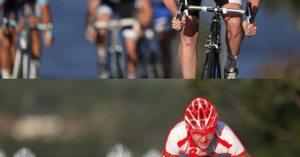
Last week, we wrote about an emerging digital camera feature called "focus peaking", which lets users easily focus lenses through live view by using colorful pixels to highlight in-focus areas. Photographer Karel Donk wanted the same feature in Photoshop, which doesn't currently offer it, so he decided to create it himself.
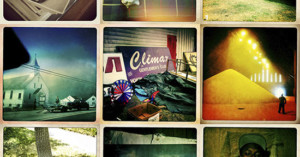
Love it or hate it, you have to admit that Instagram is making a huge impact on the world …
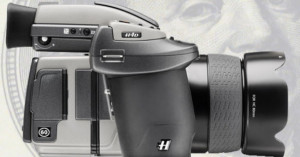
If you look at the product page of any "exotic" piece of camera equipment on Amazon, there's a good chance that you'll come across some humorous fake reviews left by photographers looking to poke fun at the product's features. Last September, we shared some funny reviews left for the Sigma 200-500mm, which looks more like a bazooka than a lens. Another one is the Hasselblad H4D-50, a medium format DSLR that costs $19,000... as an open box demo. You can probably guess what the reviews poke fun at.
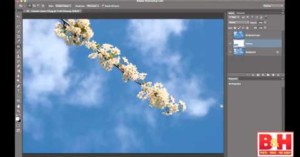
Looking for free lessons on how to get started with using Adobe Photoshop and Lightroom to post-process your photographs? Look no further than the official YouTube channel of New York City camera shop B&H Photo Video. The store often invites well-known professional photographers to hold lectures on subjects they're knowledgable in and passionate about. The collection of videos aren't as shared as other shorter tutorial videos you'll find online due to their great lengths -- they run up to two hours each -- but they're fantastic resources for learning the ins and outs of photography.
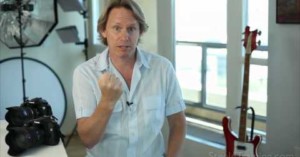
In the video above, photographer Tim Grey offers an overview of using Photoshop CS6 for optimizing your photos. His topics include adjustment layers, image cleanup tools, cropping, rotating, correcting perspective, and applying local adjustments.
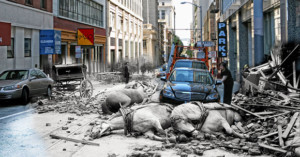
Two years ago, San Francisco-based photographer Shawn Clover began to create an amazing series of images, titled 1906 + 2010: The Earthquake Blend, featuring photographs captured during the devastating 1906 San Francisco earthquake blended into views of what the city currently looks like.
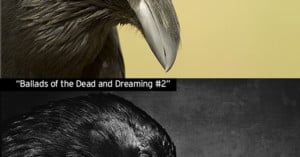
Tim Olsen Gallery, a prestigious art gallery located in Sydney, Australia, has dropped popular Australian photo artist Ben Ali Ong after it was discovered that some of his photo artworks were actually based on uncredited Getty Images. An exhibition featuring Ong's work, which was set to open this week, was canceled, and a number of art buyers will be refunded.
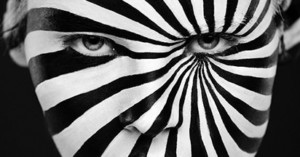
Moscow-based photographer Alexander Khokhlov has a striking series of portraits of models with various designs painted onto their faces. The faces are either painted completely black or completely white, and then used as a canvas for some kind of artwork (e.g. a Mickey mouse face, a silhouette, a keyhole). Khokhlov calls the series Weird Beauty.
If you recently upgraded from a compact camera to a DSLR, one of the first things you …
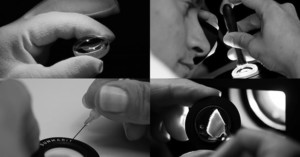
Ever wonder why Leica lenses cost so much? Among the many reasons are two big ones: the lenses are …
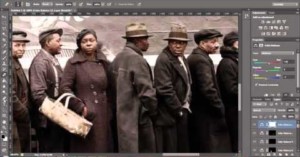
Earlier this year, we shared some amazing work by Swedish retoucher Sanna Dullaway, who takes historical B&W photographs and colorizes them. YouTube user IColoredItForYou is another master of restoring, retouching, and colorizing, but what's awesome about his work is that he creates behind-the-scenes videos showing how the edits are done. The above time-lapse video shows how he recently used Photoshop to colorize Margaret Bourke-White's famous 1937 photograph, titled "Bread Line during the Louisville flood, Kentucky".
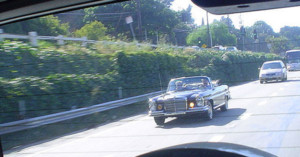
Freelance paparazzi photographer Paul Raef was arrested back on July 6th after chasing Justin Bieber on 101 Freeway, becoming the first person charged under a new anti-paparazzi law signed by former governor Arnold Schwarzenegger. Raef is currently facing four misdemeanors, with two of them being "following another vehicle too closely and reckless driving, with the intent to capture pictures for commercial gain." The punishment is up to one year in jail and $3,500 in fines.
The Los Angeles Times reports that his lawyers are now trying to have the anti-paparazzi law declared as unconstitutional, saying that it specifically and unfairly targets a certain group of news gatherers.
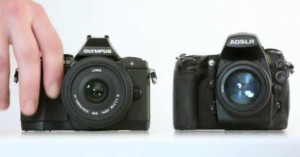
Here’s a brilliant spoof advertisement for the Olympus OM-D mirrorless camera, created “for fun with a friend” by YouTube …

The folks at Mexican agency Golpeavisa were recently tasked with creating a portrait of world-renowned Danish chef René Redzepi for a cover of ClasePremier magazine. Instead of doing a digital illustration like they've done before, they decided to flex their creative muscles and try their hand at making a portrait out of food using perspective photography. After a good deal of planning and setting up, the cover above is what resulted.

Flash memory currently dominates the non-volatile (i.e. retains data when unpowered) storage industry, including the memory cards used in …
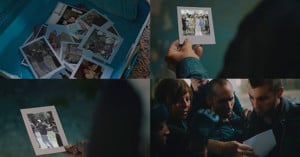
Linkin Park has released a new music video that makes creative use of online photos. Visit the website for the song "Lost in the Echo", and you'll be asked to connect with the music video using your Facebook account. Once you provide it with access, it crunches some data, and then starts playing. The video starts out like many other videos, showing a group of people in what appears to be some kind of post-apocalyptic hideout. Then one of the characters pulls out a suitcase with photos, and something catches you eye: personal photos from your Facebook albums are shown inside the video!

Fujifilm has uploaded a video to its Japanese YouTube account showing its not-yet-announced XF1 (or XP1) retro-styled compact camera. The video shows that there's a twisting feature that's used to turn the camera on and off. Turning on the camera involves twisting the lens to unlock it, pulling it out of the camera until it clicks, and then rotating it some more to open up the lens cover. Turning it off involves doing the same things in reverse.
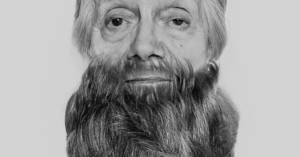
Upside Down (Faces) is a bizarre portrait project by Milano, Italy-based photographer Davide Tremolada. The photos show the front and back sides of individuals digitally blended into a single head, with the backside of the head serving as a giant beard. The resulting look is quite surreal, especially if the subject already had a beard to begin with.
Try imagining a make-believe creature that has absolutely no basis in reality. Can you? Not really. The truth is, everything imaginary is simply a rehash of things that actually exist... just in a combination that doesn't exist. Aliens are simply strange combinations of humans and other creatures that we know. Unicorns are horses with horns. Bigfoot is some guy that accidentally spilled Rogaine all over his body.
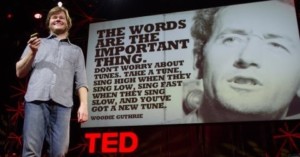
This is the basis for writer Kirby Ferguson's big idea: that "everything is a remix." He created a popular four part video series on this topic over the past year, and recently he was invited by TED to give the condensed, sub-10-minute version of it that's shown above.