Upcoming Hipstamatic App to Deliver a “Disposable Camera” Experience
iPhone photography app Hipstamatic was the king of retro filters before …
iPhone photography app Hipstamatic was the king of retro filters before …

Photographer duo Joachim Guanzon and Marden Blake (AKA aesonica) created this short behind-the-scenes …

When clients Janet and Darrell asked Australian photographer Hailey Bartholomew for a creative engagement shoot earlier this year, she came up with the idea of having the couple wear oversized bear heads.
One of the main reasons Apple has been so successful as a tech company is its focus on usability.
“What is Life?” is a creative stop motion animation created by a group of students at the …
Forget sending cameras up to the edges of space on a weather balloon: rockets are much, much …
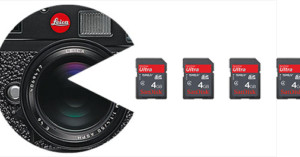
Back in August, it came to light that some of Leica's $7,000 M9 cameras had a problem in which they would corrupt the SD card being used -- a problem that caused one photographer to permanently lose work after a day of shooting.

By Martin Pannier on picuous
Unlike most videos you find on the web, images aren't very easy for the average person to share. Rather than hotlink photos from their original source, as is done for videos, most "sharing" involves downloading the photos, uploading them somewhere else, and then publishing that new version of the image. Picuous, a new service that launched today, aims to change that by bringing one-click Vimeo-style sharing to online photographs.
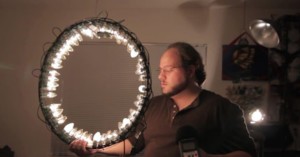
Videographer Joel Loukus created a continuous ring light source -- which he calls the "WreathLight" -- using a wreath frame and two strings of Christmas lights. The total cost came out to $24. It's a cheap and easy way of adding some soft lighting to your portraits.
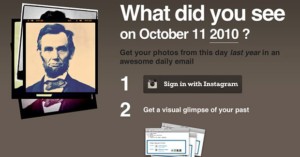
Instagram just celebrated its first birthday last week, and now early …

Thailand is experiencing the worst flooding it has seen in more than 50 …
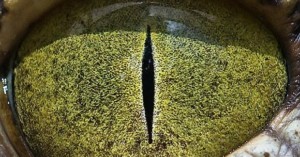
After seeing his close-up photographs of human eyes become enormously popular last year, photographer Suren Manvelyan turned to a more difficult subject: animals. He somehow managed to create a series of photographs showing the stunning eyes of animals ranging from crocodiles to horses.
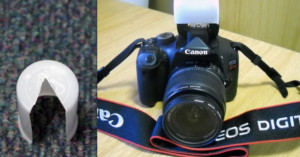
Here’s a quick and easy photo hack: cut a slice out of a white film canister to soften the …
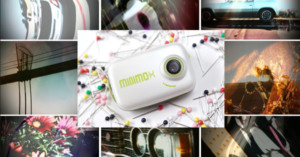
Expose two images without advancing your film, and you have yourself an in-camera double exposure photograph. With …

Advertising photographer Paul Ripke's project "Man Babies" features portraits of parents with their children... with their heads swapped. Ripke enlisted the help of two professional Photoshoppin' friends, and says that the photographs were purely for fun and to test the limits of Photoshop.
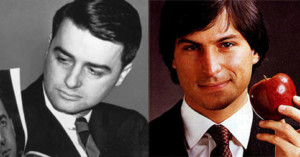
If you think about it, there are many parallels between Apple and Polaroid: both companies introduced innovative products that …
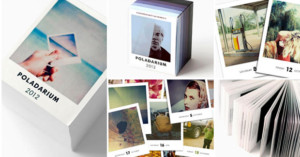
Poladarium is a cool tear-off calendar that’s great for Polaroid enthusiasts looking for …
According to Nikon Rumors, Nikon has introduced a new Unilateral Pricing Policy on DSLR gear sold in the US that will take effect on October 16th. Saying that the policy is "designed to allow customers to make purchasing decisions based on service provided and not have to worry about hunting for a better price", Nikon plans to withhold sales to any store caught pricing equipment below "national prices" that the company will set for each product.
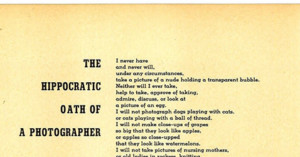
Back in 1937, art director M.F. Agha wrote a piece in U.S. Camera magazine titled The Hippocratic Oath of a Photographer, which warns photographs not to pursue common photographic clichés that were saturating the industry. It's an interesting glimpse into what popular photo subjects were back in the day.
At the Adobe MAX 2011 event in LA last week, the company gave …

Last Friday, 45-year-old Chris White was at the Braehead shopping center near Glasgow, when he took a snapshot of his daughter Hazel eating some ice cream. He was then confronted by security guards -- and later the police -- who cited the Prevention of Terrorism Act to explain that it was in their rights to confiscate his phone. While they did allow him to keep the photos, they demanded his personal details. Afterward, White created a Facebook page titled "Boycott Braehead" in an effort to draw attention to the incident.
Photographer Joseph Nienstedt was at a grocery store recently when he spotted a …
Tamara Lackey recently sat down with Chase …

Photographer Jessica Bjorn was recently hired by the Owen family to shoot some post-apocalyptic zombie slaying family portraits. The husband makes and sells chainmail armor and costumes through his Etsy store ChainCrafts, and made all the costumes seen in these photos using things such as hubcaps, soda tabs, and a railroad crossing sign.
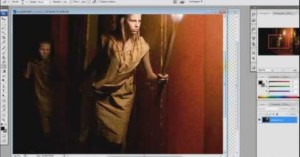
Photo enthusiast Robert Simpson created this informative behind-the-scenes video detailing how he created …

Update on 12/18/21: This video has been removed by its creator. This weekend, CNN is featuring this video showing renowned …

Kodak’s website has a “Create” section stocked with all kinds of different photo …

This great video lesson by San Francisco-based interior photographer Scott Hargis teaching how …
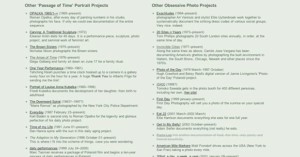
Artist Jonathan Keller Keller first started taking a self-portrait of himself every day …

Here’s an illuminating (pun intended) video walkthrough by photographer Eric Curry, showing how …
Here’s a helpful 22-page guide by National Geographic that explains many of the basic concepts of photography, from lens …
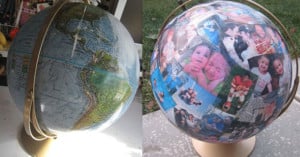
For her husband’s 40th birthday, Jen had the idea of turning an old, …
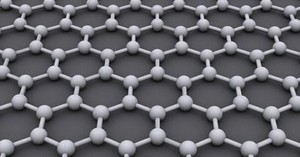
MIT scientists have discovered that graphene, a material consisting of one-atom thick sheets …
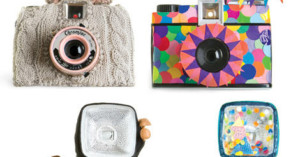
These Diana cameras were decorated and auctioned for Lomography’s …
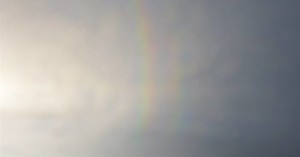
Seeing a double rainbow is a relatively rare treat, but how about three or four rainbows? Scientists have only reported seeing triple rainbows five times over the past 250 years, but German photographer Michael Theusner was recently able to capture this first ever photograph of a fourth-order rainbow. Ordinary rainbows (first and second order) appear in the area of the sky opposite the sun (and aren't seen in his shot), but when higher order rainbows appear, they show up on the sunward side.

A team of researchers at UC Davis have come up with a super-cheap …

Nightmares Fear Factory in Niagara Falls, Canada, which calls itself the scariest haunted house in North America, has an automatic camera set up at one particularly horrifying point in the house. The camera takes a photograph of visitors at precisely the moment when sheer terror reaches their brain, and the resulting expressions are hilarious.

We always get a laugh when news organizations or governments try to pass off bad Photoshop jobs …
We shared the terrible news last week that Photojojo founder Amit Gupta was …
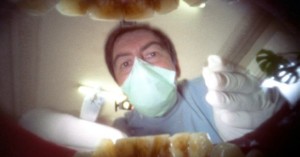
Mouthpiece is a series of photographs by photographer Justin Quinell in which he documents some of his life's experiences as seen by his mouth. The photographs were captured using a custom pinhole camera created from a 110 film cartridge. It's a unique perspective of the world that we don't often see in photographs.

After Apple founder Steve Jobs passed away yesterday, the company replaced its homepage with a well-known photo of the …

Instagram is changing not just the way photos can be shared, but how …
Phonar, the free and open undergraduate photo class we wrote about …
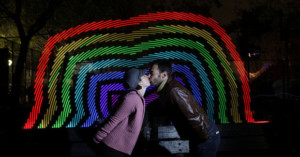
At the Bring to Light nighttime art festival in NYC last weekend, artists Sean McIntyre and Reid Bingham showed off the Rainbow Tracer -- a programmable rotating bar of LEDs that paints giant rainbows into the backgrounds of group portraits.
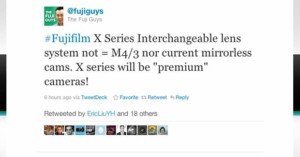
The Fuji Guys sent out a tweet today saying that the company's upcoming interchangeable lens mirrorless camera will not have a Micro Four Thirds sensor inside:
X Series Interchangeable lens system not = M4/3 nor current mirrorless cams. X series will be "premium" cameras!
From what's being said, it sounds like the company is focusing on sensor size and image quality -- good news for serious photographers. People have been begging for an X100-style camera with interchangeable lenses since that camera was announced, and Fujifilm likely isn't ignorant of that fact.
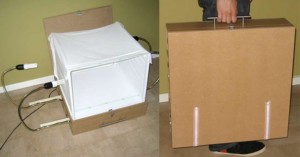
Needing a portable light box, Instructables member HHarry came up with a ingenious …
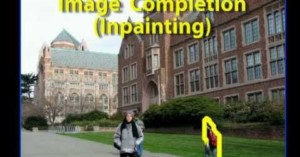
Demos at graphics conferences are often interesting to watch because they offer a sneak peek at technologies that may …
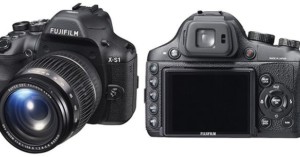
Fujifilm’s press event yesterday wasn’t just to announce that they’re working on a new mirrorless system camera: …
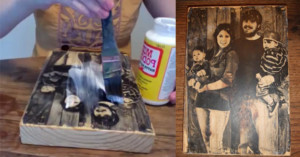
Here's a quick and easy tutorial that'll teach you a cool method of transferring a photo print (black and white or color) onto a block of wood.

Time-lapse guru Dustin Farrell recently released this epic video showing the stunning landscapes …